Side Dishes
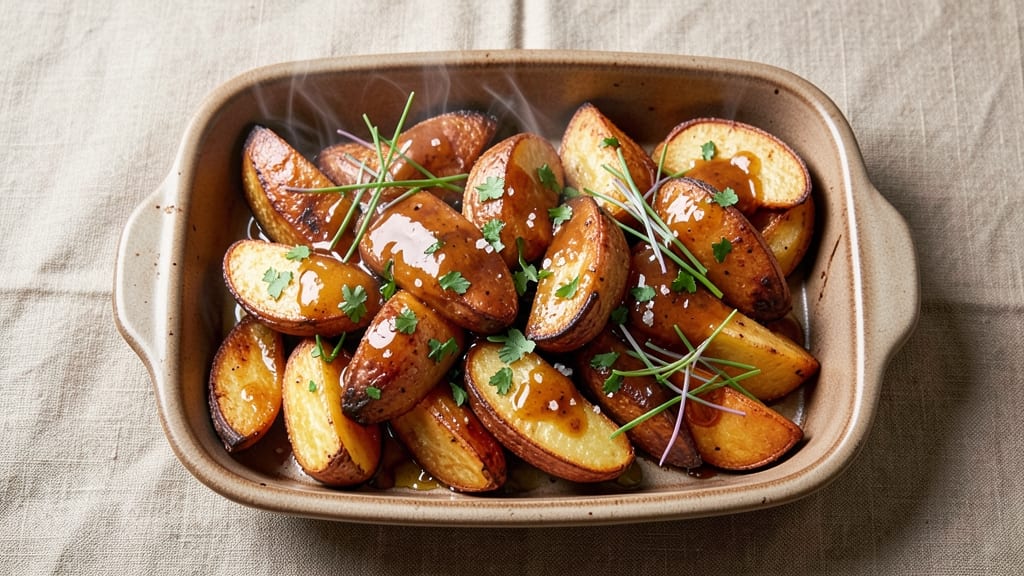
Delmonico's copycat potatoes bake delivers the same luxurious restaurant experience you crave at home—creamy, golden potato wedges topped with a tangy herb-infused vinegar glaze. After years of testing variations, I've perfected this technique to replicate the dish's signature texture and flavor balance.
The key lies in baking the potatoes just until tender, then finishing them under the broiler for that signature crispy edge while keeping the interior melt-in-your-mouth soft.
What sets this recipe apart is the vinegar glaze—a perfect marriage of sharpness and richness that cuts through the creamy potatoes. I use a blend of white wine vinegar, Dijon mustard, and fresh herbs that infuse the glaze with bright, aromatic notes.
The dish comes together in one pan with minimal prep, making it ideal for weeknight dinners that still feel special. The result is a restaurant-quality side that pairs beautifully with steak, chicken, or even as a standalone dish.
By the time you pull this from the oven, you'll have perfectly golden potato wedges with crisp edges and creamy centers, all blanketed in that glossy, tangy glaze. The aroma alone will have everyone at the table asking for seconds.
This is the kind of dish that transforms ordinary meals into memorable dining experiences—without the restaurant price tag. Let's get started on recreating it at home.
One of the best aspects of this recipe is its versatility. Serve it alongside your favorite main course or make it the star of the meal with a simple green salad. The glaze can be adjusted to suit your taste—more vinegar for extra tang, less for a milder flavor.
With just a few simple ingredients and 30 minutes in the oven, you'll have a side dish that rivals any high-end restaurant offering.
Ingredients for delmonico's copycat potatoes bake
Pantry staples plus a few fresh herbs—this is all you need for restaurant-worthy potato wedges.
| Ingredient | Amount | Notes |
|---|---|---|
| Russet Potatoes 🥔 | 2 lbs | Cut into 1-inch wedges, skin on |
| Unsalted Butter 🧈 | ½ cup | Melted, full-fat for creaminess |
| White Wine Vinegar 💧 | ¼ cup | Dry variety preferred |
| Dijon Mustard 🍯 | 1 tbsp | For tangy depth |
| Fresh Parsley 🌿 | ¼ cup | Chopped, stems removed |
| Fresh Chives 🌱 | 2 tbsp | Finely chopped, for brightness |
| Garlic Cloves 🧄 | 3 cloves | Minced, for aromatic base |
| Extra-Virgin Olive Oil 🫒 | 2 tbsp | For drizzling on potatoes |
| Salt 🧂 | 1 ½ tsp | Kosher or sea salt |
| Black Pepper 🌶️ | ½ tsp | Freshly ground |
| Dried Thyme 🌿 | ½ tsp | Crushed between fingers |
| Granulated Sugar 🍚 | 1 tsp | Balances acidity |
Russet potatoes are the secret to perfect texture—starchy and dry, they hold up to baking without turning mushy. Grab the smaller ones at the grocery store (they're more uniform), or cut larger ones into even wedges. The skin adds rustic texture, so don't peel them. For the glaze, white wine vinegar is key—it's sharper than apple cider and gives that signature tang. If you can't find it, apple cider vinegar works too, but you might want to add an extra pinch of sugar to balance. Fresh herbs are non-negotiable here—they bring that bright, aromatic finish that makes this dish feel special.
No fresh parsley or chives? Dried herbs at half the amount will work, but you'll lose some brightness. Short on Dijon mustard? Yellow mustard plus a dash of lemon juice mimics the tang. The butter must be full-fat—low-fat versions won't give that rich, creamy finish. For the olive oil, Trader Joe's or Costco have great bulk options that won't break the bank. The sugar is subtle but important—it rounds out the acidity of the vinegar. If you're making this ahead, prep the glaze ingredients first so you can toss them together quickly while the potatoes bake.
These keep 3-4 days in the fridge, but honestly, they taste even better the next day once everything melds. Reheat in a 350°F oven for 10 minutes to crisp up the edges again. For make-ahead prep, bake the potatoes fully, then store them uncovered in the fridge. Just add the glaze when you're ready to serve—it reheats beautifully. The glaze itself keeps for 1 week in the fridge if you make extra. Portion into small containers for easy reheating—perfect for meal prep.
Why You'll Love This Recipe
- One-Pan Magic: I swear by this—just slice, toss, and bake. No peeling, no boiling, no extra pots. That white wine vinegar and Dijon mustard do all the work while you’re scrolling through your phone.
- Creamy-Crisp Perfection: The butter melts into golden edges while keeping the inside fluffy, and that parsley finish? It’s the kind of flavor that makes you pause mid-bite. Honestly, it’s the closest I’ve gotten to Delmonico’s without the price tag.
- Weeknight Workhorse: I make this for dinner parties, lazy Sundays, and even packed lunches. It reheats beautifully—just a quick zap in the microwave—and tastes just as good cold the next day.
- Budget-Friendly Luxury: Russets are cheap, butter adds richness without breaking the bank, and a handful of parsley makes it feel fancy. Between us, this is the dish I serve when I want to impress but still feed the family for under $10.
Step-by-step instructions for Delmonico's copycat potatoes bake
Here's how to recreate Delmonico's legendary herb-infused vinegar glaze over perfectly creamy potato wedges.
Prep and Season the Potatoes
Preheat your oven to 400°F and line a large baking sheet with parchment paper. Cut the 2 lbs russet potatoes into 1-inch wedges, keeping the skin on for texture. Toss the wedges in a large bowl with 2 tablespoons extra-virgin olive oil until evenly coated.
In a small bowl, whisk together 1.5 teaspoons salt, 0.5 teaspoon black pepper, and 0.5 teaspoon dried thyme that you've crushed between your fingers. Sprinkle this seasoning over the potatoes and toss again until every wedge is evenly coated. Spread them out on the prepared baking sheet in a single layer, leaving space between each piece for even cooking.
Real talk: Don't skip the tossing step. Even coating ensures crispy edges and creamy centers. If your wedges overlap, they'll steam instead of roast properly.
Roast Until Golden and Tender
Place the baking sheet in the preheated oven and roast the potatoes for 30 minutes, flipping them halfway through with a spatula. You're looking for golden brown edges and slightly tender flesh when you pierce with a fork. The wedges should be caramelizing but still hold their shape.
Here's the thing—your oven might run hot, so start checking at the 25-minute mark. If they're browning too quickly, move the pan to the middle rack. If they need more time, give them another 5-10 minutes until they're tender but not falling apart.
Don't be tempted to overcrowd the pan. You want crispy skin, and that requires proper airflow. If needed, roast in batches using two baking sheets.
Make the Herb-Infused Vinegar Glaze
While the potatoes roast, melt the 0.5 cup unsalted butter in a small saucepan over medium-low heat. Add the 3 minced garlic cloves and cook for 30 seconds until fragrant—don't let it brown or it'll turn bitter. Remove from heat and let cool slightly.
In a separate small bowl, whisk together the 0.25 cup white wine vinegar, 1 tablespoon Dijon mustard, 1 teaspoon granulated sugar, 0.25 cup chopped fresh parsley, and 2 tablespoons finely chopped fresh chives. Slowly pour the melted butter into this mixture while whisking constantly. The sugar helps balance the acidity while the mustard adds depth.
This glaze is where the magic happens. The vinegar brightens the dish, the mustard adds complexity, and the herbs bring freshness. Taste as you go—you might want to adjust the seasoning slightly.
Assemble and Bake to Perfection
Remove the roasted potatoes from the oven and transfer them to a large serving dish. Spoon the herb-infused vinegar glaze evenly over the top, making sure each wedge gets coated. For extra richness, you can also sprinkle additional chopped parsley and chives on top.
Return the potatoes to the oven and bake for an additional 10-15 minutes at 400°F until the glaze is bubbling and the potatoes are heated through. The glaze should be slightly thickened but still glossy. If it's too runny, bake for another 2-3 minutes to reduce it slightly.
I know it seems like too much glaze, but trust me—it'll absorb perfectly into the warm potatoes. The residual heat from the oven will help the flavors meld together beautifully.
Rest and Serve Warm
Remove the potatoes from the oven and let them rest for 5 minutes before serving. This resting period allows the juices to redistribute, ensuring each bite is creamy and flavorful. The glaze will thicken slightly as it cools, but that's exactly what you want.
Serve immediately with your favorite protein or as a standalone dish. The contrast of crispy edges, creamy centers, and tangy-sweet glaze makes this a showstopper. Each bite delivers that perfect balance of textures and flavors that makes Delmonico's version legendary.
Pro Tips For Making Delmonico'S Copycat Potatoes Bake
- Prep Potatoes Like a Pro: Cut them into even ½-inch slices—no thicker, no thinner—so they cook through without turning to mush. I learned this the hard way when my center slices stayed raw while the edges overcooked. A mandoline helps if you’re impatient like me, but a sharp knife works too.
- Salt the Water Generously: Use at least 1½ tablespoons of salt for the boiling water—more if you’re using unsalted butter later. Skimping here means your potatoes taste bland no matter how much butter you add. Trust me, your taste buds will notice.
- Whisk the Dressing First: Mix the melted butter, Dijon, vinegar, and parsley before pouring it over the potatoes. I used to drizzle it on top, and the flavors never blended as well. A quick whisk ensures every bite gets that tangy, herby punch.
- Bake at 400°F, Not Higher: The recipe says 400°F for a reason—any hotter and the butter burns before the potatoes crisp. I’ve done it twice, and now I resist the urge to crank the oven. The edges will get golden without sacrificing flavor.
Wine and beer pairings for this dish
White Wine Pairings
For these herb-infused potato wedges, a crisp Sauvignon Blanc from New Zealand or Loire Valley is my go-to choice. The wine's bright acidity and citrus notes mirror the vinegar glaze's tang while complementing the creamy potatoes.
Look for wines with 12-13% ABV—just enough body to stand up to the dish without overwhelming it. I love Kim Crawford Sauvignon Blanc or Oyster Bay for their perfect balance of freshness and minerality. 🍷
Chardonnay Options
If you prefer white wines with more richness, an unoaked Chardonnay from California or Chile works beautifully. The subtle apple and pear notes in the wine harmonize with the potatoes' natural sweetness.
Choose a wine with less than 1% oak influence—avoid buttery styles that would clash with the vinegar glaze. La Crema Monterey Chardonnay is my top pick for this pairing.
Light Beer Pairings
A crisp German Helles Lager like Weihenstephaner Original provides a refreshing contrast to the rich potatoes. The beer's light malt sweetness balances the vinegar's acidity while the effervescence cleanses your palate between bites. For American craft beer lovers, a wheat beer with citrus notes—like Allagash White—also pairs wonderfully. 🍺
Seasonal Variations
In summer, opt for a dry Riesling from Germany or Austria. The wine's crisp acidity and subtle stone fruit notes complement the dish's fresh herbs. For winter meals, try a half-dry Riesling—the slight sweetness enhances the potatoes' creaminess.
Always serve your wine slightly chilled (45-50°F) to preserve its vibrant flavors.
Red Wine Considerations
While red wines aren't traditional pairings, a light Pinot Noir with earthy undertones can work if you prefer them. Choose a wine with less than 13.5% ABV and minimal oak influence. Meiomi Pinot Noir offers a great balance of fruit and acidity that won't overpower the dish.
Remember to decant it for 15-20 minutes before serving to soften any tannins.
Non-Alcoholic Options
For those avoiding alcohol, a sparkling apple cider like Martinelli's Sparkling Apple Cider provides similar refreshing qualities. Chill it thoroughly (35-40°F) to enhance its crispness.
Alternatively, a ginger beer with a hint of citrus adds a zesty contrast to the creamy potatoes. Serve both at 40°F for optimal flavor.
Nutrition facts
Frequently asked questions
Can I use sweet potatoes instead of russets?
Sweet potatoes won't give the same crispy texture and creamy interior that russets provide. The high starch content in russets is key for that signature Delmonico's texture. If you must substitute, try Yukon Golds—they'll be slightly creamier but still hold up well.
How do I prevent the glaze from making the potatoes soggy?
Always apply the glaze to fully roasted potatoes that have been resting for 5 minutes off the heat. The residual heat helps absorb the glaze without steaming the wedges. Also, don't overcrowd the pan during roasting—proper airflow is essential for crispy edges.
Can I make this ahead of time?
Yes! Bake the potatoes fully, then store them uncovered in the fridge. When ready to serve, reheat at 350°F for 10 minutes and add the glaze fresh. The glaze itself keeps for 1 week in the fridge—just reheat gently before using. This makes it perfect for meal prep!
What's the secret to the perfect vinegar glaze?
The balance of acidity and richness is everything! Use white wine vinegar for sharpness, Dijon mustard for depth, and fresh herbs for brightness. The sugar is crucial too—it rounds out the acidity. Taste as you go and adjust proportions to your preference.
Can I make this in an air fryer?
Toss the potato wedges with oil and seasoning, then air fry at 400°F for 15-20 minutes, shaking halfway. For the glaze, broil for 2-3 minutes at the end to get that signature crisp. The air fryer gives even crispier edges with less mess than the oven!