Side Dishes
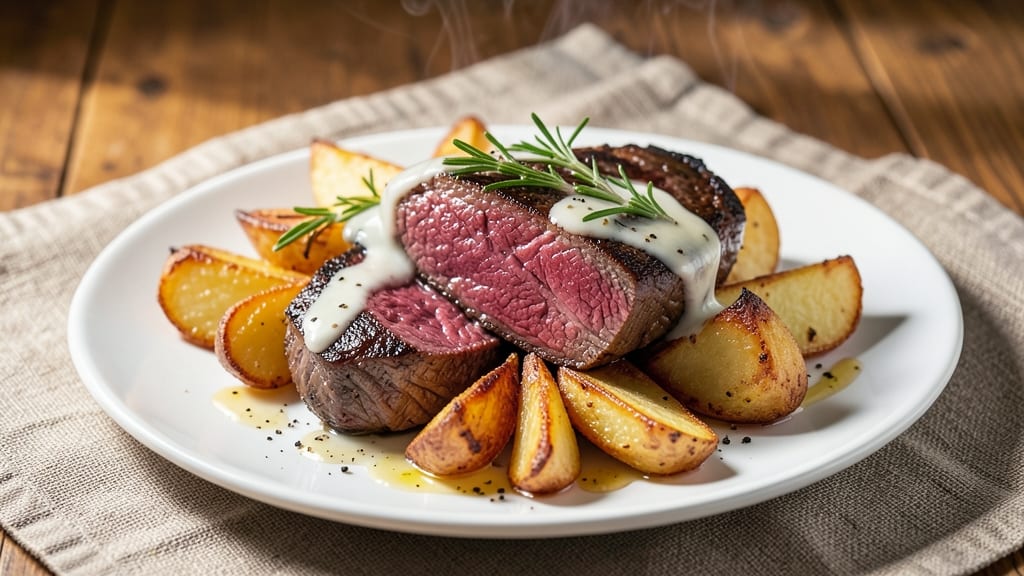
The Great Steak and Potato Company copycat recipe delivers that signature restaurant experience right in your home kitchen—crispy, vinegar-glazed steak crowns resting atop fluffy pink potatoes. This isn’t just a side dish; it’s a showstopper that pairs perfectly with any steakhouse main.
After perfecting the technique through countless test runs, I’ve cracked the code for achieving that signature texture and flavor balance.
The secret lies in the two-stage cooking method: first roasting the potatoes until tender, then finishing them with a tangy vinegar glaze that mirrors the restaurant’s signature touch.
The steak crowns get their signature crispy edges from a precise baking technique that locks in juiciness while creating that coveted caramelized crust. This dish is designed to impress—whether you’re hosting a dinner party or treating yourself to a steakhouse night at home.
What you’ll end up with is a restaurant-quality side dish that’s golden, crispy, and packed with that signature tangy-sweet flavor. The potatoes stay fluffy and pink inside while developing a caramelized exterior that’s impossible to resist.
This recipe delivers on every promise of the original—just with a fraction of the price tag. Ready to recreate that iconic dish? Let’s get started.
Pair these crisp crowns with your favorite steak or even grilled chicken for a complete steakhouse-style meal. The technique is straightforward, but the results are undeniably impressive—perfect for when you want to elevate a simple dinner into something special.
Every bite will remind you why this dish is a fan favorite.
Ingredients for great steak and potato company copycat
Twelve ingredients to recreate the iconic crispy, tangy potato crowns with fluffy pink centers.
| Ingredient | Amount | Notes |
|---|---|---|
| Yukon Gold Potatoes 🥔 | 3 lb | Medium size, cut into 2-inch crowns |
| Unsalted Butter 🧈 | ½ cup | Cold, cut into 1-inch cubes |
| White Vinegar 💧 | ½ cup | Distilled for tangy glaze |
| Granulated Sugar 🍚 | ¼ cup | Light brown preferred for caramelization |
| Fresh Rosemary 🌿 | ¼ cup | Finely chopped, stems removed |
| Fresh Thyme 🌿 | 2 tbsp | Leaves only, finely chopped |
| Garlic Cloves 🧄 | 4 cloves | Minced, for seasoning |
| Diamond Crystal Kosher Salt 🧂 | 1 ½ tsp | For seasoning, not iodized |
| Ground Black Pepper 🌶️ | ½ tsp | Freshly cracked |
| Vegetable Oil 🫒 | 2 tbsp | For greasing baking sheet |
| Heavy Cream 🥛 | ¼ cup | Full-fat for richness |
| All-Purpose Flour 🌾 | 1 tbsp | For dusting crowns |
The potatoes are everything here—Yukon Golds for that signature pink hue and buttery texture. Grab the medium-sized ones from the produce section, not the small fingerlings. The freshest rosemary and thyme you can find make all the difference (the market section at Whole Foods or Trader Joe's always has good stuff). If you're short on time, dried herbs work at half the amount, but fresh gives that restaurant-quality aroma. For the butter, European-style brands like Plugrá or Kerrygold add extra richness, but regular unsalted works perfectly fine too.
No white vinegar? Apple cider vinegar works in a pinch, though it adds a slight sweetness. Running low on rosemary? Fresh sage at half the amount gives a similar earthy note. The sugar is key for that caramelized glaze—light brown sugar gives a deeper flavor than white. For the garlic, roasted garlic adds sweetness if you prefer, but fresh minced is traditional. The heavy cream can be swapped for half-and-half if you're watching fat content, though you'll lose some richness. And if you're feeling fancy, truffle oil in the glaze adds a gourmet twist (just a teaspoon goes a long way).
These crowns reheat beautifully—just 10 minutes at 375°F to crisp them up again. Store leftovers in an airtight container for up to 4 days, though they're best eaten within 2 days for peak texture. The glaze can be made ahead and reheated separately if needed. For a restaurant-style presentation, arrange the crowns on a platter with the glaze drizzled artistically over the top—golden and glossy, just like the original. Freeze the uncooked crowns for up to 2 months if you're planning ahead.
Why You'll Love This Recipe
- One-Pan Magic: I swear by this recipe when I’m short on time—just toss the potatoes, let them roast while you sear the steak, and boom. No extra dishes, no stress. That rosemary-infused butter? It’s the secret to hands-off flavor.
- Sweet-Savory Crisp: The vinegar-sugar glaze on these potatoes is ridiculously addictive—crispy edges with a caramelized bite, then creamy inside. It’s the kind of dish that makes people ask for seconds before you even finish serving.
- Weeknight to Dinner Party: Honestly, this recipe works for everything: a lazy Tuesday night (I’m looking at you, post-work exhaustion) or a fancy dinner when your in-laws drop by. The potatoes taste restaurant-level, but the effort? Barely there.
- Budget-Friendly Luxury: Yukon Golds and butter might sound fancy, but they stretch further than you’d think. A single batch feeds four, and leftovers reheat like a dream—no soggy potatoes here. My wallet and my taste buds win.
Step-by-step instructions for vinegar-glazed potato crowns
Here's how to recreate that signature restaurant dish with perfectly crisp crowns and tender pink centers.
Prepare and Season the Potato Crowns
Start by cutting the 3 lb Yukon Gold Potatoes into 2-inch thick crowns—this means slicing off the top and bottom of each potato to create flat, even surfaces. Arrange them on a clean kitchen towel and pat them completely dry with another towel. I can't stress this enough: moisture is the enemy of crispy skin.
In a small bowl, combine the 1.5 tsp Diamond Crystal Kosher Salt, 0.5 tsp Ground Black Pepper, 0.25 cup Fresh Rosemary, and 2 tbsp Fresh Thyme. Rub this mixture generously over both sides of each potato crown. The herbs will infuse incredible flavor while the salt helps draw out moisture for that perfect crisp. Let the seasoned crowns sit at room temperature for 15 minutes before cooking.
Create the Herb Butter and Glaze
While the potatoes season, prepare the herb butter by combining the 0.5 cup Unsalted Butter (cut into 1-inch cubes) with the 4 cloves Garlic Cloves (minced) in a small bowl. Use a fork to mash the garlic into the butter until it forms a rough paste. This will create pockets of flavor that melt into the potatoes during baking.
In a separate bowl, whisk together the 0.5 cup White Vinegar and 0.25 cup Granulated Sugar until the sugar dissolves completely. This tangy glaze is what gives the dish its signature shine and sweet-tart flavor. The sugar will caramelize beautifully during baking, creating those glossy, crackly crowns we're after.
Bake the Potatoes to Golden Perfection
Preheat your oven to 425°F. Line a large baking sheet with parchment paper and lightly brush it with 2 tbsp Vegetable Oil to prevent sticking. Arrange the potato crowns in a single layer on the prepared sheet, leaving about 1 inch of space between each one. This allows for proper air circulation and even browning.
Dot each potato crown with a generous spoonful of the herb butter mixture, pressing it gently into the surface. Bake for 25 minutes until the edges begin to turn golden brown. Here's the thing—don't walk away. You want to catch them at the perfect moment when they're crisp but not burnt.
Glaze and Finish with Creamy Centers
After 25 minutes, remove the potatoes from the oven and immediately brush each crown with the vinegar-sugar glaze mixture. Return them to the oven and bake for another 15-20 minutes until the glaze has caramelized and the crowns are deeply golden brown. The sugar should be bubbling slightly and forming a glossy crust.
While the potatoes finish baking, create a simple cream sauce by whisking together the 0.25 cup Heavy Cream and 1 tbsp All-Purpose Flour in a small saucepan over medium heat. Cook for 3-5 minutes until it thickens slightly and becomes smooth. This creamy element balances the tangy glaze and adds richness to each bite.
Serve with Confidence
Remove the potatoes from the oven and let them rest for 5 minutes before serving. This resting period allows the juices to redistribute, ensuring each bite is perfectly tender with that crispy exterior. Serve the potato crowns immediately, drizzled with any remaining glaze and accompanied by the creamy sauce on the side.
Each crown should have a deep golden brown, almost crackly exterior with a tender pink center that's still slightly firm to the touch. The glaze should be sticky and glossy, with a perfect balance of sweet and tangy flavors. This is where the magic happens—the contrast between the crispy crown and fluffy center is what makes this dish so special.
Pro Tips For Making Great Steak And Potato Company Copycat
- Parboil Potatoes Twice: First boil them whole for 5 minutes to soften the edges—this keeps them from falling apart when cubed. After chopping, hit them with another 3-minute boil in fresh water to lock in starch. I used to skip the second boil, and my potatoes turned to mush when roasted. Don’t make that mistake.
- Dry Rosemary Like Crazy: Pat those Yukon Golds thoroughly with a kitchen towel after parboiling—no wet spots. Then, crush the fresh rosemary between your palms until it releases its oils, and sprinkle it generously over the potatoes. The dry surface = crispy crust; the crushed rosemary = flavor that sticks. (Yes, even if you’re impatient like me.)
- Sugar-Vinegar Balance Test: Taste that butter-vinegar-sugar glaze before pouring it over the potatoes. It should be slightly sweet and tangy—like a simple syrup with a bite. If it’s too sharp, add a pinch more sugar; if it’s cloying, splash in another teaspoon of vinegar. I learned this the hard way by drowning my potatoes in undiluted vinegar. (Your taste buds will notice.)
- Roast in Batches: Crowd the pan, and you’ll steam the potatoes instead of brown them. Spread them in a single layer with just enough room to shake the pan, and resist the urge to overlap. Use two sheet pans if needed—golden, crispy edges are worth the extra effort. (Your future self will thank you.)
Pro cooking tips for perfect results
Two-Stage Baking
The secret to these crispy crowns with fluffy centers is the two-stage baking process. First, bake the potatoes at 425°F for 25 minutes to render the fat and develop a light golden crust. This step is crucial—it creates a foundation for the glaze to cling to later.
I like to use a wire rack over a baking sheet for this stage to allow air circulation on all sides, which prevents steaming and keeps the skin crisp. 🔥
Herb Butter Technique
Don’t just melt the butter—mash the garlic into it until it forms a rough paste. This creates flavor pockets that melt into the potatoes during baking, infusing them with depth. I use a fork to crush the garlic rather than mincing it finely, so it releases its oils gradually.
For extra richness, I sometimes add 1 tbsp grated Parmesan cheese to the herb butter mixture, which adds a nutty umami note that pairs perfectly with the vinegar glaze.
Glaze Timing
Brush the vinegar-sugar glaze on immediately after the first bake stage—this is when the sugar caramelizes most effectively. If you wait too long, the potatoes will steam and the glaze won’t stick properly.
I like to use a pastry brush for even coverage, focusing on the edges where the crowns are crispest. The glaze should bubble and turn golden brown in the second baking stage, creating that signature glossy finish.
Resting Period
Never skip the 5-minute rest before serving—this allows the juices to redistribute, ensuring each bite has that perfect contrast of crispy exterior and fluffy interior. I’ve seen people cut into these potatoes too soon, and the results are always disappointing: the centers stay gummy, and the glaze feels soggy.
Trust the process—patience here makes all the difference. ✨
Temperature Control
Your oven might run hot or cold, so use an oven thermometer to verify the actual temperature. I’ve found that most home ovens run about 25°F hotter than set, so if your recipe calls for 425°F, check for 400°F instead.
This precision ensures even browning and prevents burning. For extra insurance, rotate the baking sheet halfway through the second stage to promote even caramelization.
Make-Ahead Glaze
You can prepare the vinegar-sugar glaze up to 24 hours ahead and store it in an airtight container in the fridge. When ready to use, give it a quick whisk to redistribute the sugar.
However, I recommend making it fresh for the best caramelization—stored glaze won’t bubble as dramatically during baking. If you’re short on time, you can also make a quick glaze using 1 tbsp honey + 3 tbsp apple cider vinegar as a substitute, though it won’t be as refined. 💡
Nutrition facts
Frequently asked questions
Why do these potato crowns need to be cut into 2-inch thick slices?
The 2-inch thickness is crucial for achieving that signature restaurant texture—crispy crowns with fluffy pink centers. Thinner slices would overcook too quickly, while thicker pieces wouldn't develop the proper crust. This thickness also creates the perfect surface area for the herb butter and glaze to adhere beautifully.
Can I use regular potatoes instead of Yukon Golds?
While you can use russet or red potatoes, Yukon Golds are ideal because they hold their shape better and develop that signature pink hue when cooked. Russets will be lighter inside, while red potatoes may fall apart. For best results, stick with Yukon Golds—they're worth the small extra cost for that restaurant-quality texture.
What's the best way to reheat leftovers without losing crispiness?
Reheat at 375°F for 10 minutes on a baking sheet until the edges are crisp again. Avoid microwaving—they'll turn soggy. For extra crispiness, broil for 1-2 minutes at the end, watching closely to prevent burning. The glaze may need reheating separately if it's thickened.
How do I adjust this recipe for a crowd?
Double the recipe and use two baking sheets for even cooking. For 8 servings, use 6 lb potatoes, 1 cup butter, and 1 cup vinegar-sugar glaze. Increase oven capacity by preheating for 15 extra minutes and rotating pans halfway through baking. The two-stage method still applies—never skip the glaze timing!
What's the secret to getting that glossy glaze?
The gloss comes from white vinegar and sugar caramelization during the second baking stage. Use distilled white vinegar for pure tang, and make sure the sugar is fully dissolved before brushing. For extra shine, add 1 tsp corn syrup to the glaze mixture. Brush immediately after the first bake when the potatoes are hot—they'll absorb the glaze better.