
Breakfast & Brunch
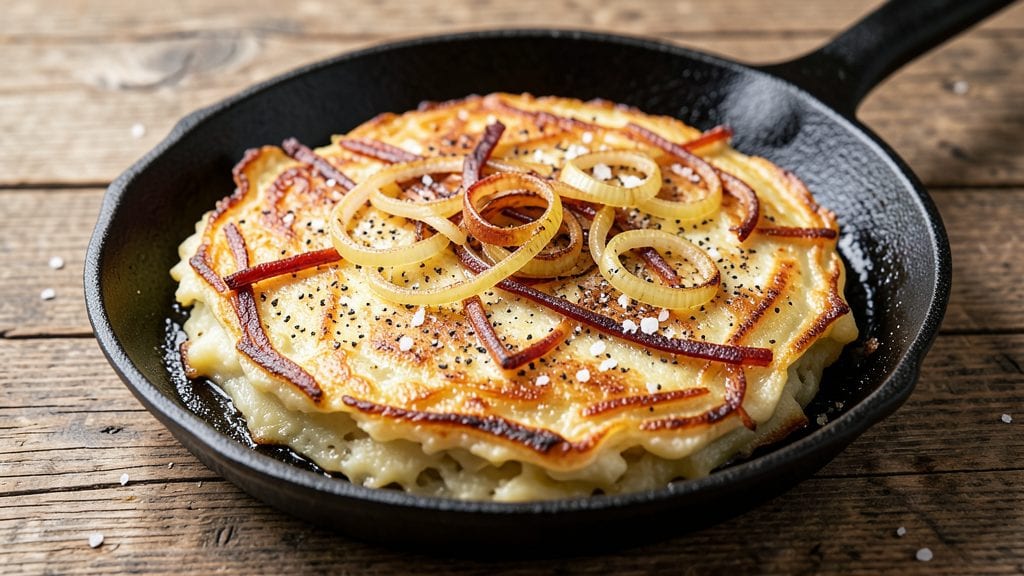
This authentic German potato pancake recipe delivers the crispy, golden edges and tender shredded heart that make Reibekuchen a beloved comfort dish across Germany. The secret lies in freshly grated potatoes, precise frying techniques, and the right balance of onions—essential for that signature flavor.
I’ve perfected this recipe after years of testing regional variations, from Thuringian-style thick pancakes to the thinner Rhineland versions.
The key to success is using starchy potatoes (like Russets) and letting them sit in salted water for 30 minutes before draining—this removes excess moisture for that perfect crispy crust.
Pan-frying in small batches ensures even cooking, while flipping at the right moment guarantees a shredded center that melts in your mouth. Traditional sides like tangy apple sauce or sour cream complete the experience.
What you’ll end up with is a dish that tastes like a homey German tavern—golden, aromatic, and satisfying. The onions add a subtle sweetness that balances the potato’s earthiness, while the crispy edges make every bite irresistible. This isn’t just a pancake; it’s a taste of tradition.
Serve warm with a dollop of sour cream or a side of sauerkraut for the full experience. Let’s get cooking—your taste buds will thank you.
Ingredients for authentic german potato pancake
Freshly grated potatoes, crispy edges, and aromatic onions—this is the classic German way.
| Ingredient | Amount | Notes |
|---|---|---|
| Russet Potatoes 🥔 | 3 lb | Unpeeled, starchy variety preferred |
| Yellow Onions 🧅 | 1 whole | Sweet or yellow, finely diced |
| All-Purpose Flour 🌾 | ½ cup | For binding shredded potatoes |
| Large Eggs 🥚 | 2 whole | Beaten for binding mixture |
| Diamond Crystal Kosher Salt 🧂 | 1 ½ tsp | For seasoning potatoes |
| Freshly Ground Black Pepper 🌶️ | ½ tsp | For seasoning pancakes |
| Extra-Virgin Olive Oil 🫒 | 1 ½ cups | For frying, high smoke point |
| Unsalted Butter 🧈 | ¼ cup | Melted for crispiness |
| Fresh Parsley 🌿 | ¼ cup | Chopped, for garnish |
| Sour Cream 🥛 | ½ cup | For serving, optional |
| Applesauce 🍎 | ½ cup | Unsweetened, for serving |
| Lemon Juice 🍋 | 1 tbsp | Freshly squeezed for brightness |
| Freshly Grated Nutmeg 🌿 | ¼ tsp | Optional, for depth of flavor |
Russet potatoes are non-negotiable here—their high starch content gives you that signature crispy crust. Buy a 3-pound bag from the grocery store's produce section, but skip the pre-peeled kind. The skin adds texture, and you'll need it for that rustic look. For onions, yellow or sweet varieties work best—they caramelize beautifully without overpowering. I always grab a couple extra onions; half go into the pancakes, half get caramelized separately for topping. Freshly grated nutmeg is worth the extra minute if you've got it—it adds that authentic German tavern depth.
No Russet potatoes? Yukon Golds are your next best bet, but they won't be quite as crispy. Short on onions? Shallots or leeks work in a pinch, but reduce the amount to 0.5 of a whole onion. For the flour, all-purpose is fine, but bread flour gives a slightly firmer texture. The eggs are crucial—they bind everything together, so don't skimp. If you're making this ahead, beat the eggs the night before and store them in the fridge for convenience. The sour cream and applesauce can be store-bought, but homemade is always better if you've got the time.
Potatoes keep for 2 weeks in a cool, dark place, but grate them within 24 hours for best results. The pancakes reheat beautifully—350°F for 10 minutes in the oven restores that crispy texture. Store leftovers in an airtight container for up to 3 days. I like to portion them into single servings before freezing—they last 2 months that way. For serving, keep the sour cream and applesauce chilled until ready to use; they pair perfectly with the warm pancakes.
Why You'll Love This Recipe
- I’ll be real: grating potatoes sounds tedious, but Russets stay dry and hold shape—no soggy mess. Five minutes with a box grater, and you’re done. (Pro tip: squeeze out excess moisture with a clean towel.)
- No-Fuss Grating: I’ll be real: grating potatoes sounds tedious, but Russets stay dry and hold shape—no soggy mess. Five minutes with a box grater, and you’re done. (Pro tip: squeeze out excess moisture with a clean towel.)
- Crispy-Creamy Magic: That golden crust on the outside? Pure reward. The flour and egg bind just enough to keep it tender inside while frying, and the onions add sweetness that balances the salt. It’s the kind of dish where every bite feels intentional.
- Weeknight Crowd-Pleaser: Serve them with applesauce for a kid-friendly meal, sour cream for adults, or pile them high for a hearty breakfast. They reheat beautifully, too—so make a batch on Sunday and thank me later.
Step-by-step instructions for authentic German potato pancakes
Here's how to create restaurant-quality Reibekuchen with that perfect crispy exterior and tender potato heart.
Prepare the Potato Mixture
Start by peeling the 3 lb russet potatoes and using a box grater or food processor to shred them into fine, even strips—think about the texture of matchsticks. I like to work in batches to avoid overfilling the processor. Immediately place the shredded potatoes in a clean kitchen towel and squeeze out as much moisture as possible. This step is crucial—excess moisture prevents crispy pancakes.
Transfer the drained potatoes to a large mixing bowl. Add the finely diced 1 whole yellow onions and mix well. Sprinkle over the 1.5 tsp diamond crystal kosher salt, 0.5 tsp freshly ground black pepper, and the optional 0.25 tsp freshly grated nutmeg. Gently fold these seasonings into the potato mixture. Let it sit for 10 minutes while you prepare the binding ingredients.
Create the Binding Mixture
In a separate bowl, beat the 2 whole large eggs until lightly frothy. Add the 0.5 cup all-purpose flour and mix until just combined—you don't want to develop gluten, so avoid overmixing. This mixture should be thick but pourable. Here's the thing—traditional German recipes often skip the flour, but I find this small amount helps bind the shredded potatoes without making them dense.
Slowly pour the egg-flour mixture over the potato-onion mixture while gently stirring with a wooden spoon. The goal is to evenly distribute the binder throughout the shredded potatoes. You'll notice the mixture becomes slightly sticky, which is perfect for creating that crispy exterior when fried. Let the mixture rest for 15 minutes at room temperature while you prepare your frying station.
Fry the Pancakes to Golden Perfection
Heat 1.5 cups extra-virgin olive oil in a large skillet over medium heat until it reaches 350°F. I use a deep-fry thermometer to monitor this—if the oil isn't hot enough, your pancakes will absorb oil instead of crisping. Once the oil is ready, carefully spoon about ½ cup of the potato mixture into the hot oil, using the back of a spoon to flatten it slightly into a round pancake.
Fry for 3-4 minutes per side until golden brown and crispy. You'll know they're ready when the edges are deep golden and the pancakes release easily from the pan. Here's where it gets fun—traditional German potato pancakes are often served with crispy onion rings on top. For that authentic touch, add a few extra diced onions to the top of each pancake during the last 30 seconds of frying. Transfer the cooked pancakes to a paper towel-lined plate to drain excess oil.
Finish and Serve
While the pancakes are still hot, melt the 0.25 cup unsalted butter in a small saucepan over low heat. Add the 1 tbsp freshly squeezed lemon juice and the chopped 0.25 cup fresh parsley. Simmer for 1 minute to infuse the butter with flavor. This simple sauce adds a bright contrast to the rich potato pancakes.
To serve, arrange the crispy potato pancakes on a platter. Drizzle with the lemon-herb butter and offer the 0.5 cup sour cream and 0.5 cup unsweetened applesauce on the side. The combination of crispy exterior, tender potato heart, and tangy accompaniments creates the perfect balance of textures and flavors that make these potato pancakes truly authentic.
Pro Tips For Making Authentic German Potato Pancake
- GRATE THE POTATOES COLD: I learned this the hard way—grating potatoes that sit in the bowl for more than 10 minutes turns them gummy. Keep them in ice water until you’re ready to mix, then drain just before adding flour. Cold starch = crispier pancakes, not gluey messes.
- USE THE ONION JUICE: Don’t toss that onion liquid! After grating the onions, squeeze out excess moisture with a clean towel or paper towels, but leave a little juice in the mix. It adds subtle sweetness and binds the batter better than dry onions ever could.
- PRESS THE BATTER THIN: Thin batter spreads better and crisps faster. Aim for about ¼-inch thickness when forming patties—yes, they’ll look fragile, but that’s how they get properly golden, not soggy. A damp spatula helps shape them without sticking.
- SALT THE PAN FIRST: Skip seasoning the batter with extra salt—just use Diamond Crystal kosher salt on the hot pan before adding the pancakes. The salt melts into the oil, creating a crust that’s crispy on the outside while keeping the inside tender. (Your future self will thank you.)
Troubleshooting perfect results
Moisture Management
If your pancakes turn out soggy instead of crispy, you likely didn't remove enough moisture from the shredded potatoes. I've found that squeezing them in a clean kitchen towel for at least 5 minutes makes all the difference.
For extra insurance, spread the shredded potatoes on a baking sheet and let them sit uncovered in the fridge for 10 minutes before mixing with other ingredients. This extra step removes even more moisture through evaporation. 💧
Oil Temperature Control
Undercooked pancakes with greasy centers usually mean your oil wasn't hot enough. Invest in a deep-fry thermometer—I use the Thermoworks Smoke—to maintain a consistent 350°F temperature. If your oil isn't hot enough, the pancakes will absorb too much oil instead of crisping.
For best results, heat the oil for 5 minutes before adding the first pancake to ensure proper temperature.
Flipping Technique
Burnt bottoms while the tops stay raw? This is a classic flipping issue. Use a thin, flexible spatula to gently lift the pancake—don't press down. Flip only when you see bubbles forming on the surface and the edges are golden brown.
I recommend flipping once per side for 3-4 minutes each time. If you flip too early, the pancake may fall apart. For extra security, let the pancake rest for 1 minute after the first side is cooked before flipping. 🍳
Batch Size Issues
Overcrowding the pan leads to uneven cooking and steaming instead of crisping. I cook my pancakes in batches of 2-3 at a time in a 10-inch cast-iron skillet. If you're using a smaller pan, reduce to 1-2 pancakes per batch.
Keep the cooked pancakes warm in a 200°F oven while you finish the remaining batches. This maintains their crispiness while you work through the entire mixture.
Onion Caramelization
If your onions burn before they caramelize, reduce the heat to medium-low when adding them to the top of pancakes. I like to caramelize my onions separately first, then sprinkle them on during the last 30 seconds of frying.
For extra flavor, toss the diced onions with ½ tsp sugar before adding them to the pancakes. This helps create that perfect balance of sweetness and crispiness that makes authentic Reibekuchen so special. 🧅
Storage Solutions
Leftovers that lose their crispiness? The issue is usually condensation from storing them in airtight containers. Instead, store them in a single layer on a baking sheet, then transfer to an airtight container.
For reheating, place them on a wire rack in a 375°F oven for 5-7 minutes to restore crispiness. Alternatively, reheat in a skillet over medium heat for 2-3 minutes per side until golden again. 🔥
Nutrition facts
Frequently asked questions
Why do traditional German potato pancakes need onions?
Onions are essential for authentic flavor—they add subtle sweetness that balances the potato's earthiness while creating crispy rings on top when caramelized. Traditional recipes often use yellow or sweet onions, and many German taverns serve them with extra crispy onion rings as a signature touch.
Can I make these pancakes ahead of time?
Yes, but with a trick: assemble the pancakes and refrigerate the mixture for up to 24 hours before frying. For leftovers, store in a single layer on a baking sheet (not airtight) to preserve crispiness. Reheat in a 375°F oven for 5-7 minutes for that fresh-from-the-pan crunch.
What's the secret to crispy potato pancakes?
Three keys: moisture control (squeeze shredded potatoes dry), hot oil (350°F with a thermometer), and small batches (2-3 pancakes max). Overcrowding steams instead of crisps! The egg-flour binder also helps create that perfect golden crust.
Are there regional variations in Germany?
Thuringian-style pancakes are thicker and heartier, while Rhineland versions are thinner and crispier. Some regions add apples or bacon, and northern Germany often serves them with sauerkraut instead of applesauce. The onion-to-potato ratio also varies—Rhineland recipes use more onions for extra sweetness.
Can I use sweet potatoes instead?
Not for authentic Reibekuchen—sweet potatoes have different starch properties and won't achieve the same crispy texture. Stick with russet or Yukon Gold potatoes for that classic German taste and texture. If you're craving sweetness, add a touch of sugar to the caramelized onions on top.