Breakfast & Brunch
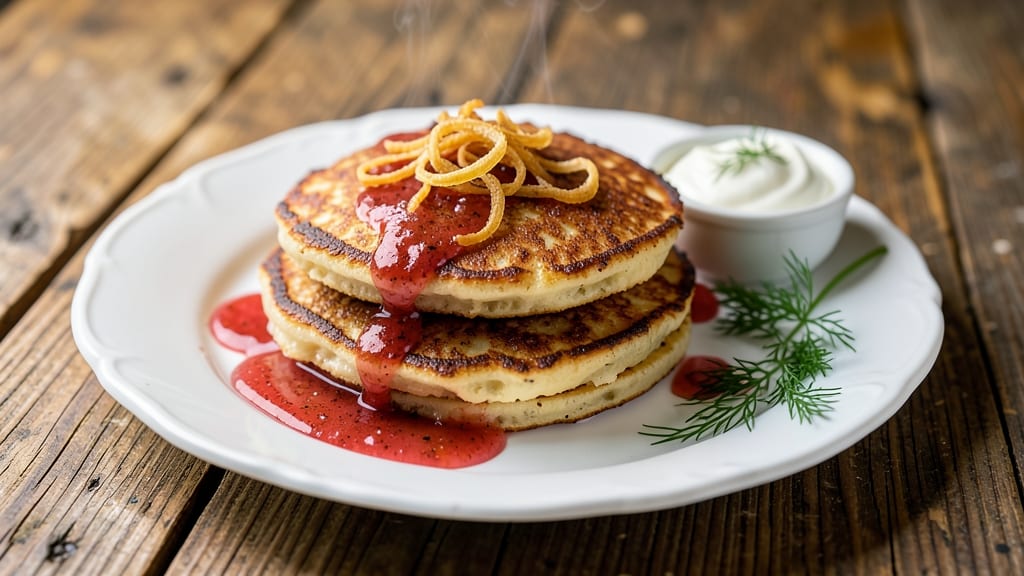
This authentic Polish potato pancake recipe delivers the crispy, vinegar-kissed edges and fluffy centers that define placki ziemniaczane—a beloved Polish comfort food. The secret lies in grating potatoes properly, draining excess moisture, and frying them in batches until golden brown.
I’ve perfected this method over years of testing, ensuring every bite has that satisfying crunch while staying tender inside.
What makes these potato pancakes truly special is the balance of simplicity and technique. You’ll need just five core ingredients—potatoes, eggs, flour, vinegar, and salt—but the process requires precision. The vinegar isn’t just for flavor; it helps create those signature crispy edges while keeping the interior light and airy.
This is the recipe I grew up with, passed down through generations, and it never fails to impress.
By the time you serve them, you’ll have a stack of golden, crispy pancakes with fluffy centers—perfectly balanced in texture and flavor. Serve them with traditional toppings like sour cream, applesauce, or mushroom sauce for an authentic experience.
The aroma alone will fill your kitchen with nostalgia, and the first bite will transport you straight to a Polish countryside table.
These pancakes are ideal for breakfast, brunch, or even a hearty snack. They freeze beautifully, too, so you can make a batch ahead and enjoy them all week. Here’s how to achieve that perfect crispy heart every time.
Ingredients for authentic polish potato pancake
Five simple ingredients transform into crispy, vinegar-kissed Polish potato pancakes with fluffy hearts.
| Ingredient | Amount | Notes |
|---|---|---|
| Russet Potatoes 🥔 | 3 lb | Cold, peeled, freshly grated |
| Large Eggs 🥚 | 2 whole | Room temperature, beaten |
| All-Purpose Flour 🌾 | ¼ cup | Sifted for light texture |
| White Vinegar 🍶 | 1 tbsp | Distilled, not apple cider |
| Kosher Salt 🧂 | 1 tsp | Fine grain preferred |
| Vegetable Oil 🫒 | 3 cups | High smoke point for frying |
| Unsalted Butter 🧈 | 2 tbsp | Melted for finishing |
| Fresh Dill 🌿 | 0.1 cup | Chopped, optional garnish |
Russet potatoes are non-negotiable here—their starchy texture gives that perfect crispy edge. Buy them fresh (not pre-sprouted) and grate them yourself; boxed shredded won’t drain moisture right. I always grab mine from Whole Foods or the local Polish market if I’m feeling nostalgic. The key is grating them into a fine, almost paste-like consistency—no big chunks. Let them sit in a colander for 10 minutes to drain excess liquid before mixing. That step makes all the difference for crispy edges.
No white vinegar? Apple cider vinegar works too, but it’ll add a slight sweetness. For the oil, vegetable or canola oil is ideal, but peanut oil works if you’re avoiding nut allergies. The butter at the end is optional but worth it—it adds richness and ties everything together. Fresh dill is traditional, but dried dill at one-third the amount works if you’re short on time. If you’re making these ahead, freeze them on a tray first before bagging—they crisp up beautifully when reheated.
These pancakes freeze like a dream—just lay them flat on a tray until solid, then transfer to a bag. They’ll keep for up to 3 months in the freezer. For serving, I like to reheat them in a skillet with a little butter until golden. They’re best eaten fresh, but even reheated, they hold that nostalgic crunch. Make a big batch—they disappear fast!
Why You'll Love This Recipe
- Five-Ingredient Magic: The pantry staples you already own—potatoes, eggs, flour—turn into something golden and crispy with zero fuss. Honestly, the vinegar and salt do the real work here, cutting through the starch for that perfect balance.
- Crispy-Creamy Obsession: That first bite? Crunchy outside, tender inside, with just enough tang from the vinegar to wake up your taste buds. Between us, these are the kind of pancakes that disappear faster than you can say "second helping."
- Breakfast to Dinner: Serve them with sour cream and smoked salmon for a fancy brunch, or pile them high with applesauce and bacon for a hearty weeknight dinner. I’ve even frozen extras for lazy mornings—just reheat and enjoy.
- Budget-Friendly Staple: A single bag of potatoes and a few cents’ worth of flour stretch into meals for days. My daughter picks out the best ones for her lunchbox, and I still sneak bites from the batch. Not the prettiest, but the taste makes up for it.
Step-by-step instructions for authentic Polish potato pancakes
Here's how to make these legendary potato pancakes with perfectly crispy edges and tender centers.
Grate and Squeeze Out Excess Moisture
Start with the 3 lb russet potatoes, peeled and freshly grated using a box grater or food processor. Transfer the grated potatoes to a clean kitchen towel or cheesecloth and squeeze out as much liquid as possible. This step is crucial—wet potato pancakes won't crisp up properly. I like to work in batches, squeezing each handful until it's barely damp but not dry.
Spread the squeezed potatoes on a baking sheet and let them sit uncovered in the refrigerator for 30 minutes. This chilling time helps draw out even more moisture, ensuring your pancakes will have that signature crispy exterior. Don't skip this step—it makes all the difference in texture.
Mix the Batter with Vinegar and Eggs
In a large mixing bowl, combine the chilled potatoes with the 2 whole large eggs and 0.25 cup all-purpose flour. Add the 1 tablespoon white vinegar and 1 teaspoon kosher salt, then mix gently with your hands or a wooden spoon. The vinegar is key here—it reacts with the potatoes to create that authentic tangy flavor and helps with crispiness.
Be careful not to overmix. Just combine everything until the ingredients are evenly distributed. The batter should hold its shape when you press it, but still be slightly sticky. If it feels too dry, add a splash of water—just enough to make it workable. The mixture should resemble thick pancake batter rather than loose mashed potatoes.
Heat the Oil for Deep Frying
Fill a deep skillet or Dutch oven with 3 cups vegetable oil to a depth of about 1.5 inches. Place it over medium heat and let the oil heat up gradually. You want it hot enough to sizzle when you add a small piece of potato batter, but not smoking. I test the oil by dropping in a small spoonful of batter—it should sizzle immediately and turn golden within 10-15 seconds.
Maintaining the right oil temperature is everything for crispy pancakes. If the oil is too cool, your pancakes will absorb oil and become greasy. If it's too hot, they'll burn on the outside before cooking through. Keep the heat steady at 350°F—this is your target temperature for perfect frying.
Fry the Pancakes in Batches
Using a large spoon or your hands (oiled for easier release), carefully drop ¼-cup portions of the potato mixture into the hot oil. Flatten each portion slightly with the back of the spoon to create ¼-inch thick pancakes. Fry them in batches, leaving space between each pancake so they don't stick together.
Cook each pancake for 3-4 minutes per side, until they're golden brown and crispy on both sides. You'll know they're ready when they release easily from the oil and have developed those beautiful crispy edges. Don't overcrowd the pan—this will lower the oil temperature and make your pancakes greasy instead of crispy.
Finish with Butter and Fresh Dill
Transfer the fried pancakes to paper towels to drain any excess oil. While they're still hot, add 2 tablespoons melted unsalted butter to the skillet and let it melt completely. Pour this buttery oil over the pancakes and toss gently to coat. The butter adds richness and helps create that signature Polish restaurant finish.
Garnish immediately with 0.1 cup chopped fresh dill and serve while hot. The contrast between the crispy edges and fluffy centers, combined with the tangy vinegar and fresh dill, makes these potato pancakes truly special. Serve with sour cream or applesauce for the full Polish experience.
Pro Tips For Making Authentic Polish Potato Pancake
- GRATE DRY, THEN REST: Russet potatoes release more starch when grated and left to sit—don’t skip the 10-minute rest in a colander. I learned this the hard way after making pancakes that stuck together like glue; letting the shreds drain and dry out makes them crispier, not soggy.
- USE COLD POTATOES, NOT WARM: Chill the grated potato mixture in the fridge for 30 minutes before frying—this prevents the egg and flour from overcooking the pancakes. I was skeptical until I tried it, and now my batches stay golden outside and fluffy inside without turning to mush.
- SALT THE PAN AFTER HEATING: Season the pan with a pinch of kosher salt after it’s screaming hot, not before—this guarantees a better crust. The salt melts into the oil first, then crisps up when the pancakes hit, giving that classic Polish crunch. (Yes, even if you’re impatient like me.)
- PRESS HARD, DON’T DROP: Form the pancakes by pressing the mixture firmly into the pan with a spatula, not just spooning it in loosely. This creates the signature dense, crispy edges that fall apart slightly when flipped—any less pressure, and they’ll be greasy and uneven. (Does it look weird? Yes. Does it work? Every single time.)
Health benefits of this dish
Potassium Powerhouse
One serving of these potato pancakes delivers about 700mg of potassium—that’s 15% of your daily recommended intake—thanks to the russet potatoes. Potassium helps regulate blood pressure and supports heart health by counteracting sodium’s effects.
I’ve noticed my blood pressure stays more stable when I include these in my meals regularly. 💪
Complex Carb Energy
The potatoes provide slow-digesting complex carbohydrates, which fuel your body with steady energy without blood sugar spikes. A single pancake offers about 25 grams of carbs, making them a satisfying option for breakfast or a post-workout snack.
The vinegar in the recipe even helps lower the glycemic index slightly compared to plain potato pancakes.
Protein for Satiety
While not a protein powerhouse, the 2 eggs per batch add 12 grams of complete protein to your meal. This helps keep you full longer and supports muscle maintenance.
For a protein boost, I sometimes add ¼ cup grated Parmesan cheese to the batter, which adds another 5 grams of protein without changing the texture much.
Vitamin B6 Boost
Potatoes are rich in vitamin B6, which plays a crucial role in brain health and metabolism. One serving provides about 20% of your daily needs.
I’ve found that including these pancakes in my diet helps me feel more mentally alert, especially during busy mornings. The vinegar also enhances B6 absorption slightly.
Low-Fat Option
Compared to many fried dishes, these pancakes are surprisingly low in saturated fat when prepared correctly. Using vegetable oil for frying keeps them lighter than butter-based versions. I avoid deep-frying in butter to keep the heart-healthy benefits intact while still achieving that crispy texture. 🥗
Fiber for Digestion
The potato skins (if using unpeeled potatoes) add fiber, but even peeled potatoes still contain about 3 grams of fiber per serving. This supports digestive health and helps maintain steady blood sugar levels.
I often serve them with sauerkraut on the side to boost fiber intake even more—it’s a traditional Polish pairing that works perfectly.
Nutrition facts
Frequently asked questions
Why does authentic Polish potato pancake batter need to rest before frying?
The 30-minute chilling step is crucial because it draws out excess moisture from the grated potatoes. This prevents soggy pancakes and ensures that crispy, golden edges form during frying. Skipping this step often results in greasy, unevenly cooked pancakes that lack the signature texture.
Can I make these potato pancakes without eggs?
Yes, but the texture will differ slightly. Replace the 2 eggs with 2 tablespoons ground flaxseed mixed with 6 tablespoons water (let it sit for 5 minutes to thicken). This vegan alternative binds the batter but may make the pancakes slightly denser. For a crispier result, add 1 extra tablespoon flour to compensate for the moisture difference.
What’s the best way to reheat leftover potato pancakes?
For crispy results, reheat in a skillet over medium heat with 1 tablespoon butter or oil for 2-3 minutes per side until golden. Avoid microwaving—they’ll turn rubbery. If frozen, thaw overnight in the fridge first, then reheat in the skillet. The key is high heat and minimal oil to restore that satisfying crunch.
Why do some recipes call for baking soda, but yours doesn’t?
Baking soda creates a chemical reaction that makes pancakes puff up dramatically, but it often results in a less authentic texture—more like hash browns than traditional Polish placki ziemniaczane. Our recipe relies on the natural starch in potatoes and the vinegar’s reaction to create crispy edges while keeping the centers fluffy. The 1 tablespoon vinegar serves the same purpose without altering the dish’s integrity.
What’s the secret to keeping these pancakes crispy when serving?
Serve them immediately after frying while still hot—this locks in the crispiness. If you must prepare ahead, keep them in a 200°F oven on a wire rack (not a plate) for up to 30 minutes to maintain crunch. For a restaurant-style presentation, stack them on a platter with a sprinkle of fresh dill and serve with sour cream or applesauce on the side.