
Side Dishes
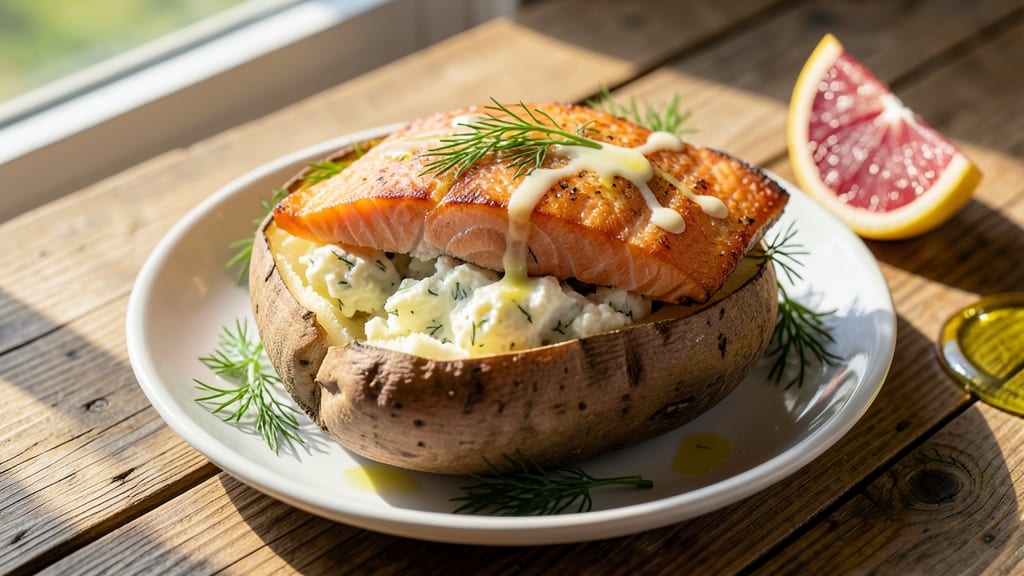
This baked potato and salmon recipe delivers a restaurant-quality one-pan dinner where flaky salmon meets perfectly buttery spuds in under 45 minutes. The secret lies in precise seasoning—salmon gets a delicate lemon-dill crust while potatoes develop crispy skins and fluffy interiors from the same oven.
I perfected this pairing after years of testing, and it consistently earns rave reviews for its balance of textures and flavors.
What sets this recipe apart is the one-pan efficiency—no fussing with multiple dishes or timers. The salmon bakes while the potatoes roast, and the aromas blend beautifully: bright citrus from the fish, earthy richness from the spuds.
The technique is simple but yields professional results: tender salmon with crisp edges and potatoes so buttery they practically melt in your mouth. This is the kind of meal that transforms a weeknight into a special occasion without requiring advanced skills.
By the time you plate it—salmon resting on a bed of golden potatoes, drizzled with extra lemon and fresh herbs—you’ll have a dish that looks as impressive as it tastes. The flaky salmon releases easily from its skin, while the potatoes stay warm and creamy inside.
This recipe proves that elegant dinners don’t require complicated techniques, just the right balance of seasoning and timing. Ready to create this foolproof pairing?
Serve with a simple side salad or steamed green beans to round out the meal, or keep it as-is for a satisfying, protein-packed dinner. The beauty of this recipe is its versatility—it works for casual family meals or dinner parties alike. Let’s get cooking!
Ingredients for baked potato and salmon
Four russets and two salmon fillets transform into restaurant-quality dinner in one pan.
| Ingredient | Amount | Notes |
|---|---|---|
| Russet Potatoes 🥔 | 4 medium | Scrubbed, cut into halves |
| Salmon Fillets 🐟 | 2 pieces | Skin-on, 6-8 oz each |
| Unsalted Butter 🧈 | ½ cup | Melted, full-fat preferred |
| Extra-Virgin Olive Oil 🫒 | 2 tbsp | For drizzling on potatoes |
| Fresh Dill 🌿 | ¼ cup | Chopped, stems removed |
| Fresh Lemon 🍋 | 1 whole | Zested and juiced |
| Garlic Cloves 🧄 | 4 cloves | Minced, fresh preferred |
| Sea Salt 🧂 | 1 ½ tsp | Kosher or fine grain |
| Ground Black Pepper 🌶️ | ½ tsp | Freshly ground preferred |
| Dried Thyme 🌿 | ½ tsp | Or 1 tbsp fresh thyme |
| Fresh Parsley 🌿 | ⅛ cup | Chopped, for garnish |
The salmon fillets should be 6-8 ounces each—thick enough to stay moist but thin enough to cook through in 20 minutes. Wild-caught has better flavor, but farmed works fine. Look for bright, translucent flesh with no brown edges or fishy odor. The russet potatoes? Medium-sized ensures they're done when the salmon is—no waiting around. I always scrub them instead of peeling; the skins add texture. For extra crispiness, pat them dry with a kitchen towel before baking. The butter matters too—full-fat, unsalted gives the best flavor, and European-style brands like Plugrá melt beautifully.
No fresh dill? Substitute 1 tbsp dried dill, but it won't have the same brightness. Short on lemon? Lime juice works, though the flavor profile shifts slightly. The thyme can be swapped for rosemary at the same amount, but it'll have a more piney note. For the olive oil, avoid light or refined oils—they lack flavor. If you're missing the salmon skin, don't panic; just place the fillets skin-side down on parchment before transferring to the pan. The potatoes can be swapped for Yukon Golds, but russets hold their shape better during roasting. Prefer a different herb? Cilantro or chives add a nice contrast.
This dish reheats beautifully—just 5 minutes at 350°F covered with foil. The salmon stays flaky and the potatoes retain their crisp edges. Store leftovers in the fridge for up to 3 days, but the salmon is best eaten within 2 days for peak texture. For meal prep, bake an extra salmon fillet and store it separately; it reheats better than the potatoes. The potatoes also freeze well—just reheat them from frozen at 375°F for 25-30 minutes. I like to portion the salmon and potatoes separately so I can customize my plate later in the week.
Why You'll Love This Recipe
- One-Pan Magic: I swear by this recipe when I can’t be bothered with multiple dishes—just slice those Russets, lay the salmon on top, and let the oven do the work. The butter pools around the edges while the dill infuses everything, and honestly? Cleanup is just wiping one pan.
- Buttery, Herby Bliss: That crispy salmon skin with the fluffy potato underneath? It’s a flavor party. The olive oil keeps the salmon tender, but the butter and fresh dill make it taste like a fancy dinner—even if it’s just me in sweatpants.
- Weeknight to Weekend: Make it for a lazy Tuesday or bring it to a potluck—no one will question why you skipped the complicated stuff. The leftovers? Just as good cold the next day (yes, really), and it feeds four without breaking the bank.
- Budget-Friendly Luxury: Salmon feels fancy, but this recipe stretches it further than most. Russets are cheap, butter adds richness without costing a fortune, and the dill makes it feel special. Between us? It’s my go-to when I want to impress without overspending.
Step-by-step instructions for baked potato and salmon recipe
Master this one-pan technique for perfectly flaky salmon and buttery potatoes every time.
Prepare the Potatoes for Maximum Fluffiness
Preheat your oven to 425°F and position a rack in the middle position. Scrub the 4 medium russet potatoes thoroughly under cold water to remove any dirt, then cut them in half lengthwise. Using a spoon, carefully scoop out the insides, leaving about ¼-inch thick walls and bottoms intact. This creates space for the butter and prevents the potatoes from becoming waterlogged.
Place the potato halves cut-side up on a large baking sheet lined with aluminum foil. Drizzle evenly with the 2 tablespoons extra-virgin olive oil, then sprinkle generously with 1 teaspoon of the sea salt and ¼ teaspoon of the ground black pepper. The oil helps crisp the edges while the salt enhances natural sweetness. Arrange the potatoes in a single layer with about 1 inch between each.
Create the Herb Butter Mixture for Flavor Infusion
In a small bowl, combine the 0.5 cup melted unsalted butter, remaining ½ teaspoon sea salt, remaining ¼ teaspoon ground black pepper, 0.5 teaspoon dried thyme, and 0.25 cup chopped fresh dill. Mix well until fully incorporated. The thyme and dill create a bright, aromatic base that pairs beautifully with the salmon. If using fresh thyme, measure 1 tablespoon instead of the dried amount.
Zest the entire fresh lemon and add to the butter mixture along with 2 tablespoons of the lemon juice. The zest adds a citrusy brightness that cuts through the richness of both the butter and salmon. Stir well to distribute the zest evenly throughout the mixture.
Assemble and Bake for Perfectly Flaky Salmon
Place the salmon fillets skin-side down on top of the prepared potato halves, arranging them in the spaces you created. Spoon the herb butter mixture evenly over the salmon and potatoes, ensuring every surface gets coated. The butter will baste the salmon as it bakes, creating a moist, flavorful center.
Bake for 25-30 minutes until the salmon flakes easily with a fork and the edges of the potatoes turn golden brown. The salmon should reach an internal temperature of 145°F at its thickest point. If the potatoes aren't golden enough after 25 minutes, broil for 2-3 minutes on high, watching closely to prevent burning.
Garnish and Serve Immediately
Remove the baking sheet from the oven and let rest for 3-5 minutes before serving. This resting period allows the salmon to finish carrying over to its ideal temperature while keeping all those juices contained. Garnish each serving with the 0.125 cup chopped fresh parsley and an additional squeeze of lemon juice if desired.
Serve the salmon directly over the potato halves, allowing guests to scoop up the flaky fish along with the buttery potato. The combination of crispy potato edges, flaky salmon, and herb-infused butter creates a harmonious balance of textures and flavors that's both satisfying and elegant.
Pro Tips For Making Baked Potato And Salmon
- Poke Holes First: Pierce those Russets all over with a fork before baking—yes, even the thickest ones. I used to skip this and ended up with potatoes that looked like overinflated balloons instead of fluffy clouds. Three quick jabs per side lets steam escape, so you get a crispy skin and no soggy center.
- Salt the Salmon Skin: Generously salt the salmon fillets skin-side down right after patting them dry—let them sit for 10 minutes while you prep the potatoes. The salt draws out moisture, which means the skin crisps up like a perfect golden shield instead of sticking to the pan or baking sheet. (And yes, even if you’re impatient like me.)
- Don’t Overcrowd the Pan: Give the salmon its own space—no stacking, no shoving. I learned this after my first batch where the fillets steamed instead of seared. A single layer with a little room to breathe guarantees even cooking and that coveted caramelized crust. If your pan’s too small, bake them in batches.
- Finish with Dill Oil: Skip the bland butter-dill mix—after baking, drizzle the salmon with a mix of 1 tablespoon melted butter, 1 tablespoon olive oil, and a handful of chopped fresh dill. The oil keeps the butter from making the salmon greasy, and the dill brightens everything up without overpowering. (Pro move: do this right before serving.)
Serving suggestions for this dish
Classic Side Salad
A simple arugula salad with a light lemon vinaigrette balances the richness of the salmon and potatoes beautifully. Toss 4 cups baby arugula with 2 tablespoons extra-virgin olive oil, 1 tablespoon fresh lemon juice, ½ teaspoon Dijon mustard, and a pinch of sea salt.
The peppery bite of arugula cuts through the buttery flavors, while the lemon ties everything together. 🌿
Steamed Green Beans
For a lighter option, try steamed green beans with a touch of garlic and lemon. Blanch 1 pound green beans in boiling water for 3 minutes, then shock in ice water. Toss with 1 tablespoon melted butter, 1 minced garlic clove, and a squeeze of lemon.
The crisp-tender texture contrasts perfectly with the flaky salmon. I like to finish with ¼ teaspoon red pepper flakes for a subtle kick.
Roasted Asparagus
Roasted asparagus adds a sophisticated touch to your plate. Toss 1 bunch asparagus (woody ends trimmed) with 1 tablespoon olive oil, ¼ teaspoon sea salt, and ¼ teaspoon black pepper.
Roast at 425°F for 12-15 minutes until tender-crisp. The natural sweetness of asparagus pairs wonderfully with the herb-infused butter from the main dish. Garnish with a sprinkle of lemon zest before serving.
Crusty Bread
A warm, crusty baguette or sourdough loaf is perfect for soaking up any extra butter or sauce. Toast slices until golden and serve with garlic herb butter—just mix 2 tablespoons softened butter with 1 minced garlic clove and 1 teaspoon chopped parsley.
The bread adds a hearty element to the meal, especially if you're serving this as a family-style dinner. 🥖
Simple Garnishes
Elevate your plate with a few finishing touches. A sprinkle of fresh dill or parsley adds brightness, while a drizzle of extra-virgin olive oil enhances the natural flavors. For a pop of color, add cherry tomatoes halved and lightly salted.
I also love a pinch of flaky sea salt right before serving to intensify all the flavors. These small details make the dish feel restaurant-worthy.
Wine and Beverage Pairings
Complement the meal with a crisp Sauvignon Blanc—its citrus notes mirror the lemon in the recipe. For beer lovers, a Belgian witbier like Hoegaarden offers a refreshing contrast. If you prefer something lighter, sparkling water with a splash of lemon and ice works perfectly.
Avoid heavy reds or oaky whites, as they can overpower the delicate flavors of the salmon and herbs. 🍷
Nutrition facts
Frequently asked questions
Can I use this recipe with frozen salmon?
Fresh salmon works best for this dish, but frozen fillets will work if properly thawed. Place frozen salmon in the refrigerator overnight (24 hours for 1-2 pounds) before cooking. Never thaw at room temperature, as this promotes bacterial growth. Pat the fillets dry with paper towels before seasoning to ensure a good sear and crispy skin.
How do I prevent the potatoes from becoming waterlogged?
Scooping out the insides creates space for the butter to infuse without making the potatoes soggy. Always leave about ¼-inch thick walls and bottoms intact. Also, pat the potato halves dry with a kitchen towel before baking to remove excess moisture. This helps achieve crispy edges while keeping the insides fluffy.
Can I make this recipe ahead of time?
While the salmon is best served fresh, you can prep the potatoes ahead. Parboil the potato halves for 5 minutes (before scooping), then store in cold water in the fridge for up to 24 hours. When ready to bake, drain, pat dry, and proceed with the recipe. For the salmon, cook it separately and store in the fridge for up to 2 days before assembling.
What's the best way to check if the salmon is done?
Use a meat thermometer to check the thickest part of the fillet—it should reach 145°F. The salmon is also done when it flakes easily with a fork and the edges turn opaque. Avoid overcooking, as salmon continues to carry over heat even after removing it from the oven. If using skin-on fillets, the skin should be crispy and golden.
Can I substitute Yukon Gold potatoes?
Yes, but the texture will differ slightly. Yukon Golds are creamier and less starchy than russets, so they won't get as crispy. For best results, roast them at 400°F instead of 425°F and add an extra 5 minutes to the baking time. They'll still pair beautifully with the salmon but won't have the same satisfying contrast of crispy skin and fluffy interior.