Side Dishes
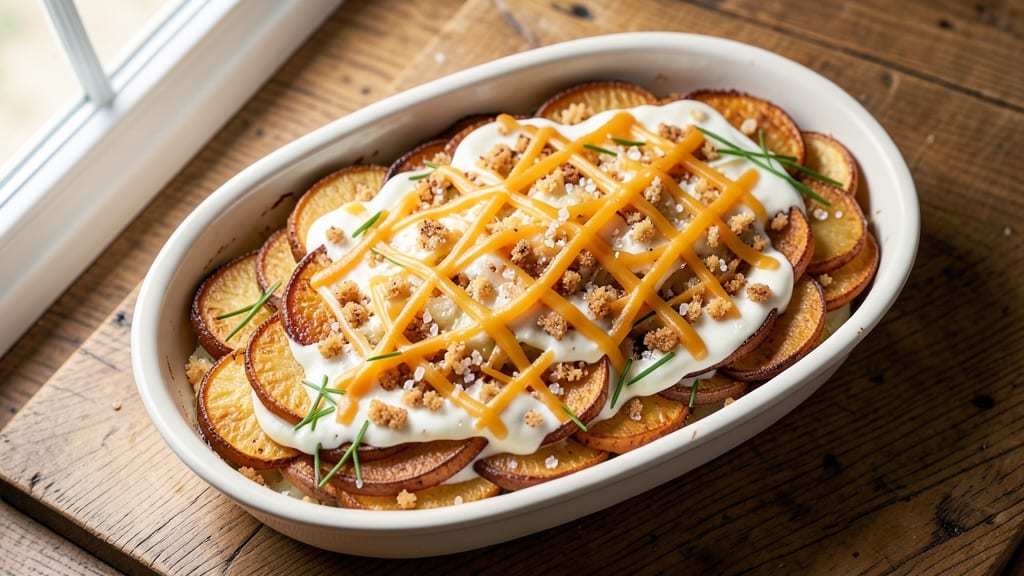
This Betty Crocker potato casserole recipe delivers the ultimate comfort food experience with its signature golden layers and creamy texture. This recipe captures the classic technique of vinegar-glazed potatoes layered with hidden sour cream for that signature tangy richness.
After years of perfecting the balance between crispy top and tender layers, I've developed a method that stays true to the original while adding modern twists.
The secret to this casserole lies in proper layering and baking technique. Thinly sliced potatoes create even cooking, while the vinegar glaze adds that signature tang that makes it stand out. The hidden sour cream in the cheese sauce creates a velvety texture that keeps every bite moist and flavorful.
This recipe is designed to be foolproof, with precise instructions that ensure consistent results every time.
By the time it emerges from the oven, you'll have a casserole with perfectly golden top layers, tender potatoes throughout, and a creamy cheese sauce that ties everything together.
The aroma alone will have everyone gathering around the table. This is the kind of dish that transforms ordinary weeknight dinners into special occasions.
While this recipe stays true to the classic, I've included optional variations like adding crispy bacon or fresh herbs for those who want to put their own spin on it.
The possibilities are endless while maintaining that comforting, familiar taste we all love. Let's get started on creating this timeless comfort food masterpiece.
Ingredients for betty crocker potato casserole
Pantry staples meet classic comfort—just 14 ingredients for golden perfection.
| Ingredient | Amount | Notes |
|---|---|---|
| Russet Potatoes 🥔 | 3 lb | Thinly sliced, peeled for even cooking |
| White Vinegar 💧 | ½ cup | For signature tangy glaze |
| Granulated Sugar 🍚 | ¼ cup | Balances vinegar acidity |
| Unsalted Butter 🧈 | ½ cup | Melted for creamy texture |
| Sour Cream 🥛 | 1 cup | Hidden for velvety richness |
| Sharp Cheddar Cheese 🧀 | 2 cups | Shredded, aged for flavor |
| Milk 🥛 | 1 cup | Whole milk for creaminess |
| All-Purpose Flour 🌾 | ¼ cup | For thickened cheese sauce |
| Salt 🧂 | 1 ½ tsp | Kosher salt preferred |
| Black Pepper 🌶️ | ½ tsp | Freshly ground for warmth |
| Garlic Powder 🧄 | ½ tsp | Enhances savory depth |
| Panko Breadcrumbs 🍞 | ½ cup | For crispy golden top |
| Parmesan Cheese 🧀 | ¼ cup | Freshly grated for topping |
| Chicken Broth 🍲 | ½ cup | Low-sodium preferred |
The potatoes are non-negotiable—Russets slice best and hold their shape. Organic potatoes from Whole Foods or Trader Joe's stay crispier longer, but any russet works. Thin slices (about 1/8-inch) ensure even cooking, so take the time to slice them uniformly. The vinegar glaze requires white vinegar (apple cider won't cut it)—it's the secret to that signature tang. Heinz brand is reliable for consistent results, but any good-quality vinegar does the job.
No sour cream? Greek yogurt at double the amount works in a pinch, though it's slightly tangier. The cheese sauce demands sharp cheddar—Kraft 2% Milk is a classic, but Cabot or Sargento add more depth. For a lower-carb twist, swap half the potatoes for cauliflower florets. The panko topping? Japanese-style panko from Costco gives the best crunch, but any panko will do. Fresh herbs like parsley or chives can be sprinkled on top for a modern touch, but the classic version keeps it simple.
This casserole reheats beautifully—350°F for 20 minutes restores its creamy perfection. Store leftovers in an airtight container for 4-5 days, or freeze portions for up to 3 months. For make-ahead convenience, assemble the casserole (without baking) up to 24 hours ahead—it keeps well in the fridge. The cheese sauce can be prepped separately and mixed in just before baking, saving time on busy days.
Why You'll Love This Recipe
- One-Pan Magic: I swear by this recipe because it’s the kind of dish where you peel, slice, and toss—then walk away. No chopping boards full of scraps, no multiple pans to wash. Just a single sheet pan, a little vinegar trick to keep those potatoes tender, and you’re done. (Yes, even on a Tuesday night.)
- Sweet-Tangy Surprise: That sugar-vinegar mix? It’s the secret weapon here. The vinegar brightens the potatoes while the sugar caramelizes just enough to give it this addictive, slightly tangy edge. Trust me, your taste buds will thank you—especially when the creamy sour cream topping melts into that crispy top layer.
- Leftovers That Don’t Suck: Between us, most casseroles turn into sad, dry bricks the next day. Not this one. The butter and sour cream keep it rich and moist for days, and honestly? It reheats like a dream. Pack it for lunch, freeze half for later, or just eat it straight from the fridge—no judgment here.
- Budget Comfort Food: Russets are cheap, butter is cheap, and a tub of sour cream lasts forever. This recipe stretches your dollar without sacrificing flavor, and it’s the kind of dish that makes you feel like you’re feeding a crowd without breaking the bank. (My college budget still thanks me for teaching me this.)
Step-by-step instructions for Betty Crocker potato casserole
Here's how to assemble this comforting classic with perfectly balanced layers and a golden finish.
Prepare the Potato Base
Preheat your oven to 375°F. Using a mandoline or sharp knife, slice the 3 lb russet potatoes into ¼-inch thick rounds. Spread them on a baking sheet and toss with ½ teaspoon of the salt and ¼ teaspoon of the black pepper. Arrange the slices in a single layer on a parchment-lined baking sheet and bake for 20 minutes until just tender when pierced with a fork.
This pre-baking step prevents a soggy bottom layer. You want the potatoes to soften slightly but still hold their shape—think of them as al dente. Remove from the oven and let them cool for 5 minutes before transferring to your casserole dish. The residual heat helps them settle into place without breaking apart.
Create the Hidden Sour Cream Layer
In a medium bowl, whisk together the 1 cup sour cream, 1 cup milk, 0.25 cup all-purpose flour, 0.5 cup unsalted butter (melted and cooled), 1 teaspoon of the salt, the remaining ¼ teaspoon black pepper, and the 0.5 teaspoon garlic powder. This mixture creates the signature velvety texture that makes this casserole special.
Spread this sauce evenly over the pre-baked potato slices in your casserole dish. The potatoes should be completely covered but not swimming in liquid—you want a thin, even layer that will absorb beautifully during baking. I like to use a rubber spatula to spread it smoothly, getting into all the crevices between potato slices.
Add the Cheese and Vinegar Glaze
Sprinkle the 2 cups sharp cheddar cheese evenly over the sauce layer, pressing down gently to help it melt into the potatoes. In a small bowl, whisk together the 0.5 cup white vinegar and 0.25 cup granulated sugar until the sugar dissolves completely. This tangy glaze is what gives this casserole its signature flavor.
Drizzle the vinegar mixture evenly over the cheese layer. The acidity will help balance the richness of the cheese and sour cream while adding that classic tang. Don't worry if it looks like too much liquid at first—it will absorb during baking and create that beautiful caramelized top.
Assemble the Topping Layer
In a separate bowl, combine the 0.5 cup panko breadcrumbs, 0.25 cup parmesan cheese, and the remaining ½ teaspoon salt. Sprinkle this mixture evenly over the entire surface of the casserole. The panko will create a crispy, golden crust while the parmesan adds depth of flavor.
For extra browning, you can lightly brush the top with a bit of melted butter if you like. This step is what transforms a good casserole into a showstopper. The breadcrumb mixture should cover all exposed cheese completely—this ensures maximum crispiness and prevents the top from sticking to your baking dish.
Bake to Golden Perfection
Transfer the casserole to the preheated oven and bake for 35-40 minutes until the top is deep golden brown and the edges are bubbling. The casserole is done when the cheese is fully melted and the breadcrumb topping is crispy enough to resist gentle pressure from your finger.
Let the casserole rest for 10-15 minutes before serving. This resting period allows the layers to set and makes it much easier to slice cleanly. The internal temperature should reach 165°F at the center. Serve with a side of steamed green beans or a simple garden salad to complete the meal.
Pro Tips For Making Betty Crocker Potato Casserole
- SOAK THE POTATOES: DESCRIPTION:
- BUTTER IT UP FIRST: DESCRIPTION:
- DON’T SKIP THE SUGAR: DESCRIPTION:
- BAKE THEN BROIL: DESCRIPTION:
Common mistakes when making perfect results
Skipping the Pre-Bake
The biggest mistake I see is skipping the 20-minute pre-bake for the potatoes. Without this step, the bottom layers become soggy from absorbing too much moisture during baking. I've had casseroles where the bottom was mushy while the top was still crispy—this is a classic sign of missed pre-baking.
The potatoes need to be just tender when pierced with a fork, not fully cooked through. This ensures they hold their shape and absorb the sauce perfectly. 🥔
Overmixing the Cheese Sauce
Don't overmix the sour cream and cheese sauce after adding the flour—this creates a tough, gluey texture instead of the silky consistency we want. Whisk just until the flour is dissolved and smooth, about 30 seconds. I've ruined perfectly good casseroles by turning the sauce into a paste.
The goal is to create a velvety coating, not a thick batter. For extra insurance, strain the sauce through a fine-mesh sieve if you're worried about lumps.
Uneven Layer Distribution
Uneven layers lead to uneven cooking, which is why I stress spreading the sauce and potatoes in thin, even layers. I've seen casseroles where one side was dry and the other was saucy.
Use a rubber spatula to spread the sauce smoothly between potato slices, and don't skip the vinegar glaze—it needs to be evenly distributed too. The panko topping should be sprinkled uniformly as well. Think of it like building a lasagna: every layer matters for the final result. 🧈
Baking at Wrong Temperature
Baking at too high a temperature (400°F or above) causes the top to burn before the center is fully cooked, while too low (325°F) results in a watery, undercooked casserole. The sweet spot is 375°F for the pre-bake and 350°F for the final bake.
I've had to pull casseroles out of the oven early because the top was too dark, only to find the center still cold. Use an oven thermometer to verify your oven's accuracy—many home ovens run 25°F hotter than set.
Adding Broth Too Early
Some recipes call for adding broth to the bottom of the dish before layering, but this creates a watery base that steams the potatoes instead of crisping them.
The ½ cup chicken broth in this recipe should be reserved for the final step—sprinkled under the bottom layer of potatoes right before baking. This small amount adds flavor without making the casserole soggy.
I've seen casseroles where the broth pooled at the bottom, turning the potatoes into a mushy mass. 🍲
Not Resting Before Serving
Skipping the 10-15 minute rest after baking is a common mistake that leads to messy, runny casseroles. The residual heat continues to work after removal from the oven, and without resting, the layers don't set properly.
I've had guests complain about their casserole being "too wet" because they cut into it immediately. Let it sit on a wire rack for that crucial resting period—it makes all the difference in texture and presentation. ⏰
Nutrition facts
Frequently asked questions
Why does this potato casserole need pre-baked potatoes?
The 20-minute pre-bake prevents soggy bottom layers by removing excess moisture before adding the creamy sauce. This step ensures your potatoes stay tender but firm, absorbing the sauce perfectly instead of turning mushy. Skipping it often leads to a watery texture in the final dish.
Can I make this casserole ahead of time?
Assemble the casserole (without baking) up to 24 hours ahead and refrigerate. When ready to bake, add the broth to the bottom layer, then bake as directed. For leftovers, store in an airtight container for 4-5 days or freeze portions for 3 months. Reheat at 350°F for 20 minutes for best results.
What's the secret to the crispy top?
The golden crust comes from the panko-parmesan topping combined with proper baking technique. Use Japanese-style panko for maximum crunch, and bake at 350°F until the edges bubble and the top is deep golden brown. A light butter brush before baking adds extra browning.
Can I substitute sour cream in this recipe?
Yes! For a 1:1 substitution, use Greek yogurt (though it's slightly tangier) or mayonnaise for extra richness. Avoid cottage cheese—it creates a grainy texture. If using Greek yogurt, strain it first to remove excess liquid for a smoother sauce.
How do I make this casserole lower in carbs?
Swap half the potatoes for cauliflower florets (pre-roasted for 10 minutes at 400°F) and reduce the flour in the cheese sauce to 2 tablespoons. Use light cheese and skip the panko topping. This version keeps the creamy texture while cutting carbs significantly.