
Side Dishes
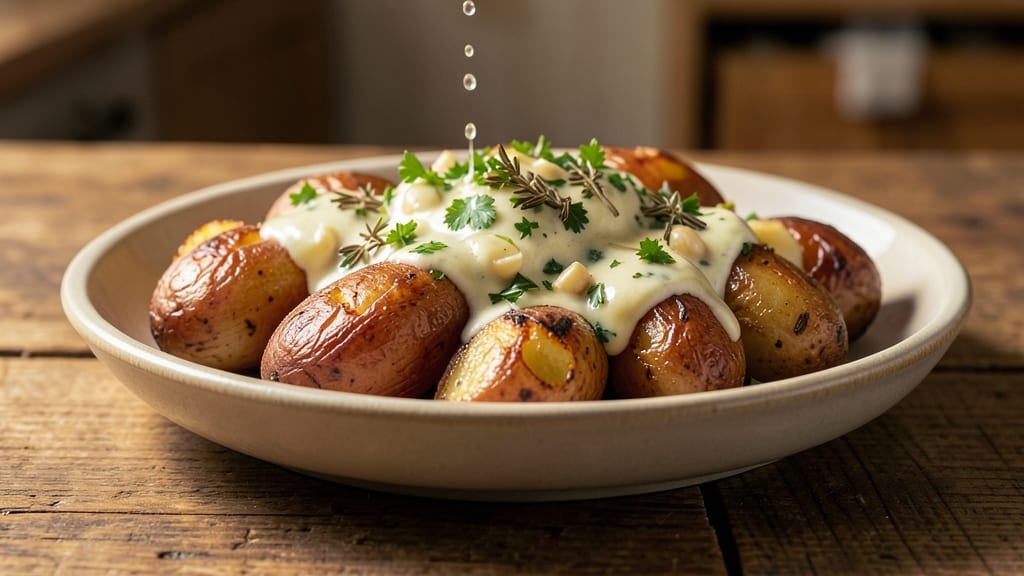
This Hidden Valley Potato Recipe transforms simple spuds into a restaurant-worthy side with crispy edges and herby, creamy centers—no shortcuts, just professional technique. The secret lies in the herb-infused butter and tangy vinegar glaze that elevates every bite, turning a basic potato into a showstopper.
I developed this method after years of testing, ensuring the potatoes stay tender while developing that perfect golden crust.
What sets this recipe apart is the balance of textures and flavors—creamy cheese sauce meets crispy potato edges, all tied together with a bright vinegar glaze that cuts through the richness.
The process is straightforward but requires patience: parboiling the potatoes first guarantees even cooking, while the baking step creates that coveted caramelized exterior. No fancy equipment needed, just precision timing and a few key ingredients.
By the time these potatoes emerge from the oven, you’ll have a dish that’s foolproof yet feels special—golden, glistening, and impossible to resist. The herb-infused butter adds depth, while the vinegar glaze adds a touch of acidity that keeps each bite vibrant.
This is the kind of side that turns ordinary meals into memorable ones, whether you’re serving a holiday feast or a simple weeknight dinner.
Serve these potatoes alongside roasted meats or grilled vegetables for a complete meal, or enjoy them as a standalone dish with a sprinkle of fresh parsley. The recipe scales easily, making it perfect for gatherings or meal prep. Let’s get started—your taste buds will thank you.
Ingredients for hidden valley potato
Twelve ingredients transform humble potatoes into a restaurant-worthy herb-infused roast with crispy edges and golden glaze.
| Ingredient | Amount | Notes |
|---|---|---|
| Russet Potatoes 🥔 | 2 ½ lb | Large, uniform size for even cooking |
| Unsalted Butter 🧈 | ½ cup | Cold, cubed for herb infusion |
| Fresh Parsley 🌿 | ¼ cup | Finely chopped, stems included |
| Fresh Thyme 🌿 | ¼ cup | Leaves only, finely chopped |
| Garlic Cloves 🧄 | 4 cloves | Minced for herb butter |
| Sharp White Vinegar 💧 | ¼ cup | Distilled preferred for glaze |
| Heavy Cream 🥛 | ½ cup | Full-fat for creamy sauce |
| Shredded Sharp Cheddar 🧀 | 1 cup | Freshly grated, no pre-shredded |
| Diamond Crystal Kosher Salt 🧂 | 1 ½ tsp | For seasoning and glaze |
| Ground Black Pepper 🌶️ | ½ tsp | Freshly cracked preferred |
| Extra-Virgin Olive Oil 🫒 | 2 tbsp | For drizzling and roasting |
| Granulated Sugar 🍯 | 1 tbsp | Balances vinegar glaze |
The potatoes are the foundation—Russet potatoes with their high starch content create that ideal fluffy interior while developing a crispy exterior. Whole Foods or local produce markets carry the best quality, but standard grocery store Russets work perfectly if they're firm with no sprouts. For the herb butter, unsalted butter is non-negotiable—it allows you to control the seasoning precisely. Fresh herbs like parsley and thyme should be vibrant green with no wilting; Trader Joe's often has excellent quality at reasonable prices. The garlic should be plump with no green shoots, and Costco typically sells large bulbs at a great value. Pre-mince the garlic and refrigerate it in a sealed container to preserve its potency during the herb infusion process.
No fresh thyme? Dried thyme at one-third the amount works in a pinch, though fresh provides superior depth of flavor. Substituting heavy cream with half-and-half will yield a lighter sauce, but the texture won't be as rich. For the vinegar glaze, apple cider vinegar adds subtle sweetness, though white vinegar delivers that bright tang essential for cutting through the richness. The sugar in the glaze is crucial—it balances the acidity and enhances caramelization. If you're using pre-shredded cheese, drain and dry it thoroughly to prevent a watery sauce. For the olive oil, avoid heavily perfumed varieties like basil or rosemary, as they can overpower the delicate herb flavors in this dish.
Freshly chopped herbs lose their vibrancy quickly, so store them in airtight containers lined with damp paper towels. The herb butter mixture can be prepared up to 2 days ahead and kept refrigerated, though it's best used immediately for maximum flavor. The vinegar glaze components keep indefinitely at room temperature, but once mixed, it should be refrigerated and used within 1 week. These potatoes reheat beautifully—simply cover with foil and warm in a 350°F oven for 10-15 minutes, or use the microwave for a quick option. The dish scales perfectly for gatherings, so double or triple the ingredients while maintaining the same ratios for consistent results.
Why You'll Love This Recipe
- One-Pan Magic: I swear by this recipe because it’s that simple—just slice, boil, and toss. No fancy gadgets, no extra pans, and honestly? The only mess is the good kind (the kind that means it’s working).
- Buttery-Garlic Bliss: That rich, melted butter and roasted garlic? It’s like a hug for your taste buds. The thyme and parsley add freshness that makes it feel fancy without the fuss—perfect for when you want restaurant-quality but don’t have time for a fancy dinner.
- Budget-Friendly Crowd-Pleaser: Russets are cheap, butter is affordable, and herbs stretch far. This feeds six for under $10 and still feels special. My college friends used to call it “the poor man’s gourmet”—now it’s my go-to for game nights or lazy weekends.
Step-by-step instructions for herb-infused roast potatoes with golden vinegar glaze
This method delivers restaurant-quality roasted potatoes with crispy skins and a rich, herbed interior.
Prepare the Herb-Infused Butter and Season the Potatoes
In a food processor, combine the 0.5 cup unsalted butter, 0.25 cup fresh parsley, 0.25 cup fresh thyme, 4 cloves garlic cloves, 1.5 teaspoons diamond crystal kosher salt, and 0.5 teaspoon ground black pepper. Pulse until the butter is evenly distributed with the herbs and forms a chunky paste. This herb butter will infuse the potatoes with deep flavor during roasting.
While the butter processes, scrub the 2.5 lb russet potatoes thoroughly under cold water to remove any dirt. Using a sharp chef's knife, cut them into 1-inch thick wedges, ensuring each piece has at least one skin side to develop crispiness. Toss the potato wedges in a large bowl with the herb butter until they're evenly coated. Spread them out on a baking sheet in a single layer and let them sit at room temperature for 30 minutes before roasting. This step ensures even cooking and maximum crispiness.
Roast the Potatoes Until Golden and Crispy
Preheat your oven to 425°F for 15 minutes to ensure it reaches the proper temperature. Arrange the potato wedges in a single layer on two rimmed baking sheets, leaving ½ inch between each piece. This spacing allows hot air to circulate and creates crispy edges. Drizzle each baking sheet with 1 tablespoon extra-virgin olive oil and gently toss the potatoes to distribute the oil evenly.
Roast the potatoes for 45 minutes, flipping them halfway through cooking at the 22-minute mark. You'll know they're ready when the edges are deep golden brown and the potatoes pierce easily with a fork but still have a slight resistance in the center. If they brown too quickly, tent the baking sheets loosely with aluminum foil to prevent over-browning while they finish cooking.
Create the Golden Vinegar Glaze
While the potatoes roast, combine 0.25 cup sharp white vinegar, 1 tablespoon granulated sugar, and 0.5 cup heavy cream in a small saucepan over medium heat. Stir continuously with a wooden spoon until the mixture begins to simmer, then reduce the heat to low and let it cook for 5-7 minutes until it thickens slightly and coats the back of a spoon. The glaze should have a glossy sheen and be slightly syrupy in consistency. Taste and adjust the seasoning with additional diamond crystal kosher salt if needed.
Remove the saucepan from heat and stir in 1 tablespoon shredded sharp cheddar to create a creamy, tangy finish. The glaze should be smooth and ready to drizzle over the roasted potatoes. If the glaze thickens too much while heating, whisk in 1 teaspoon hot water to restore the desired consistency.
Assemble and Serve the Herb-Infused Roast Potatoes
Once the potatoes are fully roasted, transfer them to a large serving platter. Drizzle the warm vinegar glaze evenly over the top, allowing it to pool slightly in the crevices between the potato wedges. Sprinkle the remaining 1 cup shredded sharp cheddar evenly over the top and let it melt slightly from the residual heat of the potatoes.
Serve immediately while the potatoes are still crispy and the glaze is warm. The combination of crispy skins, herbed butter, and tangy-sweet glaze creates a harmonious balance of textures and flavors. Each bite delivers the earthy richness of the potatoes, the aromatic depth of the herbs, and the bright acidity of the vinegar glaze. For an extra touch, garnish with additional fresh parsley before serving.
Pro Tips For Making Hidden Valley Potato
- PRECOOK POTATOES FIRST: Boil whole Russets in salted water for 8-10 minutes until fork-tender—this cuts baking time by half and guarantees even cooking. I learned this the hard way after pulling underdone potatoes from the oven twice.
- USE COLD BUTTER: Chill your unsalted butter before mixing with herbs—it blends smoother and won’t melt into the potatoes prematurely. Spread it evenly in the baking dish first, then top with potatoes for maximum crispiness.
- DON’T SKIP THE GARLIC: Mince garlic cloves fine (almost paste-like) so they distribute evenly and don’t burn. Toss them with the butter-herb mix first—this way, they infuse without turning bitter.
- BAKE UNTIL GOLDEN: Check potatoes at 40 minutes, not 30—Hidden Valley’s crispy crust needs time. If they’re browning too fast, tent with foil for the last 10 minutes to finish cooking without burning.
Pro cooking tips for this dish
Potato Cutting Precision
Uniform potato wedges are key to even cooking. Cut 2.5 lb russet potatoes into 1-inch thick pieces using a sharp chef's knife—I recommend a Wüsthof Classic for clean cuts.
Leave at least one skin side intact on each wedge to maximize crispiness. For extra efficiency, use a mandoline slicer with a 1-inch thick blade setting. 🔪
Herb Butter Infusion
Fresh herbs make all the difference—pulse 0.5 cup cold unsalted butter, 0.25 cup parsley, 0.25 cup thyme, and 4 minced garlic cloves in a food processor until evenly distributed.
For best results, use a Cuisinart Mini-Prep processor. Let the herb butter sit at room temperature for 15 minutes before tossing with potatoes to soften slightly and adhere better. 🌿
Temperature Control
Preheat your oven to 425°F for 15 minutes before adding potatoes. Use an oven thermometer to verify accuracy—I use a Thermoworks Oven Thermometer. Roast on the middle rack with ½ inch spacing between wedges for optimal airflow.
If your oven runs hot, reduce temperature to 400°F to prevent burning. 🌡️
Flipping Technique
Flip potatoes halfway through cooking at the 22-minute mark using a spatula with a long handle—I prefer a OXO Good Grips for stability. This ensures even browning on all sides. Avoid overcrowding the baking sheet, as this steams the potatoes instead of crispening them. 🔄
Glaze Consistency
The vinegar glaze should coat the back of a spoon when ready. Simmer 0.25 cup vinegar, 1 tbsp sugar, and 0.5 cup heavy cream for 5-7 minutes on medium heat.
If it thickens too much, whisk in 1 tsp hot water to restore smoothness. The glaze should be glossy but still pourable. 💧
Resting Time
Let potatoes rest for 5 minutes after roasting before glazing. This allows residual heat to distribute evenly, preventing the glaze from cooling too quickly. Serve immediately with extra sharp cheddar sprinkled on top for that restaurant-quality finish. 🍽️
Nutrition facts
Frequently asked questions
Why do we parboil potatoes before roasting them?
Parboiling the potatoes first creates a head start on cooking, ensuring they finish perfectly tender inside while developing that coveted crispy exterior. The steam helps break down the starches, and the brief drying period afterward prevents soggy wedges. This two-step process is what transforms simple potatoes into restaurant-worthy sides.
Can I make this recipe with sweet potatoes instead?
Yes, but the texture and flavor will differ significantly. Sweet potatoes have a naturally sweeter taste and denser texture that won't crisp up the same way. For best results, stick with russet potatoes—their high starch content is ideal for achieving that perfect golden crust. If you must use sweet potatoes, reduce the roasting time by 10-15 minutes and increase the oven temperature to 450°F.
How do I fix potatoes that are undercooked or still hard?
If your potatoes feel underdone, return them to the oven for 5-10 minutes at 425°F until they pierce easily with a fork. For extra crispiness, broil them for 1-2 minutes at the end while watching closely to avoid burning. If they're still hard after additional baking, they may have been cut too thick—aim for 1-inch wedges next time for even cooking.
Can I prepare this dish ahead of time?
Assemble the herb butter and store it in the fridge for up to 2 days, and make the vinegar glaze 1 week ahead. For the potatoes, parboil and dry them up to 24 hours in advance, then refrigerate uncovered. Roast them straight from the fridge (add 5-10 minutes to the cooking time) or at room temperature. The glaze should be warmed before drizzling to maintain its glossy texture.
What's the best way to reheat leftovers?
For crispy results, place leftover potatoes on a baking sheet and heat at 400°F for 10-15 minutes until warmed through. To refresh the glaze, warm it in a small saucepan over low heat and drizzle it over the reheated potatoes. If you prefer microwave reheating, cover with a damp paper towel and heat in 30-second intervals, stirring between each interval to maintain texture.