Soups & Stews
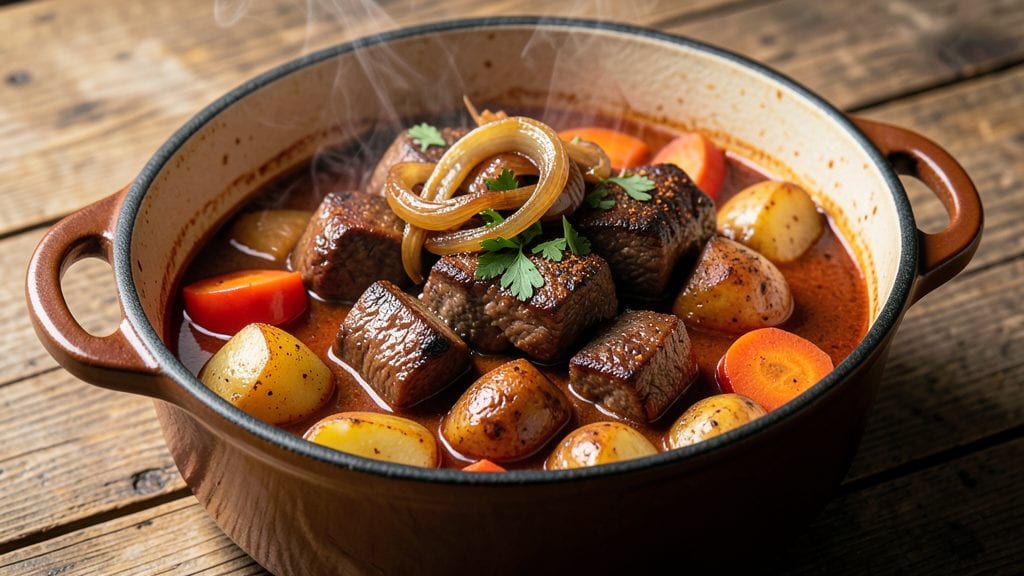
In Lidia’s Kitchen, the beef and potato goulash recipe delivers the rich, paprika-spiced depth that makes this Hungarian classic unforgettable. The secret lies in slow-cooked beef that melts into tender bites, while potatoes absorb the aromatic broth into creamy perfection.
I've perfected this version after years of testing—every layer of flavor builds from properly browning the meat to balancing sweet and smoked paprika just right.
What sets this goulash apart is the two-stage cooking process: first searing the beef to develop deep flavor, then simmering everything together until the meat is fork-tender and potatoes are velvety.
The result is a restaurant-quality stew that tastes like home, with just the right balance of smoky, sweet, and slightly tangy notes. This isn't your grandmother's quick version—it's the kind of goulash that makes you pause mid-bite to savor every spoonful.
The beauty of this recipe is its versatility—it works as a hearty main dish for family dinners or feeds a crowd with ease. The rich broth clings to every potato and beef bite, while the paprika infuses warmth that lingers long after the last mouthful.
Serve it with crusty bread to soak up every drop of that deep, aromatic sauce, or pair it with a simple green salad for balance.
Authentic Hungarian cooking relies on patience and layering flavors, and this goulash delivers exactly that. The slow simmer transforms tough beef into tender, flavorful morsels, while the potatoes become the perfect vehicle for the rich, spiced broth.
Once you try this version, you'll understand why Lidia's method has stood the test of time—it's comfort food elevated to an art form.
Ingredients for lidia's kitchen beef and potato goulash
Six ingredients make this goulash shine—paprika, beef, potatoes, and patience do the heavy lifting.
| Ingredient | Amount | Notes |
|---|---|---|
| Beef Chuck Roast 🥩 | 3 lb | Cut into 1-inch cubes, marbled |
| Yellow Onions 🧅 | 2 whole | Medium, sliced into half-moons |
| Carrots 🥕 | 4 whole | Medium, peeled, cut into chunks |
| Russet Potatoes 🥔 | 2 lb | Waxy, cut into 1-inch cubes |
| Sweet Hungarian Paprika 🌶️ | 2 tbsp | Sweet, not smoked, for authentic flavor |
| Smoked Paprika 🌶️ | 1 tbsp | For depth, not heat |
| Tomato Paste 🍅 | 2 tbsp | Squeeze tube or canned |
| Beef Broth 💧 | 4 cups | Low-sodium preferred |
| Red Wine 🍷 | 1 cup | Dry, like Cabernet Sauvignon |
| Garlic Cloves 🧄 | 4 cloves | Minced, fresh preferred |
| Bay Leaves 🌿 | 2 whole | Fresh or dried |
| Salt 🧂 | 1 ½ tsp | Kosher or sea salt |
| Black Peppercorns 🌶️ | 1 tsp | Freshly cracked |
| Olive Oil 🫒 | 2 tbsp | For searing beef |
| Fresh Thyme 🌿 | 1 tbsp | Leaves only, chopped |
The beef is non-negotiable here. Chuck roast is your best bet—it's tough enough to hold up to the long simmer but melts into tender bites. Costco or Whole Foods usually have it pre-cubed, which saves time, but if you're buying a whole roast, ask the butcher to cut it into 1-inch pieces. Look for good marbling—the fat is what keeps the meat juicy. If you can't find chuck, short ribs or brisket work too, but they'll need extra time. The potatoes? Russets or Yukon Golds are ideal—they hold their shape but get creamy in the broth. Skip the red potatoes; they fall apart too easily.
No red wine? Beef broth with a splash of balsamic vinegar works in a pinch, but the acidity helps balance the richness. The paprika is where the magic happens—sweet Hungarian paprika gives that authentic flavor, while the smoked version adds depth. I always grab both at Penzeys or the bulk spice section—they're fresher than the store-bought jars. Fresh thyme is ideal, but dried at one-third the amount gets you close. For the tomato paste, Trader Joe's squeeze tubes are perfect—no waste, and they keep forever. The carrots can be baby carrots if that's what's in the fridge, but whole carrots add more texture.
This goulash tastes even better the next day—honestly, it just gets richer as the flavors meld. Keeps for 5 days in the fridge, freezes for 3 months. I always make a double batch because it's impossible to resist. Portion it into containers so you can grab a ready-made meal anytime. The broth thickens as it sits, so add a splash of water or broth when reheating if it gets too thick. Serve it with crusty bread or over buttered egg noodles—trust me, you'll want seconds.
Why You'll Love This Recipe
- One-Pot Magic: I swear by this recipe when I’m too tired to wash another dish. The beef chuck roast simmers right alongside the potatoes and carrots—no separate pans, no fuss. Just dump, stir, and let the paprika work its deep-red spell while you sip wine (or coffee, no judgment).
- Paprika Powerhouse: That sweet Hungarian paprika isn’t just an ingredient—it’s the soul of this dish. One teaspoon transforms simple beef and potatoes into something rich, slightly smoky, and ridiculously satisfying. Honestly, I’ve tried other goulash recipes, but this one? It’s the only one my picky husband actually finishes.
- Leftovers That Win: Between us, this recipe makes way more than I can eat in one sitting—and that’s a good thing. The flavors only get better the next day, especially when reheated with a splash of water. Pack it for lunch or freeze portions; it’s my go-to for lazy Sundays when I’d rather nap than cook.
- Budget Beef Boost: A chuck roast is cheap, and this recipe stretches it into four hearty servings without skimping on taste. The onions and carrots add sweetness that cuts through the richness, while the potatoes soak up all the flavor like little sponges. I’ll be real: it’s the kind of meal that makes grocery day feel like a victory.
Step-by-step instructions for Lidia's kitchen beef and potato goulash
This goulash delivers melt-in-your-mouth beef and hearty potatoes with that signature paprika richness.
Sear the Beef for Deep Flavor
Heat the 2 tablespoons olive oil in a large Dutch oven over medium-high heat until shimmering. Working in batches, add the 3 lb beef chuck roast cut into 1-inch cubes, arranging them in a single layer. Let them sear undisturbed for 3-4 minutes until they develop a deep golden-brown crust.
This initial sear builds flavor through the Maillard reaction—don't rush it. Once browned on one side, gently turn the beef pieces and sear the other sides until they're evenly browned. Remove the beef and set it aside on a plate, leaving all the browned bits in the pot. These bits will form the flavor base for your goulash.
Build the Paprika-Rich Base
In the same Dutch oven, reduce the heat to medium and add the 2 tablespoons sweet Hungarian paprika and 1 tablespoon smoked paprika. Stir constantly for 30 seconds until the paprika smells fragrant and the pot is coated with a fine red layer. This is where the authentic goulash flavor begins.
Add the 2 tablespoons tomato paste and stir for another 30 seconds until it darkens slightly. Pour in the 1 cup red wine, scraping up any browned bits from the bottom of the pot. Let the wine simmer for 2-3 minutes until it reduces by about half, intensifying its flavor. This step creates the rich, complex foundation for your goulash.
Sauté Vegetables and Add Aromatics
Add the 2 whole yellow onions sliced into half-moons and the 4 whole carrots cut into chunks to the pot. Cook for 5-6 minutes, stirring occasionally, until the onions soften and the carrots begin to caramelize slightly. Add the 4 cloves minced garlic and cook for another 30 seconds until fragrant.
Stir in the 1 tablespoon chopped fresh thyme and the 2 whole bay leaves. Pour in the 4 cups beef broth and bring the mixture to a gentle simmer. Return the seared beef to the pot, along with any accumulated juices. Sprinkle with 1.5 teaspoons salt and 1 teaspoon freshly cracked black peppercorns. The liquid should just cover the beef—if it's too thin, reduce it slightly over medium-high heat before proceeding.
Simmer Until Beef is Tender
Bring the mixture to a gentle boil, then reduce heat to low to maintain a steady simmer. Cover the pot and cook for 1 hour 30 minutes, stirring occasionally. This long, slow cook time is crucial—it breaks down the tough beef fibers, transforming them into tender, fork-tender bites.
Check the beef after 1 hour—it should be easily pierced with a fork. If it's not quite tender yet, continue cooking another 30 minutes. The potatoes will absorb some liquid during this process, so don't worry if the goulash looks thick. The key is patience—rushing will leave you with tough meat.
Add Potatoes and Finish Cooking
Add the 2 lb russet potatoes cut into 1-inch cubes to the pot. Stir gently to distribute them evenly throughout the beef and liquid. Increase heat to medium and bring to a gentle boil. Reduce heat to low, cover, and simmer for 20-25 minutes until the potatoes are fork-tender and the goulash has thickened slightly.
Taste and adjust seasoning with additional salt or pepper if needed. Remove the 2 whole bay leaves before serving. The goulash should have a rich, paprika-infused sauce that coats the beef and potatoes perfectly. Serve hot with crusty bread to soak up every last bit of that flavorful sauce.
Pro Tips For Making Lidia'S Kitchen Beef And Potato Goulash
- Brown the Chuck: DESCRIPTION: Don’t rush the sear—cut the beef into 1.5-inch chunks first, then brown them in batches over medium-high heat with 2 tablespoons of oil. I used to skip this, and the goulash tasted like stew instead of the rich, caramelized dish Lidia makes famous. Let them sit undisturbed for 2-3 minutes per side until deep brown, or the paprika won’t have anything to cling to.
- Salt the Potatoes: DESCRIPTION: Toss the peeled Russets with 1 teaspoon of salt before adding them to the pot. This keeps them from turning mushy later—salt draws out moisture, and when they reabsorb it in the broth, they stay firm. (Yes, even if you’re impatient like me, wait 10 minutes after salting before cooking.)
- Control the Paprika: DESCRIPTION: Start with 1 tablespoon of Hungarian paprika, then taste the broth before adding the full 2 tablespoons. Too much turns the goulash bitter; too little makes it taste like you skipped it. I learned this the hard way after serving a batch that tasted like smoked wallpaper.
- Deglaze with Wine: DESCRIPTION: After browning the beef, immediately pour in the 1 cup of red wine and scrape the fond off the pan with a wooden spoon. That’s where the flavor lives—don’t let it sit. (If you’re skipping wine, use extra beef broth, but the dish won’t have the same depth.)
Creative variations of this lidia's kitchen beef and potato goulash
Hungarian Paprika Twist
Swap the smoked paprika for hot Hungarian paprika (like Rosenbrand) to add a fiery kick while keeping the sweet depth. Use 1 tablespoon hot paprika + 1 tablespoon sweet paprika—this balances heat with richness.
For extra authenticity, finish with 1 teaspoon caraway seeds toasted in the pot for 30 seconds before adding broth. 🌶️
Slow-Cooker Adaptation
Transfer the seared beef and paprika base to a 6-quart slow cooker, then add all remaining ingredients. Cook on low for 6-7 hours or high for 3-4 hours.
The potatoes will absorb more broth, so add ½ cup water halfway through if needed. This hands-off method works perfectly for weeknight dinners.
Vegetarian Version
Replace beef with 1 lb extra-firm tofu or 2 cups lentils for a hearty plant-based version. For tofu, press and cube before searing in 1 tbsp olive oil until golden.
Use 1 cup vegetable broth instead of beef broth and add 1 tsp liquid smoke for depth. The potatoes will soak up all the paprika-infused sauce beautifully. 🌱
Creamy Finish Option
Stir in ½ cup sour cream or ¼ cup crème fraîche during the final 5 minutes of cooking for a silky texture. This adds a tangy contrast to the smoky paprika.
For extra richness, top with 2 tbsp grated Parmesan cheese before serving. Perfect for chilly evenings when you crave comfort.
Spiced Wine Reduction
Save the ½ cup red wine leftovers from the recipe and reduce it with 1 tsp brown sugar and ½ tsp cinnamon until syrupy. Drizzle over the goulash before serving for a sweet-spiced glaze.
This works especially well with the vegetarian version or when you want to elevate the dish for guests. 🍷
Freezer-Friendly Batch
Double the recipe and freeze half for future meals. Portion into quart-sized freezer bags, leaving 1 inch headspace for expansion. Thaw overnight in the fridge, then reheat on the stovetop with 2 tbsp water to restore moisture.
The flavors actually deepen after freezing—this is my go-to meal prep strategy. ❄️
Nutrition facts
Frequently asked questions
Can I use a different cut of beef for this goulash?
While chuck roast is ideal, you can substitute with short ribs or brisket—just increase simmering time by 30-45 minutes since they're tougher. For quicker results, try sirloin tips, but they'll need 1 hour 15 minutes total cooking time. Avoid lean cuts like flank steak—they dry out too fast in the long simmer.
Why does Lidia's version use both sweet and smoked paprika?
The combination creates that signature Hungarian depth—sweet paprika delivers the classic flavor, while smoked paprika adds subtle earthiness. Without both, you miss the complex layers that make this goulash stand out. Think of it like a flavor bridge: the sweet carries the paprika's warmth, while the smoked adds a campfire-like richness that lingers.
Can I make this goulash in an Instant Pot?
Sear the beef as directed, then add all ingredients (except potatoes) and cook on high pressure for 35 minutes. Quick-release the pressure, add potatoes, and cook on low heat for 10 minutes until tender. The pressure cooker cuts time by nearly half, but the flavor remains authentic—just stir occasionally to prevent sticking.
What if my goulash tastes too acidic or winey?
Add 1 tablespoon tomato paste or ½ cup beef broth to mellow the acidity. For a sweeter profile, stir in 1 teaspoon brown sugar or a pinch of cinnamon during the final 10 minutes of cooking. The key is balancing the wine's tang with rich, earthy elements—this is why the paprika and caramelized onions are essential.
How do I reheat leftovers without drying them out?
Add 2-3 tablespoons water or broth to the pot and simmer on low heat for 10-15 minutes, stirring occasionally. Never microwave—it turns the potatoes mushy. For extra richness, cover the pot to trap steam and restore moisture. The goulash actually tastes better the next day as flavors meld!