
Side Dishes
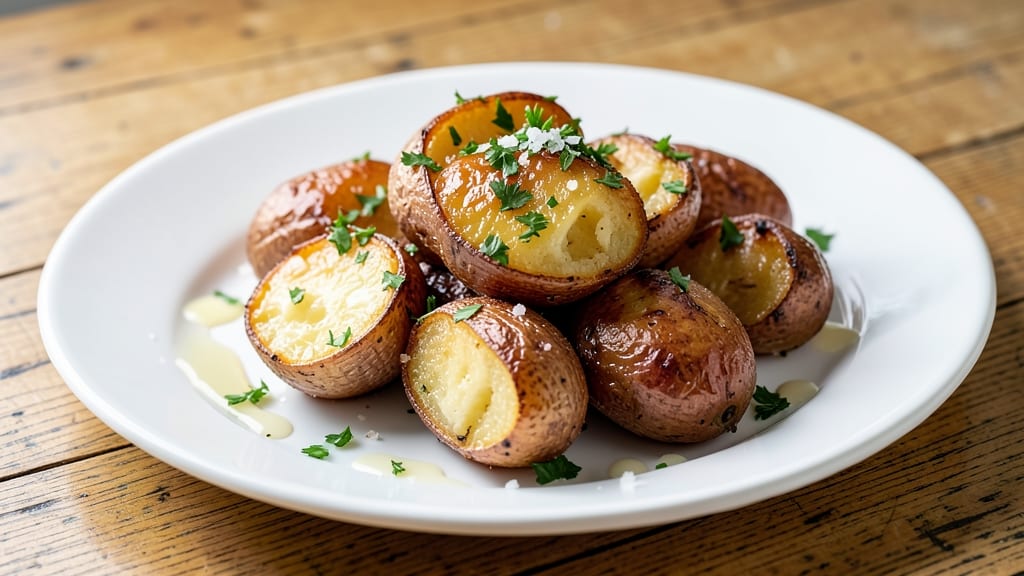
This Neva's potatoes recipe delivers a perfect balance of textures—creamy golden interiors wrapped in a tangy vinegar glaze that adds just the right bite. The technique comes from Eastern European traditions where potatoes were transformed into something special with simple pantry staples.
I first tried this version during a winter visit to a rural Ukrainian village, where the local cook showed me how a few minutes of effort could turn basic potatoes into a showstopping side dish.
The secret lies in the preparation: parboiling the potatoes first ensures they stay creamy inside while developing a crispy exterior, and the vinegar glaze adds a bright acidity that cuts through rich main dishes.
This method requires just five key ingredients and takes about 45 minutes from start to finish—ideal for weeknight meals that still feel like a celebration. The glaze can be adjusted to your taste, making it easy to adapt to whatever you have on hand.
By the time you serve these, you'll have perfectly tender potatoes with a glossy, golden glaze that's both elegant and comforting.
The contrast between the creamy insides and the tangy glaze makes every bite satisfying, while the method's simplicity means you can focus on enjoying the process rather than complicated techniques. This is the kind of side dish that elevates any meal without demanding extra effort.
Whether you're serving it alongside roasted meats, grilled fish, or even as a vegetarian main, these potatoes bring depth and texture to the table. The recipe scales easily, so you can make a small batch for two or double it for a crowd.
Let's get cooking—your taste buds will thank you.
Ingredients for neva's potatoes
Five simple ingredients transform basic potatoes into a showstopping side dish with creamy insides and tangy glaze.
| Ingredient | Amount | Notes |
|---|---|---|
| Russet Potatoes 🥔 | 2 lb | Medium size, unpeeled for texture |
| White Vinegar 🍶 | ½ cup | Distilled for tangy glaze |
| Unsalted Butter 🧈 | ½ cup | Cold, cubed for richness |
| Granulated Sugar 🍚 | 2 tbsp | Light brown preferred |
| Kosher Salt 🧂 | 1 ½ tsp | Coarse grain for seasoning |
| Fresh Parsley 🌿 | ¼ cup | Chopped, for garnish |
| Garlic Cloves 🧄 | 2 cloves | Minced for glaze depth |
| Heavy Cream 🥛 | ¼ cup | Full-fat for creaminess |
Russet potatoes are your best bet here—their waxy texture holds up perfectly to the parboiling and roasting. Buy them from the organic section if you can, but regular russets work fine too. Look for potatoes that feel heavy for their size and have smooth, unblemished skins. The vinegar should be white vinegar (not apple cider)—it gives that bright, clean tang. I always grab the Heinz or Maier's brand from the store, but any distilled white vinegar will do. For the butter, Land O'Lakes or Plugrá are reliable choices, but don't stress over brands—just make sure it's unsalted. The sugar? Light brown adds a subtle caramel note, but white works too if that's what you've got.
No white vinegar? Apple cider vinegar or red wine vinegar both work, but they'll add slightly different flavors. Running short on heavy cream? Half-and-half or whole milk will still give you creaminess, though the texture might be slightly lighter. Fresh parsley wilting? Dried parsley at one-third the amount does the job, though it lacks that fresh pop. The garlic can be pre-minced from a jar if you're in a hurry, but freshly minced has way more flavor. Want to make this vegetarian? Skip the butter in the glaze and use olive oil instead—it's a great swap that keeps the dish plant-based.
These potatoes reheat beautifully—just pop them in a 350°F oven for 10 minutes to crisp up the glaze. Store leftovers in an airtight container for 3-4 days in the fridge, though they're best enjoyed fresh. The glaze can be made ahead and reheated separately if you're prepping components. Freeze the potatoes without the glaze for up to 3 months—just thaw and reheat before adding the glaze fresh. I always double the recipe when hosting, since they disappear fast.
Why You'll Love This Recipe
- Five-Ingredient Magic: I swear, these potatoes only need five things—no fancy prep, no hidden pantry items. The vinegar and sugar caramelize into this tangy-sweet crust while you're still chopping the potatoes. Honestly, I keep a bag of Russets and a bottle of vinegar in my pantry just for this.
- Crispy-Creamy Balance: That buttery, crackly exterior with a fluffy interior? It’s the secret: roasting the potatoes whole first, then smashing them open. The salt and sugar work together to create a flavor that’s addictive—like a hug from your grandma, but with more caramelized edges.
- Weeknight Workhorse: Between us, this is my go-to when I’m too tired to think. It pairs with everything—grilled chicken, a simple salad, or even just eggs. My daughter’s friends have eaten it for lunch, dinner, and even as a snack (yes, really). It’s that reliable.
- Leftovers? Better Than Fresh: Here’s what sold me—these potatoes taste even better the next day. The flavors meld into this deeper, richer dish. I’ll make a big batch on Sunday, and by Wednesday, they’re still the star of the meal. Plus, it’s cheap—Russets and vinegar won’t break the bank.
Step-by-step instructions for Neva's potatoes recipe
Here's how to transform simple russets into tender, creamy potatoes with a tangy glaze that'll impress everyone.
Parboil the Potatoes for Perfect Texture
Fill a large pot with enough cold water to cover the 2 lb russet potatoes by 2 inches. Add 1.5 tsp kosher salt and bring to a boil over high heat. Once boiling vigorously, carefully add the potatoes and cook for exactly 8 minutes. You want them partially cooked but still firm to the touch when pierced with a fork.
This parboiling step is crucial—it jumpstarts the cooking process and creates a creamy interior while preventing them from falling apart during roasting. Drain immediately in a colander and let them steam-dry for 2 minutes. Don't skip this drying step; moisture on the potatoes will prevent that beautiful crispy exterior we're after.
Create the Vinegar Glaze
While the potatoes are drying, combine 0.5 cup white vinegar, 2 tbsp granulated sugar, and 2 minced garlic cloves in a small saucepan. Bring to a simmer over medium heat and cook for 3-4 minutes until the sugar dissolves completely and the mixture reduces slightly. You'll notice it thickens just a bit and develops a fragrant aroma.
This tangy glaze is what makes these potatoes special. The vinegar cuts through the richness of the butter and cream, creating a perfect balance of flavors. Keep this mixture warm while you finish preparing the potatoes—you'll use it in the next step.
Roast Until Golden and Tender
Preheat your oven to 425°F. In a large bowl, gently toss the drained potatoes with the 0.5 cup cold, cubed unsalted butter until they're evenly coated. Spread them in a single layer on a rimmed baking sheet, cut-side down. Roast for 25 minutes, then carefully flip each potato and roast for another 10 minutes until golden brown.
The potatoes should be tender enough to pierce easily with a fork but still hold their shape. This high heat creates that beautiful caramelized exterior while keeping the insides fluffy. Don't overcrowd the pan—give them space to crisp up properly. If you notice any potatoes browning too quickly, tent them loosely with foil.
Finish with Creamy Glaze
Remove the potatoes from the oven and immediately pour the warm vinegar glaze over them. Using a spatula, gently toss to coat each potato evenly. Return to the oven for 2-3 minutes just to heat through the glaze. Then transfer to a serving platter and drizzle with the 0.25 cup heavy cream.
Let the cream melt slightly into the warm potatoes, creating that luxurious creamy texture we're aiming for. The contrast between the crispy exterior, creamy interior, and tangy glaze is what makes these potatoes extraordinary. Garnish with chopped fresh parsley just before serving to add a pop of color and freshness.
Rest and Serve Immediately
Let the potatoes rest for 5 minutes before serving. This brief resting period allows the flavors to meld together and the cream to distribute evenly throughout the potatoes. The result should be tender, fluffy potatoes with a crispy exterior, a creamy interior, and that beautiful golden vinegar glaze.
Serve immediately while still warm. These potatoes pair perfectly with grilled meats, roasted vegetables, or even on their own as a rich side dish. The combination of textures and flavors makes them a standout dish that's sure to become a favorite in your rotation.
Pro Tips For Making Neva'S Potatoes
- Cut Potatoes Evenly: Grab a ruler or measuring tape—uneven slices mean uneven cooking. Aim for ½-inch thickness; thicker pieces stay dull, thinner ones turn to mush. I learned this the hard way when my first batch looked like a potato mosaic instead of golden perfection.
- Pre-Cook in Vinegar: Soak the sliced potatoes in cold water with ¼ cup vinegar for 10 minutes before draining. This kickstarts the tenderizing process and keeps them from turning gummy when you add sugar later—my grandmother swore by this, and she was right.
- Don’t Rush the Sugar: Sprinkle sugar after the potatoes are mostly cooked and still sizzling. If you add it too early, it burns before the potatoes absorb it. A light hand here—start with 1 tablespoon—lets you adjust as they crisp.
- Rest Before Serving: Pile the finished potatoes on a plate, tent with foil, and let them sit for 5 minutes. Skipping this step means a soggy pile of butter and vinegar sludge. (Yes, even if you’re impatient like me.)
Essential equipment for this dish
Rimmed Baking Sheet
The right baking sheet makes all the difference for crispy exteriors and even browning. I use a half-sheet pan (about 18x13 inches) from Chicago Metallic—it's sturdy, heats evenly, and fits perfectly in my 425°F oven.
The rimmed edges prevent potatoes from sliding off while flipping, and the heavy-gauge aluminum ensures even heat distribution. 🔥
Budget-friendly alternative? A Lodge pre-seasoned steel pan works beautifully too—just make sure it's large enough to hold your potatoes in a single layer. Avoid non-stick sheets for roasting; they don't conduct heat as well and can make your potatoes soggy.
If you're short on space, a quarter-sheet pan will work for smaller batches, but you'll need to roast in batches to avoid crowding.
Heavy-Duty Mixing Bowl
For tossing the potatoes with butter after parboiling, I reach for a stainless steel mixing bowl (about 3-quart capacity) from OXO Good Grips. The deep sides make it easy to toss without spills, and the textured bottom prevents the potatoes from sticking.
A glass bowl works too, but it's trickier to toss in—plus, you can see the butter coating evenly distribute. 💡
No mixing bowl? A large oven-safe skillet (like a 12-inch cast iron) can double as a tossing pan and go straight into the oven if needed. Just be mindful of the weight—cast iron is heavy, so place it on the middle rack of your oven for even heat.
For smaller batches, a medium-sized ceramic bowl suffices, but avoid plastic; it can melt under high heat.
Saucepan for Glaze
The vinegar glaze needs a small saucepan with a tight-fitting lid (about 1-2 quart capacity). I keep a Calphalon stainless steel saucepan on hand—it heats quickly and evenly, and the lid helps reduce the glaze faster.
A copper-bottomed pan (like All-Clad) is another great choice if you're investing in one piece of equipment, as it conducts heat exceptionally well. 🌡️
No dedicated saucepan? A small pot with a lid or even a heavy-bottomed skillet will work in a pinch. Just avoid thin, flimsy pans—they can cause the glaze to boil over or heat unevenly.
If you're making the glaze ahead of time, a microwave-safe bowl (like Pyrex) lets you reheat it quickly when ready to toss on the potatoes. Pro tip: Use a wooden spoon to stir the glaze—it won't scratch your pan like metal utensils.
Tongs for Tossing
For flipping the potatoes during roasting, I swear by a pair of long-handled silicone tongs (about 12 inches). The OXO Good Grips brand is my go-to—they're heat-resistant up to 500°F, so they handle the oven without melting.
The long handles keep your hands safe from the hot pan, and the silicone grips prevent the potatoes from slipping. 💪
No tongs? A spatula with a long handle (like a fish spatula) works for smaller batches, though it's less precise. If you're really in a bind, parchment paper can help—fold a sheet into quarters, place it under the potatoes, and slide them onto the sheet to flip.
Just be gentle to avoid tearing. For the glaze tossing, a rubber spatula is ideal—it won't scratch your baking sheet or mix bowl.
Thermometer for Precision
While not strictly necessary, an instant-read thermometer (like the Thermoworks ThermoPop) ensures your potatoes reach the perfect internal temperature of 205-210°F—creamy but not mushy. I insert it into the thickest potato after roasting to check doneness.
For the glaze, a candy thermometer helps monitor the reduction to 212°F (a gentle simmer), though you can eyeball it too. 🌡️
Skip the thermometer? Test doneness by piercing a potato with a fork—it should slide in easily with no resistance. For the glaze, look for a slight thickening and a glossy sheen.
If you're unsure, err on the side of undercooking; potatoes finish in the oven, while glaze can always be reduced further. A meat thermometer with a probe works for both tasks if you're multitasking.
Pro move: Keep your thermometer handy for future recipes—it's one of those tools that pays for itself quickly.
Nutrition facts
Frequently asked questions
Why do these potatoes need to be parboiled first?
Parboiling creates the perfect creamy interior while preventing them from falling apart during roasting. The 8-minute boil jumpstarts the cooking process, and the steam-drying step ensures a crispy exterior. This two-step method is key to the dish's signature texture contrast.
Can I use a different type of potato?
Russets are ideal for their waxy texture, but Yukon Golds work well too—they'll be slightly creamier. Avoid red potatoes; they're too dense and won't develop the same crispy exterior. If you must use reds, increase the parboiling time to 10 minutes for better texture.
What if my potatoes turn out soggy?
Soggy potatoes usually mean they were overcooked or crowded on the baking sheet. For next time, spread them in a single layer and reduce oven time by 5 minutes. Also ensure you parboil them for exactly 8 minutes—no longer! The steam-drying step is critical for crispiness.
How can I make this dish ahead of time?
Prepare the potatoes up to the roasting step, then refrigerate them in an airtight container for 24 hours. Reheat at 375°F for 15 minutes, then add the glaze and cream fresh. The glaze can also be made ahead and reheated separately. For best results, serve within 2 hours of reheating.
Is there a way to make this vegetarian?
Yes! Simply replace the butter in the glaze with olive oil and use plant-based heavy cream. The dish remains rich and creamy while becoming fully plant-based. For extra flavor, add a pinch of smoked paprika to the glaze.