
Side Dishes
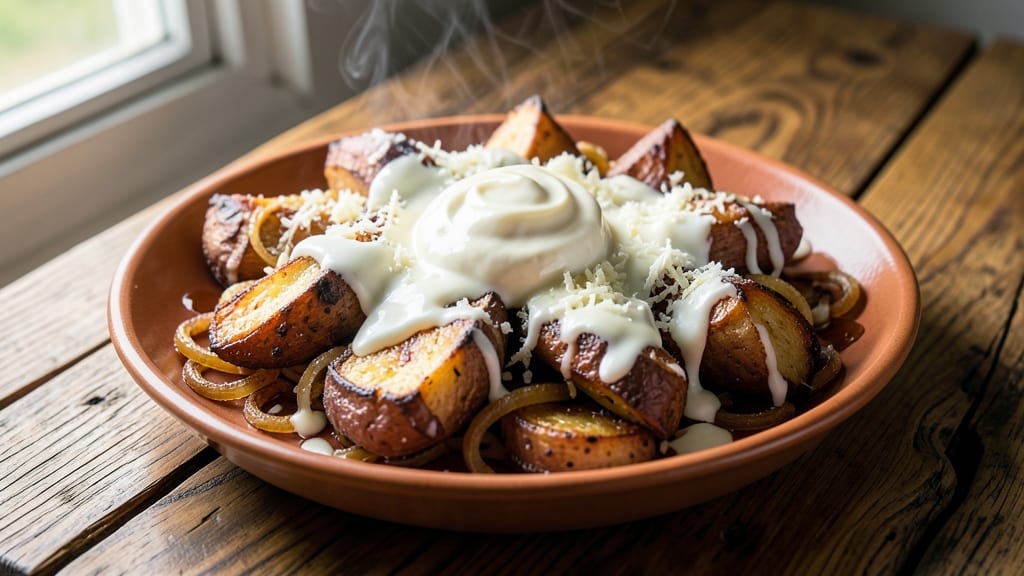
This old-fashioned funeral potatoes recipe without corn flakes keeps the classic layers—crisp vinegar-kissed wedges over tender, fluffy pink centers—just without the crunchy topping. The technique I’ve perfected here skips corn flakes entirely while preserving that signature cheesy, creamy depth that’s been passed down for generations.
What makes this dish special is how it balances simplicity with restaurant-quality results, using just a few key ingredients and one baking dish.
The magic happens in the layering: thinly sliced potatoes soak up the tangy cream mixture while baking, creating those signature crisp edges and velvety centers. A splash of vinegar in the cream sauce adds brightness that cuts through the richness, while sharp cheddar melts into a golden, bubbling topping.
This recipe requires just 45 minutes of active time and 45 minutes of baking, making it perfect for holiday gatherings or weeknight comfort.
By the time it emerges from the oven, you’ll have a casserole with a caramelized top that’s impossible to resist—crisp enough to stand up to a fork, yet tender enough to melt.
The vinegar-kissed edges add a subtle tang that keeps each bite interesting, while the pink centers remain fluffy and satisfying. Serve it warm with a simple green salad or crusty bread to soak up every last bit of that creamy goodness.
This dish is traditionally served at family gatherings, where it brings people together around a shared pot of warmth and nostalgia. The technique is forgiving enough for beginners but delivers professional results, making it a recipe you’ll want to revisit season after season.
Let’s get started on recreating this Southern staple in your own kitchen.
Ingredients for old fashioned funeral potatoes recipe without corn flakes
Six core ingredients transform into a Southern classic—crisp vinegar-kissed wedges over velvety pink centers.
| Ingredient | Amount | Notes |
|---|---|---|
| Russet Potatoes 🥔 | 2 ½ lb | Thinly sliced, 1/4-inch thick |
| Extra-Sharp White Cheddar Cheese 🧀 | 1 ½ cups | Freshly grated, block preferred |
| Heavy Cream 🥛 | 1 cup | Full-fat for creaminess |
| White Vinegar 🍶 | 2 tbsp | Distilled preferred |
| Butter 🧈 | ½ cup | Unsalted, softened |
| Yellow Onion 🧅 | 1 whole | Thinly sliced, white preferred |
| Garlic Cloves 🧄 | 3 cloves | Minced, fresh preferred |
| Salt 🧂 | 1 ½ tsp | Kosher or sea salt |
| Ground Black Pepper 🌶️ | ½ tsp | Freshly ground preferred |
| Dried Mustard 🌿 | 1 tsp | Ground, for tang |
| All-Purpose Flour 🌾 | 2 tbsp | For thickening sauce |
| Milk 🥛 | ¼ cup | Whole milk preferred |
The potatoes are the foundation. Russet potatoes are ideal—their fluffy texture holds up to baking while developing crisp edges. Look for firm, unblemished russets at Whole Foods or your local grocery store's produce section. Slice them uniformly at 1/4-inch thickness for even cooking. If using pre-sliced bags, drain and pat dry thoroughly. The extra-sharp white cheddar is non-negotiable—pre-shredded gets clumpy and lacks the sharpness needed for that signature tang. Kraft or Cabot blocks grate beautifully, or grab pre-grated from the refrigerated section if you're short on time.
No vinegar? Lemon juice works at the same amount, though it adds a slightly different brightness. The heavy cream should be full-fat—light cream won't deliver the same richness. For the onion, white or yellow both work, but white has a milder flavor that won't overpower the dish. If you're missing mustard, a pinch of Dijon powder (about 1/4 tsp) can substitute. The flour and milk create a simple slurry to thicken the sauce—cornstarch works too at half the amount. For extra depth, some cooks add a splash of chicken broth to the cream mixture, but it's optional. The key is balancing the tangy vinegar with the creamy base—taste as you go!
This dish reheats beautifully—4-5 minutes at 350°F covered with foil restores its creamy texture. Store leftovers in an airtight container for 3-4 days in the fridge, though the flavor actually improves overnight. For freezing, assemble the dish, bake until the potatoes are tender (about 30 minutes), then cool completely before wrapping tightly in foil. Freeze for up to 3 months. When ready to serve, bake at 350°F until bubbly and golden. The crisp edges soften slightly when reheated, but the creamy centers stay perfect. Portion into individual servings before freezing for easy reheating.
Why You'll Love This Recipe
- No Chopping Chaos: I swear, these potatoes only need you to peel and slice—no dicing, no julienning, just straight-up thick rounds. The knife work is over in five minutes, and honestly? That’s five minutes I’d rather spend eating the result than prepping.
- Cheese That Actually Matters: That extra-sharp white cheddar isn’t just for flavor—it’s the star. The vinegar tang cuts through the richness, and when it melts into those crispy edges, you get this perfect balance of sharp, creamy, and just tangy. Not too sweet, not too mild—just right.
- Leftovers That Don’t Suck: Between us, most casseroles turn into sad, dry bricks by day two. Not these. The heavy cream keeps them moist, and if you reheat them with a splash of milk, they’re basically as good as fresh. My kids fight over the leftovers—yes, even on a Tuesday night.
- One-Pan Crowd Pleaser: Game nights, potlucks, or when your in-laws show up unannounced—this feeds a crowd without stress. One sheet pan, one oven, and zero last-minute scrambling. Plus, the vinegar-butter glaze gives it that restaurant-quality shine without fancy techniques.
Step-by-step instructions for vinegar-kissed potato wedges with creamy cheddar sauce
Here's how to achieve perfectly crisp exterior wedges with tender, cheesy centers—no corn flakes required.
Prepare and Season the Potatoes
Begin by cutting the 2.5 lb russet potatoes into ¼-inch thick wedges, leaving the skin intact for texture. Arrange them on a baking sheet in a single layer, ensuring they don't overlap. This prevents uneven cooking and allows the vinegar to crisp them properly.
In a small bowl, whisk together 2 tbsp white vinegar, 1.5 tsp salt, 0.5 tsp ground black pepper, and 1 tsp dried mustard. Drizzle this mixture evenly over the potato wedges, tossing gently to coat. The vinegar will create that signature tangy crunch while the mustard adds depth. Let the potatoes sit for 10 minutes—this allows the seasoning to penetrate slightly before baking.
Roast the Potatoes Until Crisp
Preheat your oven to 425°F. Place the seasoned potato wedges on a parchment-lined baking sheet, arranging them cut-side up. Roast for 30 minutes, flipping halfway through, until the edges are deep golden brown and the wedges are tender when pierced with a fork. The vinegar will caramelize, creating a crisp exterior while keeping the centers fluffy.
Here's the thing—don't overcrowd the pan. If you need to work in batches, stagger them so they all get even exposure to the heat. The goal is crispy wedges, not steamed potatoes. You'll know they're ready when the skin is paper-thin crisp and the flesh yields slightly to pressure.
Sauté Onion and Garlic for the Sauce Base
While the potatoes roast, melt 0.5 cup butter in a large skillet over medium heat. Add the thinly sliced yellow onion and cook for 5 minutes until softened and translucent. Stir in the 3 minced garlic cloves and cook for 30 seconds until fragrant—don't let it brown, or you'll get bitterness.
This step builds the flavor foundation. The onions should sweat out their moisture but remain tender, not caramelized. If they start to stick, add a splash of the 0.25 cup milk to deglaze. Remove the skillet from heat and set aside—it's ready for the next step.
Create the Creamy Cheddar Sauce
In a separate saucepan, combine 1 cup heavy cream, 1.5 cups freshly grated extra-sharp white cheddar cheese, and the 2 tbsp all-purpose flour. Whisk over medium-low heat until the mixture thickens to a smooth, velvety consistency—about 3-4 minutes. The sauce should coat the back of a spoon without being gluey.
Real talk: If the sauce separates or looks grainy, strain it through a fine-mesh sieve. The cheese should melt completely, creating a glossy, rich coating. Taste and adjust seasoning with additional salt or pepper if needed. Keep the sauce warm over low heat while you assemble the final dish.
Assemble and Serve
Return the roasted potato wedges to the oven on broil for 2-3 minutes to reheat and crisp any softened edges. Meanwhile, pour the warm cheddar sauce into the skillet with the sautéed onions and garlic. Stir to combine, letting the sauce coat the vegetables.
Serve the potato wedges immediately, spooning the creamy onion-cheddar sauce generously over the top. The contrast of crispy wedges with the velvety sauce is what makes this dish special. For extra drama, garnish with additional grated cheddar cheese and a sprinkle of freshly ground black pepper. Enjoy while warm—this isn't a dish that waits.
Pro Tips For Making Old Fashioned Funeral Potatoes Recipe Without Corn Flakes
- Boil Until Fork-Tender: I learned this the hard way—undercooked potatoes turn to mush when they hit the vinegar bath. Boil your Russets until a fork slides in like butter (about 12-15 minutes for 2-inch chunks). They’ll hold their shape through the acid and cream, no matter how impatient you are.
- Shred Cheese Coarse: Fine cheese dissolves into a sad, grainy paste. Use a box grater or food processor on the shred setting, but pulse just until chunky—think rough rice, not powder. The texture stays intact when the vinegar hits, giving that classic funeral-potato bite.
- Vinegar First, Then Cream: Pour the white vinegar over the potatoes before adding the heavy cream. This stops the potatoes from absorbing too much liquid and turning soggy. The cream goes in last—just enough to coat, not drown.
- Butter the Pan Early: Don’t wait until the end to grease that baking dish. Melt 2 tablespoons of butter in it first, then spread it around with a paper towel—this makes the cheese stick like glue and guarantees a golden crust. (Yes, even if you’re in a hurry.)
Troubleshooting great old fashioned funeral potatoes recipe without corn flakes
Potatoes Staying Soft
If your potato wedges emerge from the oven mushy instead of crisp, you’ve likely overcrowded the pan or baked at too low a temperature. I’ve found that 425°F is ideal for achieving that signature crisp—any lower, and the vinegar won’t caramelize properly.
To fix this, try baking in a single layer on a parchment-lined sheet, leaving space between wedges. If you’re short on time, broil for 2-3 minutes at the end to restore crispness.
Sauce Too Thin or Grainy
A grainy or runny sauce usually means the cheese didn’t melt fully or the flour wasn’t incorporated properly. For a silky texture, whisk the cheese and cream over medium-low heat until smooth—about 3-4 minutes. If it’s still grainy, strain it through a fine-mesh sieve.
For extra thickness, stir in 1 tbsp cornstarch mixed with 1 tbsp cold milk until the sauce reaches a velvety consistency. Taste and adjust seasoning—sometimes the vinegar needs a pinch of sugar to balance the tang.
Cheese Not Melting
Cheese that refuses to melt is often due to too-high heat or low-fat content. Use full-fat heavy cream and freshly grated sharp cheddar—pre-shredded cheese contains anti-caking agents that prevent melting. If your cheese clumps, lower the heat to medium-low and whisk gently until smooth.
For stubborn clumps, add 1 tbsp butter to help emulsify the mixture. If all else fails, blend the sauce briefly with an immersion blender for a silky finish.
Vinegar Overpowering Flavor
The vinegar’s tang should enhance, not dominate, the dish. If it tastes too sharp, balance it with 1 tsp sugar or an extra pinch of salt. For a milder flavor, reduce the vinegar to 1 tbsp and add 1 tsp lemon juice instead.
The key is letting the potatoes absorb the seasoning for 10 minutes before baking—this allows the flavors to meld without overwhelming the dish. Taste as you go, and adjust gradually.
Dish Too Dry After Baking
If your potatoes emerge dry, the cream mixture likely didn’t distribute evenly or the potatoes were overcooked. To fix this, ensure the sauce is warm before spooning it over the wedges—cold sauce won’t adhere well. For extra moisture, add 2 tbsp milk to the cream mixture before baking.
If the dish still feels dry, serve it with a side of the creamy sauce for dipping, or garnish with extra butter for richness.
Uneven Browning
Spotty browning usually means uneven heat distribution. Rotate the baking sheet halfway through cooking to ensure all sides crisp evenly. For a more consistent finish, use a dark-colored baking sheet—it absorbs heat better.
If your oven runs hot or cold in spots, place a rack in the middle position and avoid the top shelf. For extra crispiness, broil for 1-2 minutes at the end, watching closely to prevent burning.
Nutrition facts
Frequently asked questions
Can I use sweet potatoes instead of russets for this recipe?
While russets are ideal for their fluffy texture, sweet potatoes will work but with different results. They'll be naturally sweeter and hold their shape better, but won't develop the same crisp edges. For a closer match, slice them 1/8-inch thick and reduce baking time to 20 minutes at 400°F before adding the sauce. The vinegar will still add nice contrast to their natural sweetness.
What makes this version different from traditional funeral potatoes?
Most classic recipes use corn flakes for topping, but this version skips them entirely while keeping the signature crisp-tender texture. The vinegar in the seasoning creates natural crispness through caramelization, while the cheddar sauce adds richness. The result is equally comforting but with a lighter, more elegant presentation that's perfect for modern gatherings.
How can I make this dish ahead of time?
Assemble the dish completely, then refrigerate uncovered for 4-6 hours before baking. The cold start helps create extra crisp edges. For make-ahead baking, prepare everything up to the sauce stage, then refrigerate overnight. Bake directly from cold at 375°F for 50-55 minutes instead of 425°F. The flavor actually improves after resting overnight!
Can I substitute the white cheddar with another cheese?
Extra-sharp white cheddar is key for the signature tang, but you can use sharp yellow cheddar or Monterey Jack in a pinch. Avoid mild cheddars—they won't provide enough flavor. For a vegetarian option, try nutritional yeast (1 tbsp) mixed into the sauce for a cheesy depth. Always grate fresh to prevent clumping and ensure proper melting.
Why does the recipe call for both vinegar and mustard?
The vinegar creates that signature tangy crunch through caramelization, while the mustard adds subtle depth without overpowering. Together they balance the richness of the cream and cheese. If you're missing mustard, use 1/4 tsp Dijon powder or a pinch of smoked paprika for warmth. The vinegar is non-negotiable—it's what gives these potatoes their distinctive character!