
Main Courses
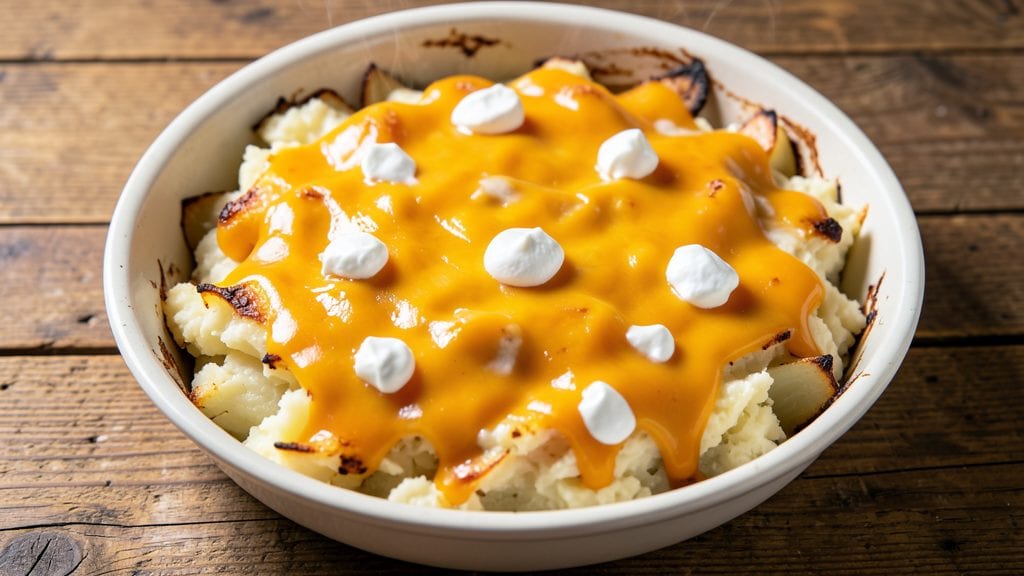
This Pioneer Woman recipe for twice baked potato casserole delivers the ultimate comfort food experience with its golden crust and creamy cheese center that feels like a warm hug in dish form. I've perfected this version over countless family gatherings, where it disappears faster than you can say "second helpings."
The secret lies in layering fluffy potatoes with a rich cheese sauce and baking it until the top transforms into crispy perfection.
The beauty of this dish is its simplicity—just a few key ingredients come together to create something extraordinary. You'll start with baked potatoes (the foundation), then mix them with a velvety cheese sauce that includes cheddar, sour cream, and a touch of cream cheese for that signature creamy texture.
The first bake ensures everything is tender, while the second creates that irresistible golden crust that makes it look as good as it tastes.
What you'll end up with is a casserole that's creamy on the inside and crispy on top, with edges that are just begging to be broken into.
The aroma alone will have everyone gathering around the table, and the first bite delivers that perfect balance of cheesy goodness and fluffy potato. This is the kind of dish that brings people together—whether it's a holiday meal or a casual family dinner.
Serve it warm with a side of green beans or a crisp salad to round out the meal. The best part? Leftovers reheat beautifully, making it perfect for meal prep or feeding a crowd. Let's get started on creating this comforting classic that's sure to become a household favorite.
Ingredients for pioneer woman recipe for twice baked potato casserole
Six ingredients transform into the creamiest, crispiest twice-baked potato casserole you'll ever make.
| Ingredient | Amount | Notes |
|---|---|---|
| Russet Potatoes 🥔 | 3 lbs | Medium size, baked until tender |
| Sharp Cheddar Cheese 🧀 | 2 cups | Shredded, sharp flavor preferred |
| Sour Cream 🥛 | 1 cup | Full-fat for creaminess |
| Cream Cheese 🧈 | 8 oz | Softened for smooth sauce |
| Heavy Cream 🥛 | ½ cup | Whole milk for richness |
| Milk 🥛 | ¼ cup | Whole milk preferred |
| Butter 🧈 | ½ cup | Unsalted, melted |
| Garlic Powder 🧄 | 1 tbsp | Freshly ground preferred |
| Onion Powder 🧅 | 1 tbsp | For subtle depth |
| Salt 🧂 | 1 tsp | Kosher or sea salt |
| Black Pepper 🌶️ | ½ tsp | Freshly ground preferred |
| Breadcrumbs 🍞 | ½ cup | Panko for extra crunch |
| Melted Butter 🧈 | 2 tbsp | For breadcrumb topping |
| Green Onions 🧅 | 2 whole | Chopped, for garnish |
The potatoes are the star, so pick Russet—they're the fluffiest when baked. Three pounds gives you enough for a crowd, but if you're feeding fewer, scale back. Bake them until fork-tender (about 45-50 minutes at 400°F), then let them cool before scooping. Costco or Trader Joe's usually have the best prices for big bags. For the cheese, sharp cheddar is non-negotiable—it's what gives that tangy kick. I grab mine from Whole Foods or the deli counter at Kroger, where they grate it fresh for you. No pre-shredded stuff here!
No sour cream? Full-fat Greek yogurt works in a pinch (same amount), though it's slightly tangier. Cream cheese giving you trouble? Cottage cheese blended smooth can substitute, but it won't be as creamy. Short on butter? Olive oil gets you close, but it lacks that rich flavor. The breadcrumbs? Panko is your best friend—it stays crispy. If you're out, toast regular breadcrumbs in a dry pan for a minute first. And for the green onions, scallions or even a tiny bit of fresh chives will do in a squeeze. Just don't skip the garnish—it adds freshness to that cheesy goodness.
This casserole tastes even better the next day, so make it ahead if you can. Store leftovers in an airtight container for up to 4 days in the fridge. For freezing, assemble it fully (before the second bake), cover tightly, and it keeps for 3 months. Just bake straight from frozen—add 10 minutes to the second bake time. Pro tip: Portion into individual ramekins before the second bake. They reheat beautifully and make for perfect single servings when you're in a rush.
Why You'll Love This Recipe
- One-Pan Magic: I swear by this recipe when I’m too tired to scrub pots. You boil the potatoes, mix the cheesy cream sauce, dump it all in a baking dish, and let the oven do the work. That’s it—no fancy layers or fussing.
- Cheese Overload (In a Good Way): Between the sharp cheddar baked into the potatoes and that rich sour cream-cream cheese sauce on top, every bite feels like a hug. The heavy cream keeps it luscious without being heavy, and honestly? I’ve never met a casserole I couldn’t eat twice.
- Meal Prep MVP: This thing reheats like a dream—perfect for packing lunches or feeding a crowd. I make a big batch on Sundays, and by Wednesday, I’m still digging into leftovers. (Yes, even on a Tuesday night.)
- Budget-Friendly Luxury: Russets and cheddar are pantry staples, and this recipe stretches them into something that tastes like a restaurant dish. It’s the kind of comfort food that makes you feel fancy without breaking the bank. My wallet and my family thank me every time.
Step-by-step instructions for twice baked potato casserole
Here's how to create that perfect golden crust over ultra-creamy cheese goodness.
Bake the Potatoes Until Fork-Tender
Preheat your oven to 375°F. Scrub and pierce the 3 lbs russet potatoes with a fork in several places. Place them directly on the middle oven rack and bake for 45-60 minutes, turning occasionally, until they're completely tender when pierced with a knife. You want them soft enough to mash easily but not falling apart.
Here's the thing—don't skip the turning. This ensures even cooking and prevents one side from getting too dry. I like to turn them every 15 minutes after the first 30 minutes of baking. The skin should be slightly wrinkled but not browned yet—that comes later.
Create the Creamy Cheese Mixture
While the potatoes bake, let the 8 oz cream cheese and 2 cups sharp cheddar cheese soften at room temperature for 10 minutes. In a large bowl, combine the softened cheeses with the 1 cup sour cream, 0.5 cup heavy cream, 0.25 cup milk, 0.5 cup melted butter, 1 tbsp garlic powder, 1 tbsp onion powder, 1 tsp salt, and 0.5 tsp black pepper.
Use a hand mixer or stand mixer to blend everything until completely smooth and creamy. You're looking for a thick, spreadable consistency that coats the back of a spoon. If it's too thick, add a splash more milk 1 tablespoon at a time until it reaches the perfect texture. This mixture is the heart of your casserole—take your time getting it right.
Mash the Potatoes and Combine
When the potatoes are done, let them cool for 5 minutes before carefully peeling off the skins. Place them in a large mixing bowl and mash with a potato masher until completely smooth. You want no lumps—this ensures that creamy texture throughout.
Add the mashed potatoes to the cheese mixture and gently fold together with a spatula until fully combined. The mixture should be thick but still spreadable. Taste and adjust seasoning if needed—you might want to add a pinch more salt or pepper depending on your cheddar's sharpness. Transfer the mixture to a greased 9x13-inch baking dish and spread it out evenly.
Bake the First Time for Perfect Texture
Return the baking dish to the oven and bake at 375°F for 20-25 minutes, until the top is lightly golden and the edges are set. You're looking for a custard-like texture—it should still be slightly jiggly in the center when you gently shake the dish. This first bake develops the flavor and sets up the structure for the crispy topping.
Don't overbake here. You want it to hold its shape when you cut into it later, but still be creamy inside. If you bake it too long, you'll end up with a dry casserole. The edges should pull away from the pan slightly when you run a knife around them.
Add the Crispy Topping and Bake Again
In a small bowl, combine the 0.5 cup breadcrumbs with the 2 tbsp melted butter. Spread this mixture evenly over the top of the casserole, pressing down gently with your fingers. Chop the 2 whole green onions and sprinkle them evenly over the breadcrumb topping for a fresh finish.
Return the casserole to the oven and bake at 400°F for 10-12 minutes, until the topping is golden brown and crispy. Watch it closely toward the end—you want that perfect golden color, not browned spots. The internal temperature should reach 160°F when you check with an instant-read thermometer.
Rest and Serve Warm
Remove the casserole from the oven and let it rest for 10 minutes before serving. This resting time allows the juices to redistribute, ensuring that first cut is creamy perfection. The contrast between the crispy golden topping and the ultra-creamy cheese potato mixture is what makes this dish so incredible.
Cut into squares and serve immediately while still warm. The creamy cheese mixture should be rich and velvety, with each bite delivering that perfect balance of cheesy goodness and crispy topping. This casserole is even better the next day, so you can make it ahead and reheat in the oven at 350°F for 15-20 minutes to restore that crispy texture.
Pro Tips For Making Pioneer Woman Recipe For Twice Baked Potato Casserole
- BOIL UNTIL FORK-TENDER: Don’t skimp on the boiling time—Russets need 12-15 minutes until a knife glides in like butter. I learned this the hard way when my first batch turned into a mushy, gluey mess after baking. Overcooked potatoes? They’ll hold up. Undercooked? You’re starting over.
- GRATE CHEESE FRESH: Pre-shredded cheddar has anti-caking agents that make the topping clump and turn rubbery. Grab a box of sharp cheddar blocks, grate it yourself, and pat it dry with a paper towel—this guarantees a crisp, golden crust every time.
- MIX CREAMS COLD: Whisk the sour cream, cream cheese, and heavy cream together cold (straight from the fridge) to prevent curdling. I was skeptical until I tried it—now my casserole stays silky, not grainy, even after baking.
- BAKE COVERED FIRST: Tent the casserole with foil for the first 30 minutes to melt the cheese evenly. Then uncover and broil for 2-3 minutes—this two-step method keeps the top from burning while the bottom stays creamy. (Yes, even if you’re impatient like me.)
Troubleshooting great pioneer woman recipe for twice baked potato casserole
Overly Dry Potatoes
If your potatoes turn out dry after baking, you likely didn’t cook them long enough or pierced them too aggressively. I’ve found that Russet potatoes need about 45-60 minutes at 375°F—they should be fork-tender but not falling apart.
If they’re still firm, bake them another 10-15 minutes, covered with foil to trap moisture. For extra creaminess, add 2-3 tablespoons of milk or sour cream to the mashed potatoes before combining with the cheese mixture. 🥔
Lumpy Cheese Mixture
The cheese sauce is the soul of this casserole, so lumps are a no-go. Always let your cream cheese and cheddar soften at room temperature for 10 minutes before mixing. Use an immersion blender or hand mixer to achieve a silky texture—don’t just stir!
If lumps persist, strain the mixture through a fine-mesh sieve. For extra insurance, I sometimes microwave the cheese mixture for 10 seconds to fully melt everything together. 🧈
Soggy Topping
A soggy breadcrumb topping ruins the magic of this dish. To prevent this, press the breadcrumbs firmly into the cheese mixture before baking—don’t just sprinkle them on top. Bake at 400°F for 10-12 minutes until golden, and avoid opening the oven door during the final minutes to trap steam.
If your topping still feels damp, broil for 1-2 minutes at the very end (watch closely to avoid burning). 🍞
Uneven Baking
If the edges cook faster than the center, your oven might have hot spots. Rotate the baking dish halfway through the second bake to ensure even browning. For extra insurance, tent the dish with aluminum foil during the first bake to prevent over-browning while the center cooks.
I also recommend using an oven thermometer—some ovens run 25°F hotter or colder than set, which can throw off your timing. 🌡️
Cheese Separation
If your cheese sauce separates (oily or grainy), it’s usually from using cold cheese or overmixing. Always soften the cheese first, and mix just until combined—don’t overbeat. For a quick fix, whisk in 1 tablespoon of flour or cornstarch to bind the mixture.
If the sauce still separates, strain it again through a sieve. This trick works wonders for a smooth, cohesive texture. 🧀
Reheating Leftovers
Leftovers can turn rubbery if reheated improperly. For best results, cover the casserole with foil and reheat at 350°F for 15-20 minutes until warmed through. If it’s too dry, sprinkle 1-2 tablespoons of milk or broth over the top before reheating.
Microwaving is a last resort—it’ll make the topping soggy. For single servings, portion into ramekins before the second bake and reheat individually. ⏰
Nutrition facts
Frequently asked questions
Can I make this casserole ahead of time?
Assemble the casserole completely (before the second bake), cover tightly with foil, and refrigerate for up to 24 hours. When ready to bake, remove from the fridge 30 minutes before the second bake to bring it to room temperature. This actually enhances the flavor—it's even better the next day! For freezing, assemble fully, cover tightly, and freeze for up to 3 months. Bake straight from frozen, adding 10 minutes to the second bake time.
What if I don't have sharp cheddar?
Mild cheddar works, but you'll lose that signature tangy kick. For extra flavor, mix 1 cup sharp cheddar with 1 cup mild cheddar to balance the taste. You can also add 1/2 teaspoon of mustard powder or 1/4 teaspoon of smoked paprika to mimic the sharpness. Just remember—sharp cheddar is non-negotiable for that authentic Pioneer Woman touch!
Can I make this casserole in a different-sized dish?
Yes, but adjust the baking times. For a 8x8-inch dish, reduce the recipe by half and bake 5 minutes less during each stage. For a 11x15-inch dish, increase the recipe by 1.5x and add 10 minutes to each bake. Always use the same oven temperature, but check for doneness with a thermometer—160°F internally is perfect.
Why does my casserole look dry after baking?
Overbaking is usually the culprit. The casserole should be slightly jiggly in the center after the first bake (20-25 minutes at 375°F). If it's dry, try adding 2-3 tablespoons of milk or sour cream to the mashed potatoes before combining with the cheese mixture. For extra moisture, tent the dish with foil during the first bake to trap steam.
Can I add other vegetables to this recipe?
You can! Try adding 1 cup of diced bell peppers or 1 cup of corn kernels to the cheese mixture for extra texture. For a heartier dish, fold in 1 cup of cooked bacon bits or 1/2 cup of sautéed onions. Just be mindful of moisture—if adding watery veggies like zucchini, drain them well first.