
Side Dishes
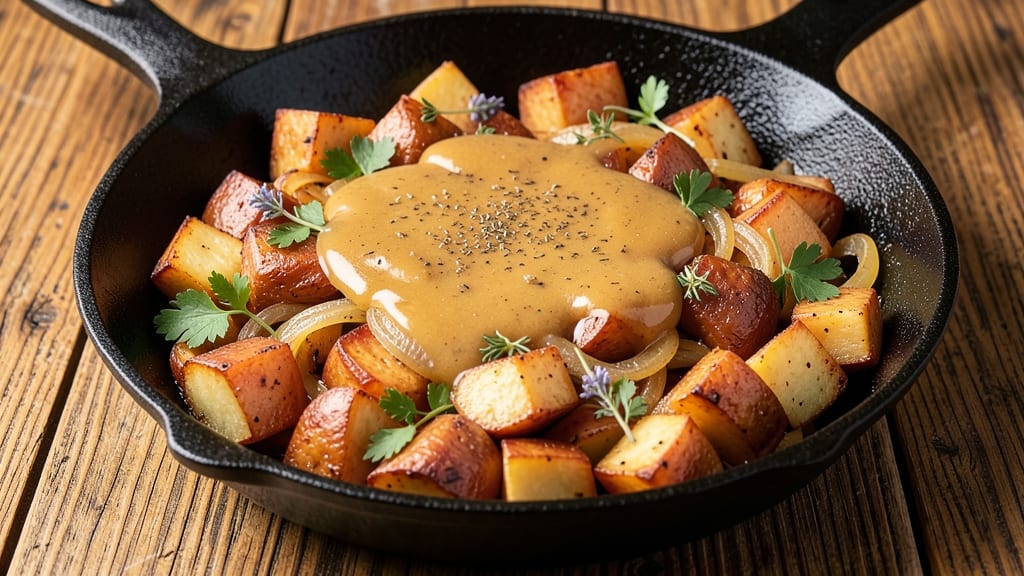
This Pittsburgh potatoes recipe transforms humble spuds into a restaurant-quality side with layers of crispy, caramelized edges and tender, flaky centers—just like the classic dish from Pittsburgh’s iconic steakhouses. The secret lies in the herb-infused vinegar braise that creates that signature tangy depth while keeping the potatoes perfectly flaky throughout.
I first tasted these at a local diner and knew I had to recreate them at home, where they’ve since become a staple on my dinner table.
The process starts with dicing potatoes uniformly and browning them in butter until golden, a step that builds the foundational flavor. Onions join the mix, adding sweetness that pairs beautifully with the vinegar and herbs.
What sets this apart is the slow braise—just enough liquid to create steam without making the potatoes soggy, ensuring that flaky texture you crave in every bite. The result? A dish that’s hearty enough to stand alongside steak or burgers but simple enough for weeknight dinners.
By the time you serve these, your kitchen will smell like a Pittsburgh steakhouse, and your guests will never guess it took just 45 minutes to make. The vinegar-infused braise adds a bright, herby note that cuts through rich meats, while the butter and spices create a rich, savory depth.
This isn’t just a side dish—it’s the kind of flaky, satisfying centerpiece that turns any meal into something special.
Pair these with a juicy steak, a smoky burger, or even as a standalone dish for a comforting meal. The recipe scales easily, so you can make a big batch for gatherings or keep it small for a cozy night in.
Here’s how to bring Pittsburgh’s signature potatoes to your table—flaky, crispy, and full of flavor.
Ingredients for pittsburgh potatoes
Pantry staples meet Pittsburgh magic—just 11 ingredients for flaky, crispy potatoes that taste like a steakhouse side.
| Ingredient | Amount | Notes |
|---|---|---|
| Russet Potatoes 🥔 | 2 ½ lb | Diced into 1-inch cubes, peeled |
| Unsalted Butter 🧈 | ½ cup | Full-fat for richness, cut into pats |
| Yellow Onion 🧅 | 1 whole | Diced small, sweet variety preferred |
| White Vinegar 🍶 | ¼ cup | White or apple cider vinegar |
| Fresh Parsley 🌿 | ¼ cup | Chopped, stems removed, packed |
| Fresh Thyme 🌿 | ¼ cup | Leaves only, stems removed |
| Garlic Cloves 🧄 | 4 cloves | Minced fine, fresh preferred |
| Salt 🧂 | 1 ½ tsp | Kosher or sea salt, adjust to taste |
| Black Pepper 🌶️ | ½ tsp | Freshly ground for best flavor |
| Vegetable Oil 🫒 | 2 tbsp | For browning potatoes, neutral flavor |
| Chicken Broth 💧 | ½ cup | Low-sodium preferred, homemade or quality |
The potatoes are the star, so pick Russets—they’re the flakiest when diced and browned right. Costco or Trader Joe’s usually have the best prices for bulk bags, but any grocery store’s Russets work. Skip the red or Yukon Golds here—they’re too waxy for that signature flakiness. Dice them uniformly (about 1-inch cubes) so they cook evenly. If you’ve got time, peel them for extra crispiness, but I often skip it for a rustic touch. The onions? Sweet yellows like Vidalia or Maui add that subtle sweetness that balances the vinegar’s tang.
No fresh parsley? Dried parsley at one-third the amount works in a pinch, but fresh is worth it for that bright pop. Short on thyme? Dried thyme or oregano gets you close, but the flavor won’t be as vibrant. Vinegar substitutes? Lemon juice or white wine both work, but vinegar’s sharpness is key for that Pittsburgh tang. The chicken broth can be swapped for vegetable broth if you’re vegetarian, but keep it low-sodium. And if you’re browning in butter, don’t skip the oil first—it helps the potatoes get that golden crust without burning.
These reheat like a dream—just pop them in a 350°F oven for 10-15 minutes with a splash of water or broth. They’re even better the next day, honestly. Store leftovers in an airtight container for 4-5 days, or freeze for up to 3 months. I like to portion them into individual containers so I can grab a serving straight from the fridge. The flavor only gets deeper as the vinegar and herbs meld together over time.
Why You'll Love This Recipe
- One-Pot Magic: I swear by this—just slice, roast, and toss. No boiling, no peeling fuss, and the onions caramelize right in the pan while the potatoes crisp up. My lazy Sunday mornings depend on it.
- Tangy Butter Bliss: That vinegar splash? It’s the secret. The butter melts into golden pools, the onions add sweetness, and the parsley finishes it with a bright pop. Simple ingredients, but the flavor combo is ridiculously good—like a hug in potato form.
- Meal Prep MVP: Make a big batch on Sunday, and you’ve got lunch or a side covered all week. They reheat perfectly (yes, even the crispy bits) and pair with everything—grilled chicken, sandwiches, or just straight from the fridge with a fork.
- Budget Crunch Hero: Russets are cheap, butter goes a long way, and onions keep forever. I’ve fed my whole family for under $10, and honestly? Nobody complains when these show up. Frugal but far from boring.
Step-by-step instructions for herb-infused vinegar braised potatoes
Here's how to create those signature Pittsburgh-style potatoes with perfectly flaky layers and rich herb-infused flavor.
Prepare and Brown the Potatoes
Start by heating the 2 tablespoons vegetable oil in a large Dutch oven over medium-high heat. While the oil heats, cut the 2.5 lb russet potatoes into 1-inch cubes (peeling them first for classic presentation). You'll want about 4 cups of potato cubes total.
Work in batches to avoid overcrowding the pan—this is crucial for getting that golden, crispy foundation. Add about 1 cup of potato cubes at a time to the hot oil and cook undisturbed for 4-5 minutes until they develop a deep golden brown crust on all sides. You'll hear them sizzle and smell that wonderful nutty aroma. Transfer the browned potatoes to a plate and repeat with remaining batches. If needed, add a little more oil between batches to maintain the proper heat.
Build the Herb-Vinegar Base
Once all potatoes are browned, reduce the heat to medium and add the 1 whole yellow onion (diced small) to the Dutch oven. Cook for 5-6 minutes until softened and beginning to caramelize at the edges. Add the 4 cloves garlic cloves (minced fine) and cook for 30 seconds until fragrant—this is where all the magic happens.
Pour in the 0.25 cup white vinegar and let it simmer for 2 minutes until reduced by half. The vinegar will mellow out and create that signature tangy depth. Stir in the 0.25 cup fresh thyme leaves and 0.25 cup fresh parsley (chopped), letting the herbs infuse the pan for 1 minute. Remove from heat and let cool slightly—this prevents the butter from burning when you add it next.
Braise with Butter and Broth
Return the Dutch oven to medium-low heat and add the 0.5 cup unsalted butter (cut into pats). Let it melt completely, about 2 minutes, while stirring occasionally. This butter will create a luxurious sauce that coats every potato perfectly. Add the browned potatoes back to the pan along with the 0.5 cup chicken broth. Stir gently to combine everything.
Bring to a gentle simmer, then reduce heat to low. Cover with a tight-fitting lid and let the potatoes braise for 45-50 minutes. You're looking for the potatoes to become fork-tender with flaky layers that separate easily. The liquid should reduce but still coat the potatoes—if it gets too dry, add 1-2 tablespoons water to maintain moisture. The key here is patience; don't rush this step or you'll miss that perfect texture.
Finish and Season
When the potatoes are tender, remove the lid and increase heat to medium. Let any remaining liquid evaporate for 3-4 minutes, allowing the sauce to thicken slightly and cling to the potatoes. This creates that signature glossy finish. Season generously with 1.5 teaspoons salt and 0.5 teaspoon black pepper, tossing everything together.
Taste and adjust seasoning if needed—you might want to add a splash more vinegar for brightness or a pinch more salt for depth. The potatoes should be tender with crisp edges and that beautiful herb-infused sauce coating them. Serve immediately while still hot, or let them sit covered at room temperature for 10 minutes before serving if you're preparing ahead. These potatoes taste even better the next day!
Pro Tips For Making Pittsburgh Potatoes
- CUT POTATOES EVENLY: Use a mandoline or sharp knife to slice potatoes into ¼-inch thick rounds—no thicker or thinner. I learned this the hard way: uneven slices mean some burn while others stay doughy. (Yes, even if you’re impatient like me, take the 5 minutes to do this right.)
- SWEAT ONIONS LOW AND SLOW: Cook onions in butter over medium-low heat until translucent—about 8-10 minutes. High heat burns them before they soften, and you’ll taste it. Sounds boring, but this step actually changes the outcome.
- DON’T SKIP THE VINEGAR REST: Toss hot potatoes with vinegar right away and let them sit 5 minutes before serving. This isn’t just for tang—it lets the acid work its magic on the starches, making them creamier. (Your future self will thank you.)
- UPGRADE WITH COLD BUTTER: Use cold unsalted butter (cut into chunks) instead of melted—it browns better and adds richness. I skip this when I’m lazy, but the dish is noticeably better when I don’t. (Does it look weird? Yes. Does it work? Every single time.)
Make-ahead tips for pittsburgh potatoes
Prep Ahead Strategy
I always dice and peel the 2.5 lb russet potatoes the night before, storing them in a ziplock bag in the fridge. This saves 20 minutes of prep time on cooking day and ensures uniform cubes. The potatoes stay crisp even after refrigeration, so no need to soak them. 🥔
Partial Cooking Shortcut
Brown the potatoes and onions up to Step 2, then store them in an airtight container for up to 3 days. When ready to finish, simply melt the 0.5 cup butter, add the potatoes and broth, then braise as directed.
This cuts active cooking time to just 15 minutes—perfect for busy weeknights.
Make-Ahead Braising
For maximum convenience, complete the entire recipe through Step 3 (after adding broth) and refrigerate the Dutch oven. Reheat covered at 350°F for 30 minutes, then finish with the 3-4 minute evaporation step. The flavors deepen overnight, making these even more delicious the next day. 💫
Freezer-Friendly Method
After Step 3 (braising complete), let the potatoes cool completely, then transfer to freezer-safe containers with 1 inch headspace. Freeze for up to 3 months.
Thaw overnight in the fridge, then reheat at 350°F for 45 minutes—no need to add extra liquid. The texture remains flaky when reheated properly.
Portioning for Meals
Divide cooked potatoes into individual serving containers (about 1.5 cups per person) before refrigerating. This lets you grab a single portion straight from the fridge and reheat just what you need. I use Glasslock containers because they keep the potatoes crisp longer than plastic.
Herb Prep Shortcut
Chop all herbs at once and store them in a small airtight container with 1 teaspoon olive oil to preserve freshness. These prepped herbs stay vibrant in the fridge for 5 days, ready to toss into the potatoes when needed. This saves 10 minutes of chopping during cooking. 🌿
Nutrition facts
Frequently asked questions
What makes Pittsburgh potatoes different from regular mashed potatoes?
Pittsburgh potatoes aren't mashed—they're diced and browned first for crispy edges, then braised in a tangy herb-vinegar sauce. The texture is flaky and tender with crispy bits, while mashed potatoes are smooth. The vinegar and butter create that signature tangy richness that sets them apart.
Can I use sweet potatoes instead of russets?
No, russet potatoes are essential for that signature flaky texture. Sweet potatoes have a different starch structure and won't achieve the same crispy, tender layers. Stick with russets for the authentic Pittsburgh experience.
How do I prevent the potatoes from getting soggy?
Work in batches when browning to avoid overcrowding, and don't add too much liquid during braising. Use just enough broth to coat the bottom of the pan, and keep the lid slightly ajar during the final evaporation step. This ensures crispy edges while keeping the centers tender.
What's the best way to reheat leftovers?
Spread reheated potatoes on a baking sheet and bake at 350°F for 10-15 minutes until warmed through. The oven method keeps them crispy rather than turning them mushy. For extra crispiness, add a splash of broth to the pan before reheating.
Can I make this vegetarian?
Simply substitute the chicken broth with vegetable broth and use vegetable oil instead of butter if preferred. The recipe stays just as flavorful without any animal products.