
Main Courses
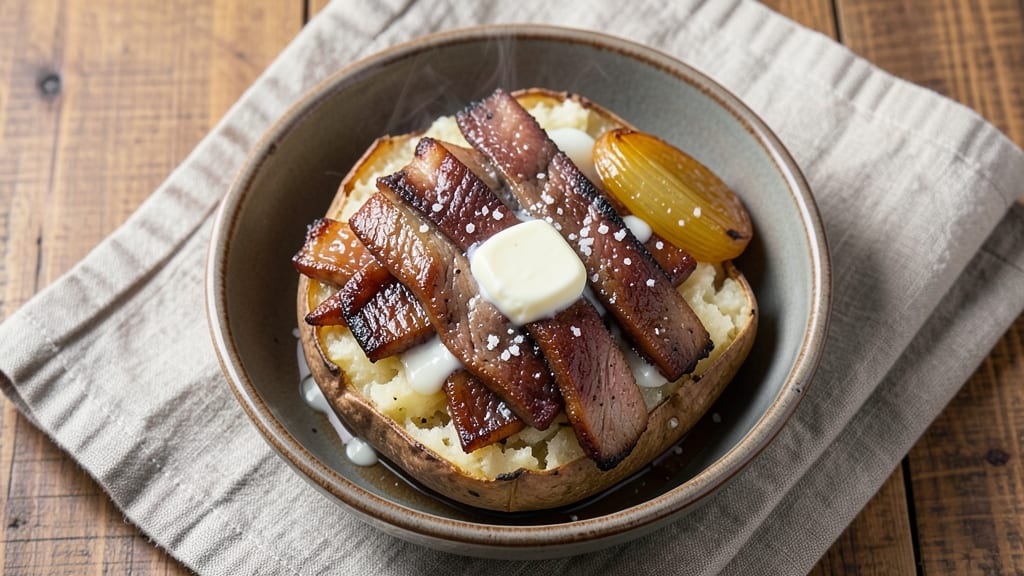
This brisket baked potato recipe transforms a classic comfort dish into a showstopper by pairing tender, slow-cooked brisket with vinegar-kissed potatoes that develop fluffy, crispy crusts.
After years of perfecting both components—smoky brisket that falls apart at the touch and potatoes with just the right texture—I can confidently say this is the ultimate weeknight dinner that feels like a restaurant meal.
The secret lies in the vinegar wash, which creates those coveted crispy edges while keeping the insides pillowy soft.
What makes this recipe truly special is how the two components complement each other: the rich, savory brisket cuts through the buttery potatoes, while the vinegar's tang balances the meal perfectly.
You'll start with a simple dry rub for the brisket, then slow-cook it until fork-tender, while the potatoes get their signature crust in the oven. This isn't just a side dish—it's a complete meal that comes together with minimal effort but maximum impact.
By the time you're done, you'll have perfectly seasoned brisket that shreds easily and potatoes with those prized crispy crusts and fluffy interiors. The combination of textures—tender meat, crispy potato edges, and creamy insides—makes every bite satisfying.
This is comfort food at its finest, elevated just enough to feel special without requiring hours in the kitchen.
Serve with a dollop of sour cream, shredded cheese, or even a simple brisket gravy to tie everything together. The best part? Leftovers reheat beautifully, making this an ideal meal prep option for busy weeks. Let's get started on creating this restaurant-quality dish at home.
Ingredients for brisket baked potato
Four potatoes, two pounds of brisket, and a vinegar trick for that perfect crispy crust.
| Ingredient | Amount | Notes |
|---|---|---|
| Russet Potatoes 🥔 | 4 whole | Large, unpeeled, scrubbed clean |
| Beef Brisket 🥩 | 2 lb | Flat cut, trimmed of excess fat |
| Yellow Onion 🧅 | 1 whole | Large, sliced into wedges |
| White Vinegar 💧 | ¼ cup | White or apple cider vinegar |
| Unsalted Butter 🧈 | ½ cup | Cold, cubed for potatoes |
| Kosher Salt 🧂 | 2 tbsp | Plus extra for seasoning |
| Black Pepper 🌶️ | 1 tsp | Freshly ground for brisket |
| Garlic Powder 🧄 | 1 tsp | For brisket dry rub |
| Smoked Paprika 🌶️ | 1 tsp | For brisket dry rub |
| Brown Sugar 🍯 | 1 tbsp | Light or dark for brisket |
| Olive Oil 🫒 | 2 tbsp | For potato crust |
| Fresh Parsley 🌿 | ¼ cup | Chopped, for garnish |
| Sour Cream 🥛 | ½ cup | Full-fat for serving |
| Shredded Sharp Cheddar 🧀 | ½ cup | For topping |
The brisket is the star here, so pick a good cut—flat-cut works best for tender results. I grab mine from Costco or the butcher section at Whole Foods when it's on sale, but any grocery store carries it. Trim off any thick fat and cut into even chunks for consistent cooking. The potatoes? Russets are non-negotiable—their high starch content gives you that fluffy interior. Skip the small ones; you want big, dramatic potatoes that can hold all that brisket. And don't peel them—the skin adds texture and keeps them from falling apart.
No white vinegar? Apple cider vinegar or lemon juice work in a pinch, though white gives that classic tang. Running short on smoked paprika? Regular paprika plus a pinch of cayenne mimics the smoky depth. The butter should be cold and cubed—don't melt it ahead of time. For the brisket rub, I double the spices if I'm making a big batch—just scale everything up. And if you're feeling fancy, swap the cheddar for Monterey Jack or pepper jack for a fun twist. The potatoes can go in the oven right after the brisket comes out of the slow cooker—no waiting around.
Brisket keeps beautifully in the fridge for 4-5 days, so make extra if you can. The potatoes reheat best in the oven—350°F for 15 minutes with a splash of water in the pan to keep them moist. For meal prep, I assemble the potatoes ahead and bake them fresh when ready to eat. The vinegar wash keeps for 1 week in the fridge if you want to make it early. And trust me, the leftovers are just as good—if not better—because the flavors meld overnight.
Why You'll Love This Recipe
- One-Pan Magic: I swear by this when I’m too tired to scrub pots—just bake the potatoes and brisket together, then shred the meat right on top. The onions caramelize in the same pan, so cleanup is basically nonexistent.
- Smoky Comfort Bite: That brisket, slow-cooked until tender, melts into the fluffy potato like it was always meant to be there. The vinegar cut gives it a tangy lift, and the butter? Pure indulgence without the guilt.
- Game Day Hero: Between us, this is my go-to for tailgates or lazy Sundays. The leftovers reheat like a dream, and I’ve even packed it for lunch—warm, filling, and no one questions the weird combo of brisket and spuds.
- Budget Powerhouse: A pound of brisket stretches across two big potatoes, and the onions add depth without costing a fortune. Honestly, it’s the kind of meal that makes you feel like you’re feeding a crowd without breaking the bank.
Step-by-step instructions for brisket baked potato recipe
Here's how to transform simple potatoes into smoky, crispy masterpieces with tender brisket.
Prepare the Brisket for Perfect Tenderization
Begin by trimming the 2 lb beef brisket, removing any excess fat while leaving about ¼ inch to protect the meat during cooking. Cut the brisket into four equal portions, each about ½-inch thick. In a small bowl, mix the 1 tsp garlic powder, 1 tsp smoked paprika, 1 tbsp brown sugar, and 1 tsp black pepper with the 2 tbsp kosher salt. Rub this mixture generously over each brisket portion, pressing it into the meat so it adheres well.
Place the seasoned brisket pieces on a wire rack set over a baking sheet and refrigerate uncovered for at least 1 hour. This resting period allows the seasoning to penetrate deeply and the meat to come to room temperature before cooking. The brisket should feel slightly tacky from the rub when you handle it—this ensures maximum flavor transfer during cooking.
Create Vinegar-Kissed Potato Crusts
Preheat your oven to 425°F. Scrub the 4 whole russet potatoes clean and pierce each with a fork in several places to allow steam to escape. Place them on a baking sheet and bake for 45 minutes, turning halfway through, until they feel tender when squeezed gently at the stem end. Remove from the oven and let them cool slightly for 5 minutes.
While the potatoes are still warm, carefully slice each in half lengthwise and scoop out about ½ cup of the fluffy insides, leaving about ¼-inch thick shells. In a small bowl, mix the 0.25 cup white vinegar with the 2 tbsp olive oil. Brush this mixture generously over the insides of the potato shells, then sprinkle with a pinch of kosher salt. Return the shells to the baking sheet and bake for an additional 10 minutes until the edges begin to crisp and turn golden brown.
Cook the Brisket to Juicy Perfection
While the potato shells are crisping, heat a large oven-safe skillet over medium-high heat. Add the 0.5 cup unsalted butter and let it melt completely. Add the seasoned brisket pieces and cook for 2-3 minutes per side until they develop a golden-brown crust. Transfer the skillet to the preheated oven and bake for 10-12 minutes, or until the internal temperature reaches 145°F for medium-rare.
Remove the brisket from the oven and let it rest for 10 minutes. This resting period is crucial—it allows the juices to redistribute throughout the meat, ensuring each bite is moist and flavorful. While the brisket rests, slice the 1 whole yellow onion into wedges and set them aside for the next step.
Assemble and Bake the Loaded Potatoes
Return the oven to 375°F. Place the crispy potato shells back in the oven for 5 minutes to maintain their warmth. Meanwhile, shred the cooked brisket using two forks, discarding any large fat pieces. In a small bowl, mix the shredded brisket with the sliced yellow onion wedges, then spoon this mixture into the potato shells, mounding it generously.
Top each potato with 2 tablespoons of the 0.5 cup shredded sharp cheddar and return to the oven for 3-5 minutes, just until the cheese begins to melt and bubble. Remove from the oven and let them rest for 2 minutes to allow the cheese to set slightly. Garnish each potato with a dollop of the 0.5 cup sour cream and a sprinkle of the 0.25 cup chopped fresh parsley.
Serve Immediately for Maximum Flavor
Serve the brisket baked potatoes immediately while they're still warm and the potato shells are crispy. The combination of the vinegar-kissed crust, tender brisket, and melted cheddar creates a harmony of textures and flavors that's impossible to resist. Each bite delivers the smoky depth of the brisket, the crispy contrast of the potato shells, and the creamy finish of the sour cream.
Pro Tips For Making Brisket Baked Potato
- PIERCE POTATOES FIRST: Russet skins are tough—score them deep (about ½-inch) with a knife in a crosshatch before baking. I used to skip this, and the skins would either stay rubbery or burn before the inside cooked. A quick rinse after scoring keeps them from drying out too fast.
- SWEAT ONIONS LOW: Slice onions thin and cook them in butter over medium-low heat until translucent, not browned. I learned this the hard way—charred onions make the brisket taste bitter, and you’ll be scraping them off your teeth later. Add a splash of vinegar at the end to brighten them up.
- DON’T SKIP THE REST: Pull the brisket from the oven when it hits 195°F internal—then let it sit under foil for 15 minutes before slicing. I was so eager to serve that I’d cut into it hot, and the slices would fall apart. This step guarantees tender, shreddable meat that holds together.
- USE COLD BUTTER: Slather the baked potatoes with cold unsalted butter right out of the fridge, then pop them in the oven. The butter melts slowly and soaks in evenly instead of pooling. I used to use room-temperature butter and ended up with greasy, unevenly coated potatoes every time.
Pro cooking tips for perfect results
Brisket Prep Secrets
Brisket loves a good head start, so I always trim the fat to ¼ inch—just enough to protect the meat without adding grease to your pan. Cut it into ½-inch thick slices for even cooking. My trick?
Mix the dry rub with a tiny bit of olive oil first—it helps the spices stick like glue. I also let the seasoned brisket rest on a rack in the fridge for 1 hour before cooking. This isn't just about room temperature—it's about letting those flavors sink in deep. 💡
Potato Crust Hacks
The vinegar trick is non-negotiable for that restaurant-worthy crust. I use white vinegar because it's sharper and creates more crisp than apple cider, but both work. Brush it on the warm potato shells—not too thick, just enough to coat.
For extra drama, I sprinkle a pinch of kosher salt right after brushing. The key is timing: bake the shells for 10 minutes at 425°F right after the initial bake, while they're still warm. Cold shells won't crisp properly.
Brisket Cooking Control
I swear by the two-stage cook for brisket: sear first in butter over medium-high heat until golden, then finish in the oven at 375°F until it hits 145°F internal. The butter adds richness and helps create a crust that locks in juices.
Never skip the 10-minute rest—this is where the magic happens. I once forgot and served brisket too soon, and it was dry. Lesson learned: patience pays off. The onions go in raw so they soften and caramelize slightly from the brisket's heat. 🔥
Potato Shell Revival
If your potato shells lose crispiness while assembling, pop them back in the oven for 3-5 minutes at 375°F before adding toppings. I also keep a small bowl of ice water nearby—dipping the shells for 10 seconds right before serving keeps them crisp longer.
For leftovers, I reheat them at 350°F for 15 minutes with a splash of water in the pan. The vinegar wash actually improves overnight, so leftovers often taste even better.
Cheese Melting Tricks
Sharp cheddar melts beautifully, but I've had better luck with Monterey Jack for a creamier texture. Sprinkle it right before the final 3-5 minutes in the oven—this gives it just enough time to melt without turning greasy.
For extra gooey goodness, I sometimes add a thin layer of sour cream under the cheese. The heat from the brisket will make it bubble up like a cloud. Garnish with parsley last—it stays fresh longer when added after baking. ✨
Make-Ahead Magic
Prep the vinegar wash and store it in the fridge for up to 1 week. Assemble the potatoes ahead (without cheese) and refrigerate them for 24 hours—they'll be even more flavorful.
Cook the brisket fresh the day of serving, but you can shred and refrigerate it for 3 days. When reheating, I cover the potatoes with foil for 10 minutes at 350°F to keep them moist, then uncover for the last 5 minutes to crisp the edges again.
Nutrition facts
Frequently asked questions
Can I use sweet potatoes instead of russets?
While you can try sweet potatoes, they won't give you the same fluffy texture or crispy crust. Russets have the perfect starch-to-moisture ratio for this recipe. If you're set on sweet potatoes, bake them whole for 1 hour at 400°F before making shells, and use a mix of olive oil and honey for the vinegar wash to help with browning.
How do I fix brisket that's too tough?
If your brisket turns out tough, it likely wasn't cooked long enough or rested properly. For next time, aim for an internal temp of 195°F (for pulled texture) and let it rest 20-30 minutes before slicing. If you're short on time, try slicing against the grain and serving with extra gravy to help tenderize.
Can I make this recipe in a slow cooker?
Cook the brisket in your slow cooker on low for 8-10 hours with the same dry rub. For the potatoes, bake them as directed, then transfer to the slow cooker with the vinegar wash and cook on high for 30 minutes before adding toppings. Just watch the potato shells—they may need less time to crisp than in the oven.
What's the best way to reheat leftovers?
For best results, reheat potato shells at 350°F for 15 minutes with a splash of water in the pan to maintain moisture. Cover with foil for the first 10 minutes to prevent drying, then uncover to crisp the edges again. Brisket reheats best in a skillet with a little broth or water to keep it juicy.
Can I make this vegetarian?
You can substitute the brisket with hearty plant-based options like jackfruit or mushrooms marinated in smoky BBQ sauce. For the potato shells, keep the vinegar wash but consider adding a sprinkle of nutritional yeast for a cheesy flavor. The texture contrast will still be delicious—just swap the meat for a protein-rich alternative.