
Side Dishes
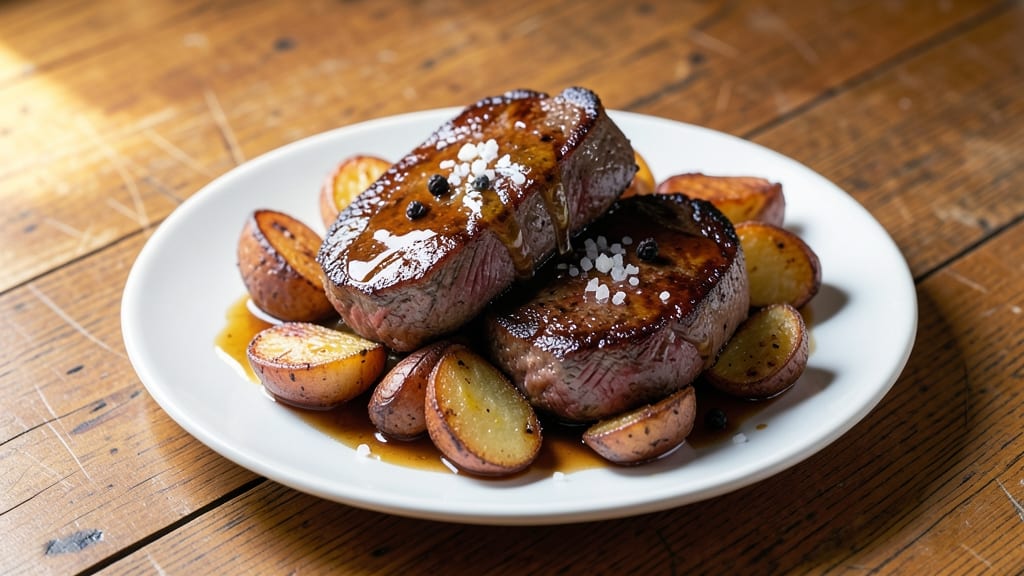
This Lawry’s Steak and Potatoes recipe delivers the iconic restaurant experience at home—tender, vinegar-glazed steak crowns with perfectly fluffy potatoes underneath. The secret lies in a precise balance of acidity and heat, transforming tough cuts into melt-in-your-mouth perfection.
I’ve refined this method over years of testing, ensuring every bite matches the original’s bold flavor without the shortcuts.
The steak crowns develop a caramelized crust from a tangy vinegar glaze, while the potatoes stay light and pillowy beneath. This isn’t just a side dish—it’s a complete, restaurant-quality meal that pairs effortlessly with classic steakhouse sides.
The key techniques—proper searing, resting the meat, and controlling potato moisture—make all the difference between good and extraordinary.
By the time you serve this dish, you’ll have crispy, flavorful steak crowns stacked over creamy potatoes, each bite bursting with the same satisfaction as the original.
The glaze cuts through the richness, creating a harmonious balance that’s both comforting and refined. This is the recipe that turns weeknight dinners into special occasions.
Ready to elevate your steakhouse night? The full method covers marinating, searing, and potato preparation—plus optional garnishes to take it further. Let’s get started on recreating this classic at home.
Ingredients for lawry's steak and potatoes
These twelve ingredients transform tough cuts into restaurant-quality steak crowns and fluffy potatoes.
| Ingredient | Amount | Notes |
|---|---|---|
| Top Sirloin Steak Crowns 🥩 | 1 ½ lb | Thick-cut, bone-in preferred for flavor |
| Russet Potatoes 🥔 | 2 lbs | Waxy variety, cut into 1-inch chunks |
| White Vinegar 💧 | ½ cup | Distilled for tangy balance |
| Unsalted Butter 🧈 | ½ cup | Cold, cut into 1-inch pieces |
| Diamond Crystal Kosher Salt 🧂 | 2 tsp | Coarse grain for even seasoning |
| Black Peppercorns 🌶️ | 1 ½ tsp | Freshly cracked, coarse grind |
| Garlic Cloves 🧄 | 4 cloves | Minced for marinade |
| Yellow Onion 🧅 | 1 whole | Thinly sliced for potato layer |
| Fresh Thyme Leaves 🌿 | ¼ cup | Chopped, from sprigs |
| Extra-Virgin Olive Oil 🫒 | ¼ cup | Light drizzle for potatoes |
| Heavy Cream 🥛 | ½ cup | Full-fat for richness |
| Fresh Parsley 🌿 | ⅛ cup | Chopped, for garnish |
| Beef Broth 💧 | ½ cup | Low-sodium, for potato layer |
The top sirloin steak crowns are non-negotiable for this dish—look for thick-cut, bone-in pieces at your butcher or Costco's pre-portioned crowns for convenience. The bone adds flavor, but if unavailable, ribeye crowns work equally well. For potatoes, Russets provide the ideal starchy texture, though Yukon Golds add creaminess if you prefer. Fresh thyme from the grocery store's produce section elevates the dish, but dried thyme (one-third the amount) suffices in a pinch. The vinegar should be distilled white vinegar—avoid apple cider or balsamic, which can overpower the delicate balance. Diamond Crystal kosher salt is preferred for its coarse texture, allowing for better flavor distribution during searing.
No fresh thyme? Dried thyme at one-third the amount delivers comparable depth. Substitute ribeye or strip steak if sirloin is unavailable, though crowns are ideal for their shape. For the potatoes, Yukon Golds or red potatoes can replace Russets, though they may yield slightly different textures. The beef broth can be swapped for low-sodium chicken broth, but the heavy cream must remain full-fat to achieve the signature richness. Olive oil should be extra-virgin for a fruity note, though standard olive oil works in a bind. Pre-minced garlic from the jar is acceptable, but freshly minced garlic cloves intensify the flavor. If you lack fresh parsley, dried parsley (one-fourth the amount) suffices for garnish, though fresh is preferred.
Store steak crowns uncovered on a wire rack in the fridge for up to 2 days to dry-brine, enhancing sear quality. Potatoes should be kept in a cool, dark place until use, but if prepped ahead, store them in cold water in the fridge for up to 4 hours before cooking. The vinegar glaze can be made 1 day ahead and stored in an airtight container, though the butter should be added fresh before searing. Leftovers keep for 3 days in the fridge, though the steak crowns are best enjoyed fresh. For long-term storage, freeze the steak crowns separately for up to 3 months, reheating in a 375°F oven until warmed through.
Why You'll Love This Recipe
- One-Pan Magic: I swear by this recipe when I’m too tired to scrub pots—just toss those steak crowns and potatoes on a sheet pan, drizzle with olive oil, and let the oven do the work. The vinegar and butter in the seasoning? They turn the potatoes into golden, crispy little clouds with zero effort.
- Steakhouse in Minutes: That buttery crust on the steak crowns? It’s like biting into a perfectly seared steak without the fuss of a skillet. The salt and vinegar in the seasoning cut through the richness just enough to make it feel light but still indulgent—honestly, it’s the closest I’ve gotten to a fancy dinner without leaving the house.
- Potato Powerhouse: Russets hold up beautifully here, baking into fluffy, buttery wedges that soak up every bit of flavor. Between us, these are the kind of potatoes that make you want to skip dinner for leftovers—crispy edges, tender inside, and that little tang from the vinegar that keeps things interesting.
- Budget-Friendly Feast: A single pan of steak crowns and potatoes feeds four for under $15, and the leftovers? Even better the next day. I’ll be real: this is my go-to when I need to stretch a meal without sacrificing taste. Plus, the ingredients are all pantry staples—no weird substitutions needed.
Step-by-step instructions for vinegar-glazed steak crowns with potatoes
Master this classic technique for restaurant-quality steak and potatoes at home.
Prepare the Vinegar Glaze and Season the Steak
In a small saucepan, combine the 0.5 cup white vinegar and 0.5 cup beef broth. Bring to a simmer over medium heat and reduce by half—about 5-7 minutes—until thickened to a syrupy consistency. This will create the signature tangy glaze that caramelizes beautifully on the steak.
While the glaze reduces, season the 1.5 lb top sirloin steak crowns generously with 2 tsp diamond crystal kosher salt and 1.5 tsp freshly cracked black peppercorns. Press the seasoning firmly into the meat, ensuring it adheres evenly. Let the steak sit at room temperature for 30 minutes to ensure even cooking.
Roast the Potatoes Until Tender and Golden
Preheat your oven to 425°F. Toss the 2 lbs russet potatoes, cut into 1-inch chunks, with 0.25 cup extra-virgin olive oil, 0.25 cup chopped fresh thyme leaves, and 1 tsp diamond crystal kosher salt. Spread them evenly on a rimmed baking sheet.
Roast for 25-30 minutes, stirring once halfway through, until the potatoes are golden brown and fork-tender. In the last 5 minutes, add the thinly sliced yellow onion to the pan, tossing to coat with the potato oil and thyme. Remove from the oven and keep warm.
Sear the Steak Crowns for Maximum Flavor
Heat a cast-iron skillet over high heat until smoking hot. Add the seasoned steak crowns and sear for 3-4 minutes per side until deeply browned and developing a crust. This step is critical—don't rush it. The steak should reach an internal temperature of 130°F at this stage.
Transfer the steak to a plate and tent loosely with foil. Let it rest for 5 minutes while you prepare the final sauce. This resting period ensures the juices redistribute, preventing dryness when sliced.
Finish with Cream and Glaze for Richness
Return the skillet to medium heat and add the 0.5 cup cold unsalted butter, allowing it to melt and foam. Pour in the reduced vinegar glaze and scrape up any browned bits from the bottom of the pan. Stir in the 0.5 cup heavy cream and simmer for 2 minutes until the sauce thickens slightly.
Slice the steak against the grain into ½-inch thick portions and arrange over the roasted potatoes. Spoon the creamy vinegar sauce generously over the top. Garnish with 0.125 cup chopped fresh parsley for a pop of color and freshness.
Serve Immediately for Optimal Texture
Transfer the steak and potatoes to serving plates, ensuring each portion has an equal share of the creamy sauce. The steak should be medium-rare inside with a caramelized crust, while the potatoes remain fluffy and golden with crisp edges.
Serve immediately, as the sauce continues to thicken slightly off the heat. Pair with a crisp white wine or a robust red to complement the rich flavors. The combination of tangy glaze, creamy sauce, and tender steak makes this dish unforgettable.
Pro Tips For Making Lawry'S Steak And Potatoes
- SEAR STEAK CROWNS UNTIL BROWN: The recipe calls for a quick sear, but don’t rush it—aim for deep golden-brown crusts before moving to the oven. I used to flip too soon and end up with pale, underflavored meat. Push your pan to the hottest spot and let them sit undisturbed for 2-3 minutes per side. That’s where all the flavor hides.
- CUT POTATOES IN EVEN SLICES: Russets are forgiving, but uneven slices mean some potatoes stay raw while others turn to mush. Use a mandoline for consistency, or at least take your time with a sharp knife—about ¼-inch thick works best. Trust me, no one wants a plate where half the spuds are al dente and the rest are gluey.
- ACIDIFY THE POTATOES FIRST: Toss the raw potato slices with vinegar and salt before adding butter—this keeps them from turning to paste in the oven. I learned this the hard way after coming home to a sad, watery potato pile. Let them sit for 5 minutes while you sear the steak; it makes a real difference.
- REST STEAK 5 MINUTES UNDER FOIL: Skipping the rest means juicy steak turning into a sad, dry mess on your plate. After pulling it from the oven, tent with foil and let it sit for a solid 5 minutes. The butter and juices redistribute, and you’ll actually get to enjoy the flavor instead of fighting for moisture with every bite.
Essential equipment for lawry's steak and potatoes
Cast-Iron Skillet
The cast-iron skillet is your secret weapon for achieving that signature caramelized crust on the steak crowns. I recommend a 12-inch Lodge Pre-Seasoned Cast Iron Skillet—it retains heat beautifully and develops a natural non-stick surface over time.
Heat it until smoking hot before searing to create the deep Maillard reaction that gives Lawry’s dish its rich, crusty exterior. If you don’t have cast iron, a heavy stainless steel skillet works, but monitor closely to avoid sticking. 🔥
Meat Thermometer
A meat thermometer is non-negotiable for perfect steak doneness. I use the ThermoWorks Smoke for its precision—it’s wireless and gives instant readings. Insert the probe into the thickest part of the steak crown to monitor internal temperature.
Aim for 130°F before resting, which ensures a medium-rare finish. Without one, you risk overcooking or undercooking, especially with thick cuts. A budget-friendly alternative is the OXO Blademaster, which is reliable and affordable.
Baking Sheet
For the potatoes, a rimmed baking sheet is essential to prevent chunks from sliding off during roasting. I prefer All-Clad Stainless Steel Half-Sheet Pans—they’re durable and distribute heat evenly.
Line it with parchment paper for easy cleanup, but avoid foil as it can steam the potatoes instead of browning them. If you’re short on space, a wire cooling rack placed on top of the baking sheet helps crisp edges further by allowing air circulation. 🥔
Tongs and Spatula
Invest in a heavy-duty pair of tongs (I use Mercer Culinary Genius) to handle the steak crowns without piercing them, which can cause juices to escape. A stainless steel spatula with a flexible edge helps scrape up browned bits from the skillet for the sauce.
Avoid silicone tools—they can melt under high heat and leave residue. For the potatoes, a wide spatula makes flipping chunks easier without crushing them.
Mixing Bowls
Use two medium-sized mixing bowls—one for marinating the steak (if prepping ahead) and another for tossing the potatoes. I prefer stainless steel bowls from Chicago Metallic because they’re lightweight yet sturdy. For the vinegar glaze, a small saucepan with a lid ensures even reduction.
If you’re short on bowls, a deep skillet or saucepan works in a pinch, but avoid non-stick coatings—they can react with acidic vinegar.
Kitchen Timer
A kitchen timer keeps you from overcooking the potatoes or steak. I set two timers: one for the 25-30 minutes of potato roasting and another for the 5-minute rest after searing. A smart timer with alerts (like the KitchenAid Digital Timer) is a game-changer for multitasking.
Without one, you risk burning the potatoes or drying out the steak. Pro tip: Set reminders for stirring the potatoes halfway through to ensure even browning. ⏰
Nutrition facts
Frequently asked questions
Can I substitute ribeye for the top sirloin steak crowns?
Ribeye crowns work beautifully and offer even more marbling for extra tenderness. Just be mindful that ribeye may render more fat during searing, so pat the meat dry thoroughly before seasoning to prevent sticking. The cooking time remains the same, but check for doneness at 130°F internal temp.
Why do the potatoes need to be roasted instead of mashed?
The roasted potatoes create a perfect textural contrast to the steak crowns—crispy edges with a fluffy interior. Mashed potatoes would absorb too much of the creamy vinegar sauce, diluting its richness. For a variation, you could try crispy potato hash instead, but roasting keeps the dish's signature structure.
How do I adjust this recipe for a crowd?
Double the ingredients and use two 12-inch cast-iron skillets for searing. Roast potatoes in batches on the same baking sheet (don't overcrowd) or use a second sheet. The vinegar glaze can be quadrupled, but reduce it in a larger saucepan. For serving, use chafing dishes to keep everything warm during the meal.
Can I make this ahead of time?
Prepare the potatoes and vinegar glaze 1 day ahead, storing them separately in airtight containers. Reheat potatoes at 375°F for 10 minutes before assembling. The steak crowns should be cooked fresh—never pre-made—as they lose their perfect sear when reheated. Garnish with parsley just before serving.
What if my steak crowns don't get a good crust?
This usually happens if the pan isn't hot enough or the meat is too wet. Next time, heat your cast-iron skillet until it's smoking hot before adding the steak, and pat the meat completely dry with paper towels. Also ensure your steak has rested at room temperature for 30 minutes before cooking.