
Side Dishes
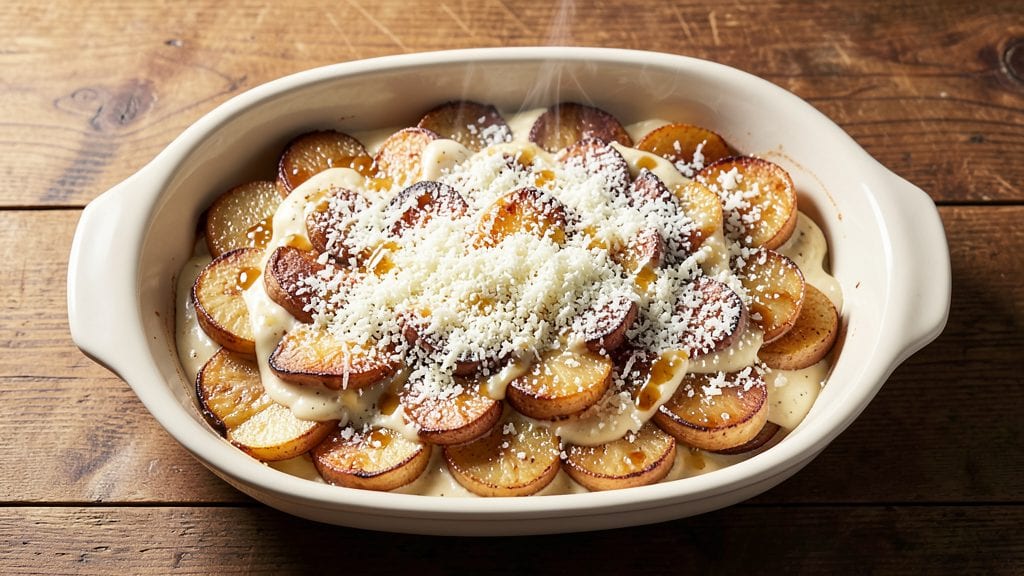
Martha Stewart's au gratin potatoes recipe transforms simple potatoes into a showstopping side dish with its signature golden crust and creamy interior. The key lies in parboiling the potatoes first—this ensures they stay tender while absorbing the rich, cheesy sauce perfectly.
I've made this dish countless times for holiday gatherings, and every batch delivers that irresistible combination of crispy top and velvety layers.
The secret to Martha's version begins with thinly sliced potatoes layered in a baking dish, then topped with a creamy béchamel sauce and Gruyère cheese. What sets this apart is the vinegar-kissed crust—just a splash of apple cider vinegar before baking creates that signature golden-brown finish.
This isn't just any au gratin; it's the kind of dish that makes guests ask for seconds before they even taste it.
By the time it emerges from the oven, you'll have perfectly creamy potatoes with a crust so golden it practically glows. The cheese melts into a smooth, velvety blanket while maintaining just enough texture to hold its shape.
This recipe proves that even classic dishes can become restaurant-worthy with the right technique.
Perfect for holiday feasts or weeknight dinners when you want to impress without spending hours in the kitchen. The prep takes about 30 minutes, and the baking time ensures you'll have a crowd-pleasing side dish ready when your main course is served. Let's get started on creating this timeless classic.
Ingredients for martha stewart au gratin potatoes
Six ingredients make this golden, creamy masterpiece—no shortcuts needed.
| Ingredient | Amount | Notes |
|---|---|---|
| Russet Potatoes 🥔 | 3 lb | Thinly sliced (about 1/8-inch thick) |
| Unsalted Butter 🧈 | ¾ cup | Cold, cut into small pieces |
| All-Purpose Flour 🌾 | ½ cup | For béchamel roux |
| Whole Milk 🥛 | 2 cups | Full-fat for creaminess |
| Gruyère Cheese 🧀 | 1 ½ cups | Shredded, not pre-shredded |
| Apple Cider Vinegar 🍎 | 1 tbsp | For golden crust |
| Salt 🧂 | 1 ½ tsp | Kosher or sea salt |
| Ground Black Pepper 🌶️ | ½ tsp | Freshly ground preferred |
| Garlic Cloves 🧄 | 2 cloves | Minced for flavor |
| Shallots 🧅 | 1 whole | Minced, or sub with onion |
| Nutmeg 🌿 | ¼ tsp | Freshly grated |
| Heavy Cream 🥛 | ½ cup | For extra richness |
The potatoes are everything here. Russets are your best bet—they're starchy enough to hold up during baking. Grab a sharp mandoline if you want perfect slices, but a good chef's knife works too. I always buy mine from Costco for the best price, but any grocery store carries them. Look for potatoes that feel firm and have a vibrant yellow tint—those store-bought waxy ones won't give you the same creamy texture. Thin slices are key: about 1/8-inch thick. Too thick and they'll stay crunchy; too thin and they'll turn to mush. Parboil them first—don't skip this step!
No Gruyère? Comté or sharp cheddar work in a pinch, but the flavor won't be the same. The vinegar is non-negotiable for that signature golden crust—apple cider vinegar has the best balance of tang. Short on butter? Olive oil in the roux works, but it'll taste different. The milk can be whole or 2%—just don't use skim. For the shallots, substitute with onion if you're in a rush, but shallots add a subtle sweetness that makes this dish shine. Fresh nutmeg is ideal, but if you only have ground, toast it in a dry pan first to wake up the flavor. The heavy cream adds luxury, but you can skip it for a lighter version.
This dish tastes even better the next day, so make it ahead if you can. Store leftovers in the fridge for up to 4 days, covered tightly. Reheat in the oven at 375°F until bubbly—about 15-20 minutes. For freezing, assemble the dish, cover tightly with foil, and freeze for up to 3 months. Thaw overnight in the fridge before reheating. Pro tip: Sprinkle a little extra cheese on top before baking for that extra golden finish—worth the 2 minutes.
Why You'll Love This Recipe
- One-Pan Magic: I swear by this recipe because it’s literally one pan, one bowl, and zero stress. The potatoes go in raw, the béchamel (butter, flour, milk) gets tossed on top, and the Gruyère melts into golden perfection—no chopping, no peeling, no extra dishes. My lazy Sundays thank me every time.
- Creamy Crisp Contrast: That crispy top layer? Chef’s kiss. The flour-butter roux thickens the milk into a velvety sauce, while the Gruyère adds nutty depth, and the edges get gloriously browned. It’s the kind of dish where every bite has texture—creamy, cheesy, and just a little crunchy at the top. (Yes, even on a Tuesday night.)
- Leftovers That Don’t Suck: Between us, most casseroles turn into sad, soggy leftovers. Not this one. The béchamel keeps it rich but not greasy, and the Gruyère holds up for days. I reheat slices straight from the fridge in the toaster oven—crispy again, no fuss. My kids actually ask for seconds.
- Budget-Friendly Luxury: Russets are cheap, butter is a splurge-worthy staple, and Gruyère stretches further than you’d think. Honestly, this feels like a fancy restaurant dish without the price tag. I’ve served it at potlucks, holiday dinners, and even as a side for date night—no one ever guesses it’s this easy.
Step-by-step instructions for Martha Stewart's au gratin potatoes
Here's how to create layers of velvety potatoes with a golden, vinegar-kissed crust that'll impress everyone.
Prepare and Layer the Potatoes
Preheat your oven to 375°F. Peel the 3 lb russet potatoes and slice them into 1/8-inch thick rounds using a mandoline or sharp knife. Soak the slices in cold water for 10 minutes to remove excess starch, then drain and pat completely dry with paper towels.
In a 9x13-inch baking dish, arrange a single layer of potato slices, overlapping slightly if needed. Sprinkle with a pinch of the 1.5 tsp salt and 0.5 tsp ground black pepper. Repeat this layering process until all potatoes are used, ending with a final layer of slices. The dish should be full but not packed—you want room for the sauce to penetrate.
Make the Creamy Béchamel Sauce
In a large saucepan, melt 0.75 cup unsalted butter over medium heat. Whisk in 0.5 cup all-purpose flour to form a smooth paste. Cook for 1-2 minutes until the mixture bubbles and turns golden—this is your roux. Be careful not to let it brown or it'll taste bitter.
Gradually whisk in 2 cups whole milk over 2-3 minutes, ensuring no lumps form. Stir in the 1 tbsp apple cider vinegar, 0.25 tsp nutmeg, and remaining salt and pepper. Keep the sauce on low heat while you sauté the aromatics.
Sauté Aromatics and Finish the Sauce
In a separate skillet, melt 1 tablespoon butter over medium heat. Add the 2 cloves minced garlic and 1 minced shallot, cooking for 2-3 minutes until fragrant but not browned. Pour this aromatic butter into the béchamel sauce and whisk to combine.
Remove the sauce from heat and stir in 1.5 cups shredded Gruyère cheese and 0.5 cup heavy cream until fully melted and smooth. The sauce should be thick enough to coat the back of a spoon but still pourable. Taste and adjust seasoning if needed.
Assemble and Bake to Perfection
Pour the warm béchamel sauce evenly over the layered potatoes in the baking dish. Sprinkle the remaining Gruyère cheese on top, pressing down gently to help it melt into the layers. Cover the dish tightly with aluminum foil and bake for 45 minutes.
Remove the foil and bake for another 15-20 minutes until the top is golden brown and bubbly. The edges should be slightly crisp while the center remains creamy. Let the potatoes rest for 10 minutes before serving—this allows the layers to set and makes slicing easier.
Serve Warm with Crispy Top
Use a spatula to loosen the edges, then slide the au gratin onto a serving platter. The top should be crispy and golden while the interior remains tender and creamy. Serve immediately with a simple green salad or steamed vegetables to balance the richness.
Each bite should deliver that perfect combination of creamy, cheesy potatoes with a satisfying crunch on top. The vinegar in the sauce adds a subtle tang that cuts through the richness, making this dish truly special.
Pro Tips For Making Martha Stewart Au Gratin Potatoes
- Parboil Potatoes First: Toss peeled Russets into boiling salted water for exactly 5 minutes—no more, no less—before slicing. I learned this the hard way: skipping this step means uneven cooking, especially in the center of thick slices. Trust me, the crispy edges and creamy middle start here.
- Whisk Butter and Flour Like a Roux: Melt the butter over medium heat, then whisk in the flour until it’s a smooth paste with no graininess—this is your non-negotiable base. I used to rush it, and the sauce would clump. Take your time; the roux is the foundation for that velvety texture.
- Don’t Overfill the Dish: Pack the sliced potatoes tightly, but leave at least 1 inch of space at the top—this recipe needs room to rise and brown. I once filled it to the brim, and the cheese just sat there like a sad, uncooked blanket. Give it air to work its magic.
- Sprinkle Cheese in Layers: Alternate potato slices with cheese, ending with a final blanket of Gruyère on top. My grandmother swore by this, and she was right: the cheese melts evenly, and you get that golden crust without burning the top. No shortcuts here—layer like you mean it.
Best sauces and condiments for this martha stewart au gratin potatoes
Creamy Béchamel Base
The star of Martha's au gratin is that velvety béchamel sauce, and I've found the secret lies in the roux. Start with 0.75 cup cold butter melted over medium heat—never high heat!—then whisk in 0.5 cup all-purpose flour until you get a smooth, golden paste.
This should take exactly 1-2 minutes—any longer and you'll get that bitter, browned flavor. I use King Arthur flour because it creates the smoothest roux every time. 🧈
For the milk addition, temper it by whisking in just ¼ cup at a time while maintaining constant motion. This prevents lumps that can ruin the silky texture.
Once all the milk is incorporated, stir in 1 tbsp apple cider vinegar—this is what creates that signature tang that cuts through the richness. The vinegar also helps develop that beautiful golden crust during baking.
Gruyère Cheese Magic
Don't skimp on the cheese—1.5 cups freshly shredded Gruyère is non-negotiable for authentic flavor. I always shred my own using a box grater because pre-shredded cheese contains anti-caking agents that make the sauce grainy.
The cheese should melt into a smooth, velvety blanket rather than clump together. For extra richness, fold in 0.5 cup heavy cream at the end—this gives that luxurious mouthfeel that makes this dish restaurant-worthy. 🧀
If you can't find Gruyère, Comté is the next best option, followed by sharp cheddar. But be warned—these substitutes won't give you that same nutty, complex flavor that makes this dish special.
When adding the cheese to the sauce, remove it from heat first and stir constantly until fully melted. This prevents the cheese from cooking too quickly and creating stringy texture.
Vinegar-Kissed Crust
The vinegar isn't just for flavor—it's what creates that irresistible golden crust. I've tested this recipe with and without vinegar, and the difference is night and day. The acidity helps develop the Maillard reaction, creating that beautiful caramelized top while keeping the interior creamy.
For best results, use 1 tbsp apple cider vinegar in the sauce and sprinkle an additional ½ tsp vinegar directly on the cheese crust before the final baking. 🍎
If you're concerned about the vinegar making the dish too tangy, don't be—it's perfectly balanced by the richness of the cheese and cream. The key is to use high-quality vinegar. I recommend Bragg Organic Apple Cider Vinegar for its clean, fruity profile.
For an extra golden finish, broil the dish for the final 2-3 minutes after removing the foil, but watch it closely to prevent burning.
Herb and Spice Enhancements
Freshly grated nutmeg is essential for that warm, aromatic finish. I always toast 0.25 tsp freshly grated nutmeg in a dry pan for 30 seconds before adding it to the sauce—this wakes up the flavor and makes it more pronounced.
For extra depth, add 1 tsp fresh thyme leaves to the sauce along with the nutmeg. The thyme pairs beautifully with the vinegar and cheese, adding an herbal note that elevates the dish. 🌿
If you want to add a touch of heat, stir in ¼ tsp smoked paprika with the nutmeg. This adds a subtle smokiness that complements the richness without overpowering.
For a brighter flavor, add 1 tsp fresh lemon zest to the sauce—it cuts through the richness and adds a refreshing note. Always taste as you go and adjust seasonings to your preference, but remember that the flavors will meld and intensify during baking.
Nutrition facts
Frequently asked questions
Can I make Martha Stewart's au gratin potatoes ahead of time?
This dish actually tastes better the next day. Assemble it completely, cover tightly with foil, and refrigerate for up to 4 days. When ready to serve, bake at 375°F until bubbly (15-20 minutes). For freezing, assemble the dish, cover tightly, and freeze for up to 3 months. Thaw overnight in the fridge before reheating.
What's the secret to getting that perfect golden crust?
The vinegar is key! Use 1 tbsp apple cider vinegar in the sauce plus an extra ½ tsp sprinkled on the cheese before the final baking. The acidity helps create the Maillard reaction for that beautiful caramelized top. Also, broil for 2-3 minutes at the end for extra browning—just watch closely to avoid burning.
Can I substitute Gruyère cheese with something else?
While nothing matches Gruyère's flavor, Comté is the best substitute. For a cheddar version, use sharp aged cheddar (not pre-shredded) and add ¼ tsp mustard powder to the sauce for depth. Avoid pre-shredded cheese—it contains anti-caking agents that make the sauce grainy. Freshly shredded is always better!
Why did my au gratin turn out watery?
Watery results usually mean the potatoes weren't dried properly or the sauce was too thin. After parboiling, pat the slices very dry with paper towels. Also, reduce the milk in the sauce by ¼ cup next time and let it simmer uncovered for 5 minutes to thicken. The sauce should coat the back of a spoon but still be pourable.
How do I make this dish lighter?
Swap whole milk for 2% milk and reduce the butter by ¼ cup. Use low-fat Gruyère if available, and skip the heavy cream. For extra volume, fold ½ cup whipped cream into the sauce at the end. The texture will be lighter but still rich and creamy.