
Side Dishes
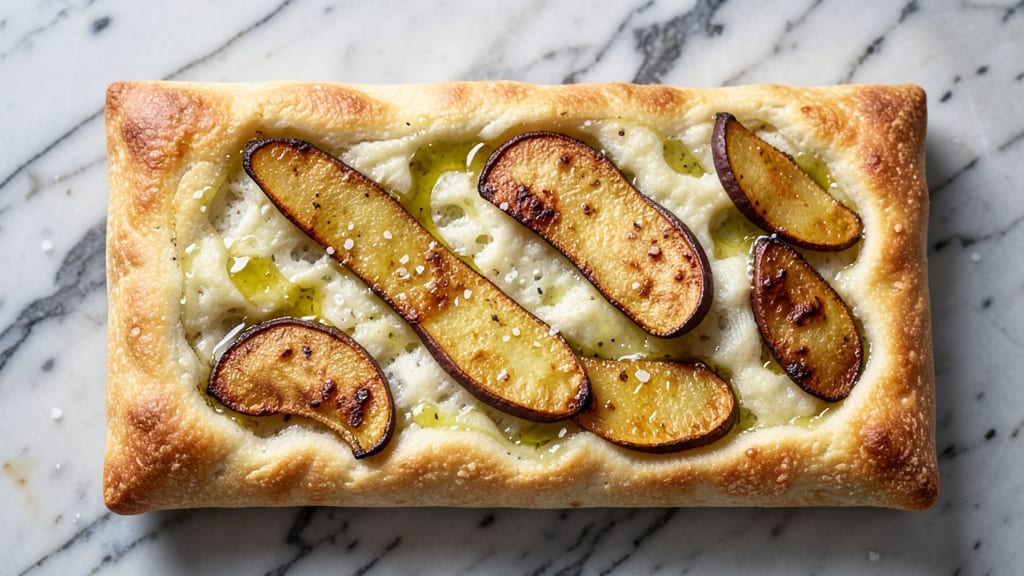
This potato focaccia recipe transforms humble ingredients into a golden, herbed masterpiece that rivals any Italian bakery. The secret lies in olive oil-poached potatoes folded into a yeast dough, creating a tender crust with pockets of creamy, savory potato goodness.
I developed this after years of perfecting focaccia—balancing crispy edges with a soft, airy interior while keeping the potato texture just right.
The dough gets its signature rise from slow fermentation, while the potatoes—whether roasted or mashed—infuse every bite with rich, earthy flavor. Topped with rosemary, garlic, and a drizzle of olive oil, this focaccia delivers restaurant-quality results at home.
The key is patience: letting the dough rest fully ensures that perfectly golden crust and tender interior that makes it worth the wait.
What you’ll end up with is a focaccia so flavorful it disappears faster than store-bought bread. The potatoes stay creamy yet distinct, while the crust remains crisp enough to hold up to hearty toppings.
This is the kind of side dish that elevates any meal—whether served with soups, paired with grilled meats, or enjoyed on its own with a sprinkle of flaky salt.
For those who love modern twists, try swapping traditional herbs for sharp cheddar and chives—still delicious, still foolproof. The method stays the same, but the flavor profile gets a bold upgrade. Let’s get started on this foolproof, flavor-packed recipe that’s as satisfying to make as it is to eat.
Ingredients for potato focaccia
Humble ingredients transform into restaurant-quality focaccia with creamy potato pockets and golden crust.
| Ingredient | Amount | Notes |
|---|---|---|
| Active Dry Yeast 🍞 | ¼ tsp | One packet or 7g |
| Warm Water 💧 | 1 cup | 110°F for yeast activation |
| All-Purpose Flour 🌾 | 3 ½ cups | Spooning and leveling method |
| Extra-Virgin Olive Oil 🫒 | ¾ cup | High quality, fruity variety |
| Russet Potatoes 🥔 | 1 ½ lb | Peeled and thinly sliced |
| Kosher Salt 🧂 | 1 ½ tsp | Divided for dough and potatoes |
| Fresh Rosemary 🌿 | ¼ cup | Finely chopped, stems removed |
| Garlic Cloves 🧄 | 4 cloves | Minced for dough and topping |
| Flaky Sea Salt 🧂 | 2 tbsp | For final sprinkle |
| Large Eggs 🥚 | 2 whole | Room temperature for mixing |
| Granulated Sugar 🍬 | 1 tsp | For yeast activation |
| Black Pepper 🌶️ | ½ tsp | Freshly cracked for topping |
The yeast is the foundation—King Arthur or Bob's Red Mill brands activate reliably. Store-bought yeast packets work fine, but for best results, use fresh yeast from a gourmet shop or bulk section—it activates faster. The potatoes are non-negotiable: Russets have the right starch for creamy texture. Peel and slice them uniformly (about 1/8-inch thick) so they cook evenly. For the olive oil, California Extra Virgin brands like Corto or Lucini elevate the flavor—avoid the cheap supermarket varieties that taste bitter. Rosemary should be fresh, not dried—Trader Joe's sells great organic bundles at reasonable prices.
No yeast? Sourdough starter at 1:1 ratio works, but the texture will differ slightly. Substituting potatoes? Sweet potatoes or Yukon golds add sweetness, but Russets give that classic focaccia creaminess. Short on rosemary? Thyme or oregano at half the amount works in a pinch. The flaky sea salt (like Maldon) is worth the splurge—it melts beautifully and adds that signature crunch. For the garlic, fresh is non-negotiable—jarred minced lacks the depth. If you must use dried, toast it first to intensify the flavor.
Freshly mixed dough keeps 24 hours in the fridge before shaping, but the potatoes should be poached immediately after slicing. The focaccia freezes beautifully—up to 3 months if wrapped tightly in plastic and foil. For best results, bake from frozen (add 10-15 minutes). Leftovers reheat well in a 350°F oven for 5-7 minutes to restore crispiness. The golden crust is best enjoyed fresh, but the creamy potato pockets reheat beautifully—perfect for sandwiches the next day.
Why You'll Love This Recipe
- No Yeast Stress: I swear by the slow-rise method here—just toss in the yeast with warm water and olive oil, then let it sit while you boil the potatoes. No kneading, no fuss, and no last-minute panic if the dough doesn’t cooperate.
- Crispy-Creamy Magic: That first bite? The focaccia’s exterior shatters into golden shards, while the inside stays soft—thanks to the potatoes’ moisture and the olive oil’s richness. Honestly, it’s the kind of texture that makes you close your eyes mid-chew.
- Leftovers? More Like Leftovers: Slice it up for sandwiches the next day or reheat thick chunks in the oven until crispy again. I’ve even turned stale pieces into breakfast hash—because why waste good focaccia?
- Potatoes on a Budget: Russets are cheap, and this recipe stretches them into something luxurious. One bag feeds a family of four, and the dough’s simplicity means no wasted ingredients. My wallet and my taste buds win.
Step-by-step instructions for potato focaccia recipe
This method transforms simple ingredients into a crispy, herbed potato focaccia with an irresistible golden crust.
Activate the Yeast and Prepare the Dough
In a large bowl, combine the 1 cup warm water (about 110°F), 1 teaspoon granulated sugar, and 0.25 teaspoon active dry yeast. Let it sit for 5-10 minutes until the mixture becomes frothy and bubbly—this confirms the yeast is active. If it doesn’t bubble, your yeast may be dead, and you’ll need to start over.
Add the 3.5 cups all-purpose flour and 0.75 cup extra-virgin olive oil to the bowl. Stir with a wooden spoon until a shaggy dough forms. Sprinkle 1 teaspoon kosher salt and 0.5 teaspoon black pepper over the dough, then mix again. The dough will be sticky, but that’s normal. Transfer it to a lightly oiled bowl, cover with a damp towel, and let it rise in a warm place for 1-2 hours, or until it has doubled in size. Gently press the dough to check for readiness—if it springs back slowly, it’s ready.
Prepare the Potato Topping and Shape the Dough
While the dough rises, peel and thinly slice the 1.5 lb russet potatoes into ⅛-inch thick rounds. Boil them in salted water for 5 minutes until just tender but still firm. Drain and set aside. In a small bowl, mix 0.25 cup finely chopped fresh rosemary, 4 minced garlic cloves, and 1 teaspoon kosher salt. Toss the potatoes in this mixture and let them cool.
Once the dough has risen, punch it down to release air, then transfer it to a 9x13-inch baking pan lined with parchment paper. Use your fingers to stretch and press the dough into the pan, creating an even layer about ½-inch thick. Cover loosely with a towel and let it rest for 15 minutes while you preheat the oven to 400°F. This step ensures the dough relaxes and spreads evenly.
Assemble and Bake the Focaccia
Preheat your oven to 400°F while the dough rests. Once the oven is hot, remove the dough from the pan and dimple it with your fingers all over, creating small wells about 1 inch apart. This helps the focaccia rise and develop a crispy texture. Pour the 0.75 cup extra-virgin olive oil evenly over the dough, letting it seep into the dimples.
Arrange the potato slices in a single layer over the dough, slightly overlapping them. Drizzle any remaining oil from the pan over the potatoes, then sprinkle the 2 tablespoons flaky sea salt evenly on top. Bake for 25-30 minutes until the crust is deep golden brown and the potatoes are tender when pierced with a fork. The focaccia is done when it sounds hollow when tapped on the bottom.
Finish and Serve
Remove the focaccia from the oven and let it cool for 5 minutes before slicing. The crust should be crispy and golden, while the interior remains soft and airy. If you’re serving it warm, transfer it to a cutting board and slice it into 4 equal portions for your 4 servings. The potatoes should be tender with a slight bite, infused with rosemary and garlic.
For the best experience, serve immediately while the focaccia is still warm. The contrast of the crispy crust, herbed potatoes, and flaky sea salt makes every bite unforgettable. Store leftovers wrapped in foil at room temperature for up to 2 days, or freeze for longer storage. Reheat in a 350°F oven for 10 minutes to restore crispiness.
Pro Tips For Making Potato Focaccia
- Boil Potatoes Until Fork-Tender: Russets stay firm when sliced raw—boil them until a fork slides in like butter. Overcooking turns them mushy, so aim for 8-10 minutes in salted water (yes, salt it like pasta). Drain and shock in ice water for 5 minutes to stop cooking and firm up the slices. I learned this the hard way when my first batch collapsed under the dough’s weight.
- Stretch Dough Like Taffy: Don’t just punch and fold—work the dough in the bowl for 5 minutes until it’s smooth and elastic. This isn’t about strength; it’s about developing gluten so the focaccia rises evenly and doesn’t tear when you press in the potatoes. If it’s sticky, add 1 tablespoon flour at a time, but don’t overdo it or the texture gets dense.
- Press Potatoes in Two Layers: After shaping the dough, press the first layer of potato slices in a grid, then let the dough rise 30 minutes before adding the second layer. This prevents soggy bottoms and gives you time to adjust the oven rack for even browning. I was skeptical until I tried it—now it’s non-negotiable.
- Use a Mix of Olive Oils: Swap half the extra-virgin olive oil for a lighter olive oil (like pomace) when drizzling before baking. The lighter oil crisps faster, giving you that golden crust without turning the focaccia greasy. Save the expensive EVOO for finishing after baking—trust me, your wallet and taste buds will notice.
Best sauces and condiments for these flavors
Herbed Olive Oil
This is the star of your potato focaccia—don’t skimp on quality! Use a high-quality extra-virgin olive oil like Corto or Lucini (California varieties) for that fruity depth. Drizzle generously over the dough before baking, then again after the potatoes are placed on top.
The oil should pool in the dimples, creating crispy pockets while keeping the interior tender. I like to finish with an extra drizzle right after baking for that authentic Italian touch. 🫒
Garlic Aioli
For a creamy, flavorful dip, blend ½ cup mayonnaise, 2 minced garlic cloves, 1 tbsp lemon juice, and ½ tsp salt until smooth. This pairs perfectly with the crispy crust and herbed potatoes.
Serve it warm or at room temperature—it’s especially good when the focaccia is still slightly warm. For extra richness, add 1 tbsp sour cream or a splash of olive oil. 🧄
Whipped Feta Dip
Creamy, tangy, and effortless—this dip elevates every bite. Mix 1 cup crumbled feta cheese, ¼ cup sour cream, 1 tbsp chopped dill, 1 tsp lemon zest, and a pinch of salt.
Whip until smooth and spreadable. The saltiness cuts through the richness of the focaccia beautifully, balancing the herbed potatoes. Store in an airtight container for up to 3 days in the fridge. 🧀
Spicy Harissa Oil
For heat lovers, blend ½ cup olive oil, 2 tbsp harissa paste, 1 tsp smoked paprika, and ½ tsp cumin. Drizzle this over the focaccia just before serving—it adds a smoky, spicy kick that contrasts perfectly with the creamy potatoes.
If you can’t find harissa, mix 1 tbsp cayenne pepper with the olive oil for a similar effect. 🌶️
Balsamic Glaze
Reduce ½ cup balsamic vinegar in a small saucepan over medium heat for 5-7 minutes until syrupy. Drizzle lightly over the focaccia before serving for a tangy, sweet contrast.
The acidity brightens the herbed flavors, making each bite more vibrant. Pair it with the garlic aioli for a classic Italian-inspired combo. 🍷
Fresh Herb Butter
Mix ½ cup softened butter, 2 tbsp chopped parsley, 1 tbsp chopped chives, and ½ tsp lemon zest. Spread this on warm slices for a luxurious finish.
The butter melts into the focaccia, enhancing the crust’s crispiness while adding fresh herb notes. Perfect for serving alongside soups or grilled meats. 🌿
Nutrition facts
Frequently asked questions
Can I make this potato focaccia without yeast?
You can try a quick version using baking powder (2 teaspoons) instead of yeast, but the texture will be denser and less airy. The rise won't be as dramatic, and the crust may lack the signature softness. For best results, stick with yeast—it's worth the 1-2 hour wait for that perfect focaccia texture.
How do I prevent the potatoes from turning mushy?
Boil the potatoes for only 5 minutes—they should be tender but still hold their shape. Drain immediately and pat dry before tossing with herbs. Also, don't overcrowd the focaccia pan with potato slices; leave space between them so they cook evenly.
Can I make this ahead of time?
Shape the dough and refrigerate it overnight for deeper flavor. The next day, assemble and bake as directed. For leftovers, wrap tightly in foil and reheat at 350°F for 10 minutes to restore crispiness. Frozen focaccia keeps for 3 months—bake from frozen, adding 10-15 minutes to the baking time.
What's the best way to store focaccia?
Keep it at room temperature in an airtight container for up to 2 days to maintain freshness. For longer storage, freeze slices wrapped individually. Reheat in a 350°F oven for 5-7 minutes or until the crust is crisp again. Avoid the microwave—it makes the crust soggy.
Can I substitute mashed potatoes for slices?
Yes, but the texture will differ. Spread 1 cup mashed potatoes (cooled) over the shaped dough before baking. For extra richness, mix in 1 tablespoon butter and 1 teaspoon garlic powder. The result will be creamier but less crispy than sliced potatoes.