
Side Dishes
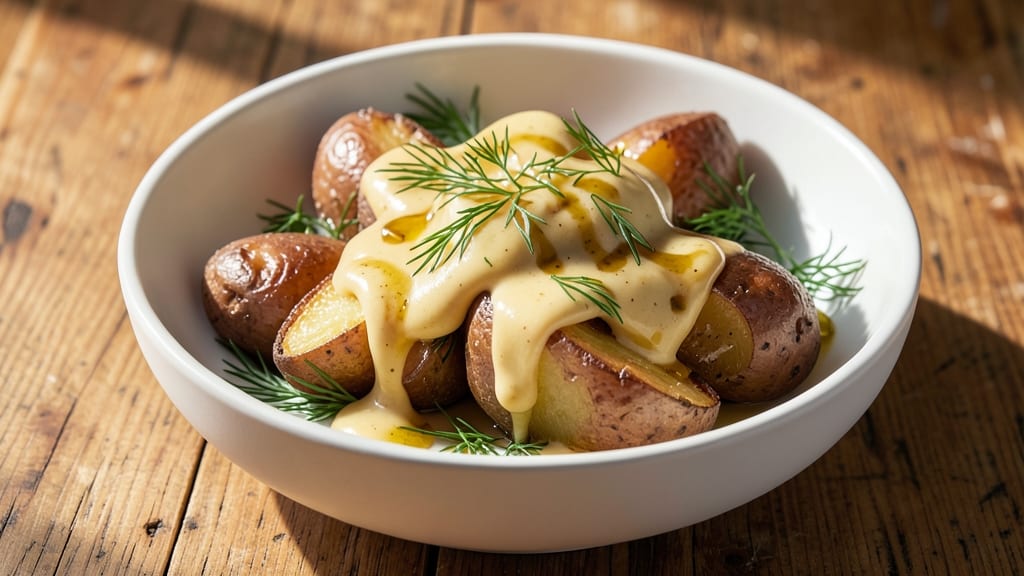
This potato mayonnaise recipe transforms humble potatoes into a velvety, herb-infused spread that elevates everything from sandwiches to roasted vegetables. The secret lies in blending cooked potatoes with mayonnaise until perfectly smooth, creating a rich, creamy base that’s far more sophisticated than store-bought options.
I developed this after craving a lighter alternative to heavy sauces—one that still delivers bold flavor without overpowering the dish.
The result is a versatile condiment with a silky texture that clings beautifully to meats, fish, or crisp vegetables. Unlike traditional potato salad, this version skips the vinegar and focuses on fresh herbs like dill and chives for brightness, while a touch of mustard adds depth.
It’s the perfect balance of creaminess and freshness, ready in just 15 minutes with ingredients you likely already have on hand.
Whether you’re serving it as a dip for potato chips, a spread for smoked salmon, or a tangy topping for grilled steaks, this potato mayonnaise brings restaurant-quality richness to any meal.
The best part? It keeps well in the fridge for up to 5 days, making it ideal for meal prep or entertaining. Let’s get started on this game-changing condiment.
For extra flair, try adding a pinch of smoked paprika or a squeeze of lemon juice for brightness. The possibilities are endless—this isn’t just a side, it’s a flavor enhancer that turns simple dishes into showstoppers. Trust me, once you try it, you’ll never reach for plain mayo again.
Ingredients for potato mayonnaise
Eight ingredients transform humble potatoes into restaurant-quality herb-infused mayonnaise.
| Ingredient | Amount | Notes |
|---|---|---|
| Yukon Gold Potatoes 🥔 | 2 lbs | Peeled, boiled until fork-tender |
| Dijon Mustard 🍯 | 1 tbsp | For depth and tanginess |
| Mayonnaise 🥫 | 1 cup | High-quality, full-fat preferred |
| Fresh Dill 🌿 | ¼ cup | Finely chopped, stems removed |
| Fresh Chives 🌱 | 2 tbsp | Minced for delicate brightness |
| Extra-Virgin Olive Oil 🫒 | 2 tbsp | For richness and silkiness |
| Lemon Juice 🍋 | 1 tbsp | Freshly squeezed, for acidity |
| Salt 🧂 | ½ tsp | Diamond Crystal kosher preferred |
| Black Pepper 🌶️ | ¼ tsp | Freshly ground for warmth |
| Smoked Paprika 🌶️ | ¼ tsp | Optional, for smoky depth |
The potatoes are the foundation—Yukon Golds are ideal for their buttery texture, but Russets work too. Whole Foods or local farmers' markets often carry the best quality, but any grocery store will do. Boil them until they're fork-tender but not falling apart—this ensures a silky, not gummy, texture. I always boil mine in salted water (about 1 tbsp salt per gallon) for extra flavor infusion. Fresh dill and chives are non-negotiable for that bright, herbaceous note—dried just won't cut it here. If you're short on time, frozen herbs work in a pinch, but fresh is absolutely essential for that restaurant-quality richness.
No Dijon mustard? Yellow mustard at double the amount works, though it'll be less refined. Skip the mayo? Greek yogurt or sour cream creates a lighter version, but the texture will be slightly different. The olive oil matters here—extra-virgin with fruity notes elevates everything, while cheaper oils can make the spread taste flat. Smoked paprika is optional but adds that extra layer of complexity that makes this spread truly special. For extra tang, a splash of white wine vinegar can replace the lemon juice, though it'll be slightly more acidic.
This keeps beautifully in the fridge for up to 5 days, making it perfect for meal prep. Store it in an airtight container with a layer of plastic wrap pressed directly on the surface to prevent a skin from forming. For longer storage, freeze portions in ice cube trays—perfect for single servings later. Reheat gently in the microwave or at room temperature for the best texture. The flavor actually improves over time as the herbs meld with the potatoes, so don't hesitate to make a big batch.
Why You'll Love This Recipe
- Five-Ingredient Magic: I swear by this combo—boil the Yukons, mash them while still warm, then fold in mayo, mustard, and herbs. No fancy techniques, just a bowl and a fork. Honestly, it’s the kind of dish that makes me feel like I did something impressive, even though it’s basically assembly.
- Herb-Packed Punch: That bright hit of fresh dill and chives cuts through the richness of the mayo like a summer breeze. The Dijon mustard adds a little tangy kick, so it’s never boring—just creamy, herby, and ridiculously satisfying. (Yes, even on a Tuesday night.)
- Meal Prep MVP: This stuff keeps for days in the fridge, so I make a big batch on Sundays. Slather it on sandwiches, toss it with roasted veggies, or just eat it straight with crackers. My kids call it “fancy potato dip,” but I know better—it’s my secret weapon for lazy afternoons.
- Budget-Friendly Luxury: Yukon Golds are cheap, mayo is cheap, and a handful of herbs stretch far. For the cost of a single restaurant appetizer, I’ve got enough to feed my whole family leftovers for a week. Not the prettiest, but the taste makes up for it every time.
Step-by-step instructions for herb-infused potato mayonnaise
Transform simple boiled potatoes into an extraordinary, creamy topping with this foolproof method.
Boil the Yukon Gold Potatoes to Perfection
Place the 2 lbs Yukon Gold Potatoes (peeled) in a large pot and cover with cold water by about 2 inches. Add 1 tsp salt to the water—this ensures the potatoes cook evenly and absorb flavor. Bring to a rolling boil over high heat, then immediately reduce to a gentle simmer. Cook for 15-20 minutes until the potatoes are fork-tender when pierced with a knife.
Drain the potatoes immediately and let them steam-dry in the colander for 2-3 minutes. This step removes excess moisture, which is crucial for preventing a watery mayonnaise later. While still warm, pass the potatoes through a potato ricer or mash them with a potato masher until completely smooth. Let the mashed potatoes cool to room temperature before proceeding—this prevents the mayonnaise from breaking when mixed.
Whisk Together the Herb and Oil Base
In a large mixing bowl, combine the 1 cup Mayonnaise, 2 tbsp Extra-Virgin Olive Oil, 1 tbsp Dijon Mustard, 1 tbsp Lemon Juice, 0.5 tsp Salt, 0.25 tsp Black Pepper, and 0.25 tsp Smoked Paprika. Using a whisk or electric mixer, blend these ingredients on low speed for 30 seconds until fully emulsified and smooth. This creates a rich, flavorful base that will carry the potato texture beautifully.
Add the 0.25 cup finely chopped Fresh Dill and 2 tbsp minced Fresh Chives to the bowl. Fold them in gently with a spatula, ensuring the herbs are evenly distributed. Here's the thing—folding by hand prevents overmixing, which could break the emulsion. You want the herbs to brighten the mayonnaise without overpowering it.
Gradually Incorporate the Mashed Potatoes
With the mixer running on low speed, slowly add the room-temperature mashed potatoes to the herb-infused mayonnaise mixture. Start with ½ cup at a time, allowing the mixture to fully incorporate before adding more. This gradual approach ensures the potatoes blend smoothly without curdling the mayonnaise. The texture should transform into a thick, velvety spread with a subtle potato sweetness.
Continue mixing until the entire 2 lbs of mashed potatoes is incorporated. Taste and adjust seasoning if needed—you might want to add a pinch more salt or lemon juice to balance the flavors. The final consistency should be thick but spreadable, like a luxurious potato dip. If it’s too thick, add 1-2 tsp water to loosen it slightly.
Chill and Rest for Maximum Flavor
Transfer the potato mayonnaise to an airtight container and refrigerate for at least 2 hours (or up to 48 hours). This resting period allows the flavors to meld and the texture to set perfectly. The longer it chills, the more cohesive and flavorful it becomes—trust the process, even if it feels like waiting too long.
Before serving, give the mayonnaise a quick stir to ensure uniformity. The final product should be smooth, creamy, and vibrant green from the herbs. This isn’t just a side dish—it’s a showstopper that elevates any meal. Serve it as a dip for fries, a spread for sandwiches, or a topping for grilled meats. Every bite delivers that perfect balance of herbaceous brightness, creamy richness, and smoky depth—absolutely perfect every time.
Pro Tips For Making Potato Mayonnaise
- BOIL UNTIL TENDER: Yukon Golds should give slightly when pierced—no one likes a mushy mash. Start in cold water, bring to a rolling boil, then simmer for 12-15 minutes. Overcooking turns them gluey; undercooking leaves you with raw starch.
- CHILL THE POTATOES: Drain and spread them on a tray to cool completely before mashing. Cold potatoes blend smoother and absorb the mayo better—no one wants a greasy, gummy mess. (Yes, I learned this after making a sad, clumpy batch.)
- SALT THE MAYONNAISE: Skip the salt in the mayo, then season the final mix aggressively. Store-bought mayo is already salty; you’ll thank yourself when the flavors balance instead of clashing. (I used to overdo it, and it ruined the dish.)
- FINE-DICE THE HERBS: Pulse fresh dill and chives in a food processor for 2-3 seconds—just until chopped, not paste. Big chunks sink to the bottom; fine dice blends evenly. (My lazy chopping habit made me cringe every time.)
Troubleshooting perfect results
Mayonnaise Breaking Fix
If your potato mayonnaise separates or looks grainy, it’s usually from excess moisture or overmixing. First, whisk in 1 tsp Dijon mustard and 1 tbsp olive oil to help re-emulsify.
For stubborn separations, blend in 1 tbsp plain yogurt to stabilize the texture. Always ensure your mashed potatoes are completely cool before mixing to prevent curdling. 💡
Potato Texture Issues
If your spread tastes starchy or gritty, your potatoes weren’t mashed smooth enough. Use a potato ricer for ultra-silky results—it’s worth the investment. For a quick fix, blend the finished mayonnaise in a food processor for 10-15 seconds until perfectly smooth.
Overcooked potatoes? Start with 15 minutes of boiling time and check for doneness early. 🥔
Herb Distribution Problems
Uneven herb distribution happens when you mix too vigorously. Fold in herbs by hand with a spatula instead of using an electric mixer. For extra flavor without clumps, blend 1 tbsp chopped herbs with 2 tbsp olive oil first, then incorporate into the mayonnaise.
If herbs sink to the bottom, stir in 1 tsp xanthan gum to thicken slightly. ✨
Storage-Life Extension
To prevent mold or off-flavors, store your potato mayonnaise in an airtight glass container with plastic wrap pressed directly on the surface. For longer shelf life, freeze in ice cube trays—thaw overnight in the fridge before using.
If it develops a skin, simply whisk it back to smoothness. Never store above 40°F to maintain safety and quality. ❄️
Flavor Balance Adjustments
Too bland? Add ½ tsp smoked paprika or 1 tsp lemon juice for brightness. Too tangy? Balance with 1 tsp honey or ½ tsp sugar. For richness, stir in 1 tbsp extra olive oil.
Taste as you go—this spread is highly customizable! Adjust seasonings gradually to avoid overpowering the delicate potato flavor. 🌶️
Nutrition facts
Frequently asked questions
What's the best potato variety for this recipe?
Yukon Gold potatoes are ideal for their buttery texture, but Russets or red potatoes work too. Avoid waxy potatoes like red potatoes if you want ultra-smooth results—they can create a slightly grainy texture.
Can I make this without fresh herbs?
Yes! Use 1 tbsp dried dill and 1 tsp dried chives instead of fresh, but the flavor won't be as vibrant. For best results, blend 1 tbsp dried herbs with 1 tbsp olive oil first to distribute the flavor evenly.
How do I fix separated potato mayonnaise?
Whisk in 1 tsp Dijon mustard and 1 tbsp olive oil to re-emulsify. For stubborn separation, blend in 1 tbsp plain yogurt to stabilize. Always ensure mashed potatoes are completely cool before mixing to prevent curdling.
What are the best ways to use this spread?
Try it as a dip for fries or veggie sticks, a sandwich spread with smoked salmon, or a topping for grilled meats. It also elevates open-faced toast or seafood platters—the creamy texture pairs perfectly with crispy or flaky proteins.
Why does it need to chill before serving?
Chilling for 2+ hours lets flavors meld and textures set properly. The cold also helps stabilize the emulsion, preventing separation. The longer it rests, the more cohesive and flavorful it becomes—don't skip this step!