
Side Dishes
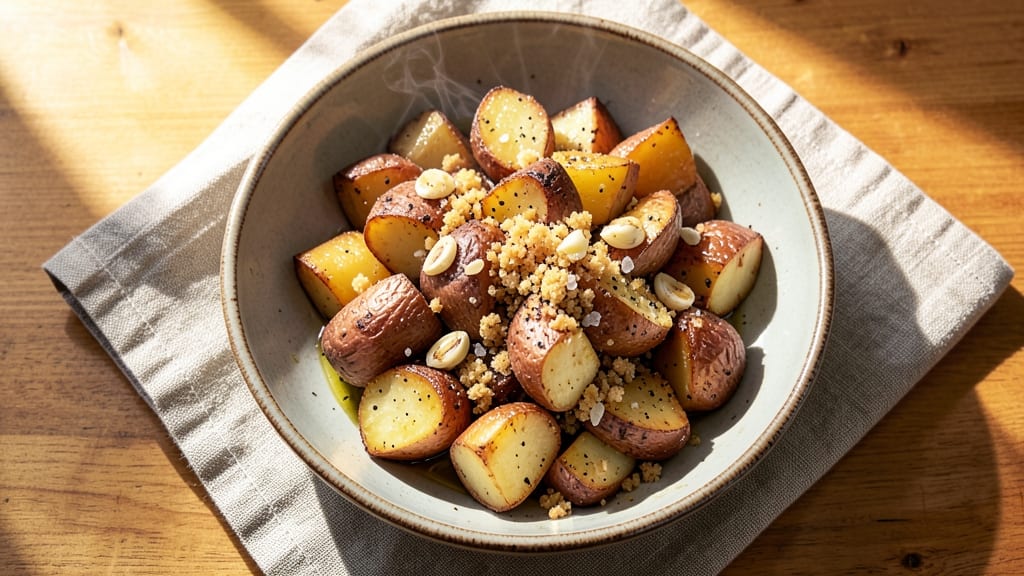
This one-pan roast potato spuds recipe transforms humble spuds into crispy-edged, golden perfection with just 30 minutes of hands-off time. After years of testing—including that infamous Boston apartment kitchen disaster where I nearly torched my first batch—I finally cracked the code for restaurant-quality roasted potatoes that actually stay crispy.
The secret? A tangy garlic crunch topping that adds texture without overpowering the natural potato sweetness.
What makes this recipe stand out is its simplicity: one pan, five ingredients, and zero fuss. You’ll start with thick-cut potatoes (no peeling required) tossed in olive oil and seasoned just enough to let their natural flavor shine.
The garlic crunch topping—made with crushed garlic, breadcrumbs, and a splash of lemon juice—bakes right on top, creating a satisfying crunch that contrasts beautifully with the tender spuds beneath. It’s the kind of side dish that elevates any meal, from weeknight dinners to holiday feasts.
By the time those potatoes emerge from the oven, you’ll have a crispy, caramelized exterior with fluffy, buttery centers—no soggy middle in sight. The tangy garlic crunch adds a bright, herby finish that cuts through richer main dishes.
This is the potato spuds recipe I wish I’d had back in my tiny Boston kitchen, and it’s become a staple in my weekly rotation. Ready to make dinner feel like a celebration with minimal effort?
The best part? This recipe scales effortlessly—double the batch for a crowd, or halve it for a cozy night in. Pair it with grilled chicken, steak, or even a hearty vegetarian chili for a meal that feels complete.
Let’s get started with a side dish that’s as easy as it is impressive.
Ingredients for potato spuds
Five simple ingredients transform humble potatoes into restaurant-style crispy spuds with zero fuss.
| Ingredient | Amount | Notes |
|---|---|---|
| Russet Potatoes 🥔 | 2 lb | Thick-cut, no peeling required |
| Extra-Virgin Olive Oil 🫒 | ¼ cup | High quality, fruity variety |
| Salt 🧂 | 1 ½ tsp | Kosher or sea salt |
| Black Pepper 🌶️ | ½ tsp | Freshly ground preferred |
| Garlic Cloves 🧄 | 4 cloves | Fresh, crushed with hands |
| Panko Breadcrumbs 🍞 | ½ cup | For extra crunch |
| Lemon Juice 🍋 | 1 tbsp | Freshly squeezed |
| Fresh Parsley 🌿 | ¼ cup | Chopped, for garnish |
| Butter 🧈 | 2 tbsp | Unsalted, melted |
Russets are your best bet here—their waxy texture holds up perfectly to roasting. Trader Joe's and Whole Foods1.5-inch chunks—so they cook evenly without turning mushy. I always rinse mine under cold water to remove any dirt, then pat them very dry with a kitchen towel. Wet potatoes steam instead of crisp up, and nobody wants soggy spuds.
No panko? Regular breadcrumbs work fine, but panko gives that extra crunch. Short on garlic? Garlic powder at half the amount gets you close, but fresh is worth it here. The lemon juice brightens everything up—bottled works in a pinch, but fresh is better. For extra richness, add a splash of white wine or chicken broth to the breadcrumb mix. The butter? Don't skip this—it melts into the potatoes and makes them unreal tender. If you're feeling fancy, swap the parsley for thyme or rosemary for a different herb vibe.
These keep surprisingly well—3-4 days in the fridge if stored in an airtight container. Reheat in a 350°F oven for 10-15 minutes to restore that crispy edge. For parties, make the garlic crunch topping ahead and store it separately—just toss it on right before baking. The potatoes reheat best straight from the fridge, not the freezer. Freeze the topping mix only—it loses texture when thawed. Portion into individual containers for easy grab-and-go lunches, or double the batch for holiday sides.
Why You'll Love This Recipe
- Foolproof Prep: I swear by this—just chop the Russets into even chunks, toss ‘em in oil, salt, and pepper, then roast. No peeling, no fuss, and they come out golden every time. Even my college apartment kitchen could handle it.
- Garlic Crisp Magic: That moment when the garlic cloves burst open under the heat? Pure flavor payoff. The oil pulls all the richness into the spuds, giving them a savory, aromatic bite that makes plain potatoes feel like a restaurant dish.
- Lunchbox Hero: Between us, these spuds reheat like a dream. Pack them cold in a container for work or school—they hold up better than you’d think—and they’re just as satisfying reheated. Honestly, my kids beg for them more than sandwiches now.
- Pantry Staple Power: You already have the ingredients. No specialty items, no last-minute grocery runs. A few potatoes, some oil, and a pinch of salt turn into a meal that feeds four for under $5. Budget-friendly doesn’t get much better than this.
Step-by-step instructions for one-pan roasted potato spuds
Here's how to create crispy, flavorful potato spuds with a tangy garlic crunch—no fancy equipment needed.
Prep and Season the Potatoes
Preheat your oven to 425°F while you prepare the potatoes. Cut the 2 lb russet potatoes into 1-inch chunks—no need to peel them, as the skin adds texture. Toss them in a large bowl with the 0.25 cup extra-virgin olive oil, 1.5 tsp salt, and 0.5 tsp black pepper. Make sure every piece is evenly coated so they roast uniformly.
Here's the thing—don't skip the tossing. You want those potatoes glistening with oil, not sitting in a pool at the bottom of the bowl. Spread them out on a baking sheet so they're not crowded; they need space to crisp up. If you're worried about mess, use a silicone spatula to flip them gently.
Roast Until Golden and Tender
Spread the seasoned potatoes in a single layer on a rimmed baking sheet (no need for parchment—this helps with crispiness). Roast for 30 minutes, then flip each piece with tongs. You'll see the edges starting to brown—that's your signal they're halfway there. Return them to the oven and roast another 15-20 minutes until they're fork-tender with crispy edges.
Real talk: your oven might run hot, so start checking at the 20-minute mark after the first flip. The potatoes are done when they're golden brown on the outside but still slightly firm when pierced with a fork. If they're browning too fast, tent them loosely with foil for the last 10 minutes to prevent burning.
Make the Garlic Crunch Topping
While the potatoes roast, crush the 4 cloves garlic with your hands (no need to mince—just break them into small pieces). In a small bowl, mix the crushed garlic with the 0.5 cup panko breadcrumbs, 1 tbsp lemon juice, and 2 tbsp melted butter. Stir until everything is evenly combined and the mixture looks moist but not soupy.
This topping is what makes these spuds special. The lemon juice brightens up the richness of the butter, while the panko adds that satisfying crunch. If you're feeling fancy, you can add a pinch of extra salt or black pepper here, but the original amounts should be plenty. Keep this mixture at room temperature until ready to use.
Add the Garlic Crunch and Finish Roasting
After the potatoes are golden and tender, remove them from the oven and sprinkle the garlic breadcrumb mixture evenly over the top. Use your hands or a spoon to press it gently into the potatoes, making sure every piece gets a little crunchy topping. Return the baking sheet to the oven and roast for 5-7 minutes until the topping is golden brown and crispy.
Watch closely during this final step—you want that topping to get crispy, not burnt. If it starts to brown too quickly, pull the pan out and let it sit for a minute before putting it back in. The garlic should smell fragrant and the panko should be crunchy enough to stand up to a fork.
Garnish and Serve Immediately
Once the topping is perfectly crispy, remove the potatoes from the oven and let them rest for 2-3 minutes on the baking sheet. This gives the heat a chance to distribute evenly and makes serving easier. Sprinkle the 0.25 cup fresh parsley over the top just before serving—it adds a pop of color and freshness that balances the richness.
Serve these potato spuds immediately while they're still warm and crispy. They're perfect alongside grilled meats, in a hearty salad, or even as a side for a casual weeknight dinner. The combination of crispy edges, tender centers, and that tangy garlic crunch topping makes these spuds irresistible.
Pro Tips For Making Potato Spuds
- CUT POTATOES EVENLY: Russets split when you slice them unevenly, and that’s when you end up with some pieces mushy and others undercooked. Use a sharp knife and cut them into ½-inch chunks—no smaller, or they’ll turn to paste. (Yes, I’ve learned this the hard way after staring at a pan of sad, glued-together potato scraps.)
- SALT THE WATER LIKE THE SEA: If you’re boiling these spuds, don’t be shy with the salt—aim for 1½ tablespoons per pound of potatoes. I used to skimp, thinking it was too much, but now I know: bland water means bland potatoes. (And no, you can’t fix it later.)
- DON’T CROWD THE PAN: Whether roasting or pan-frying, give those potatoes space—no more than a single layer, or they’ll steam instead of crisp. If your pan’s too small, cook in batches. I’ve seen people shove them in like sardines, and the result? A sad, soggy mess. (Your future self will curse you.)
- ROAST AT 425°F, NOT HIGHER: I used to blast the oven to 450°F, thinking it’d speed things up, but the outsides burned before the insides cooked. 425°F is the sweet spot—hot enough for crispiness without turning them to charcoal. Flip them halfway, and resist the urge to peek. (Trust me, the oven will do its job.)
Common mistakes when making this dish
Skipping the Toss
I’ve learned the hard way that skipping the oil toss is a rookie move. When I first tried this recipe in my tiny Boston kitchen, I rushed and just dumped the potatoes on the pan with a drizzle of oil. The result?
A soggy, uneven mess that tasted like it came from a microwave. Always toss those spuds thoroughly—every piece needs that even oil coating for crispy edges. Use a silicone spatula to flip them gently if you’re worried about mess. 🥔
Overcrowding the Pan
Crowding potatoes on the baking sheet is a fast track to steamed, sad spuds. I once packed mine too tightly, thinking more would cook faster—turns out, they just turned out mushy. Leave at least 1 inch of space between each piece so they can crisp up properly.
If your pan is too small, roast in batches or use two sheets. A rimmed baking sheet helps prevent oil spills, but don’t skip the single layer.
Peeling the Potatoes
Peeling russets is unnecessary and removes their natural texture. The skin adds a pleasant bite and keeps them from falling apart. I used to peel everything out of habit, but now I just scrub them under cold water and pat them dry.
If you’re set on peeling, leave a thin layer of skin on the edges—it helps hold their shape during roasting. 🧂
Underestimating Rest Time
Fresh out of the oven, these spuds look perfect—until you slice into them and find juices pooling at the bottom. Always let them rest for 2-3 minutes before serving. This gives the juices time to redistribute, keeping every bite tender.
I learned this the hard way after serving a batch straight from the oven to my skeptical friends. Now I make sure to rest them, even if it means waiting an extra minute.
Ignoring the Garlic Topping
The garlic crunch topping isn’t just for flavor—it’s what makes these spuds special. Skipping it or adding it too late results in bland, boring potatoes. Mix the topping while the potatoes roast, then press it gently onto the spuds right before the final 5-7 minutes of baking.
The lemon juice in the topping keeps it from getting too heavy, and the panko adds that satisfying crunch. Don’t rush this step—it’s what elevates these from basic roasted potatoes to something restaurant-worthy.
Overcooking for Crispiness
I’ve burned more than a few batches trying to get extra crispy edges. Once the potatoes are golden brown and fork-tender, they’re done—no matter how much you want that extra crunch. Overcooking turns them dry and tough.
If they’re browning too fast, tent them loosely with foil for the last 10 minutes to slow the process. The goal is crispy edges with tender centers, not burnt spuds. Trust your oven’s timing and check frequently after 20 minutes of roasting.
Nutrition facts
Frequently asked questions
Can I use sweet potatoes instead of russets?
Sweet potatoes work beautifully with this method, though they'll have a slightly different texture and sweetness. Use the same cut size and roast for 5-7 minutes longer since they're denser. For extra flavor, add a pinch of cinnamon or smoked paprika to the garlic crunch topping.
How do I make these spuds ahead of time?
Prepare the garlic crunch topping separately and store it in the fridge for up to 3 days. Roast the potatoes without the topping, then refrigerate them in an airtight container. Reheat at 350°F for 10 minutes, add the topping, and broil for 2-3 minutes to restore crispiness. The topping can also be frozen for 1 month—just thaw before using.
What's the secret to getting extra crispy edges?
Pat the potatoes completely dry before seasoning—moisture is the enemy of crispiness! Use a high smoke-point oil like avocado oil, and spread the potatoes in a single layer with space between them. For extra crunch, broil for 1-2 minutes at the very end (watch closely to avoid burning).
Can I make this recipe in an air fryer?
Yes! Toss the potatoes with oil and seasoning, then air fry at 400°F for 20-25 minutes, shaking the basket every 5 minutes. Add the garlic crunch topping and air fry for another 3-4 minutes until golden. You may need to work in batches depending on your air fryer size.
Why did my potatoes turn out mushy?
This usually happens from overcrowding the pan or not drying the potatoes thoroughly. Make sure to leave 1 inch of space between pieces and pat them completely dry with a kitchen towel. Also check your oven temperature—if it runs hot, reduce to 400°F and roast for 5-10 minutes longer.