
Side Dishes
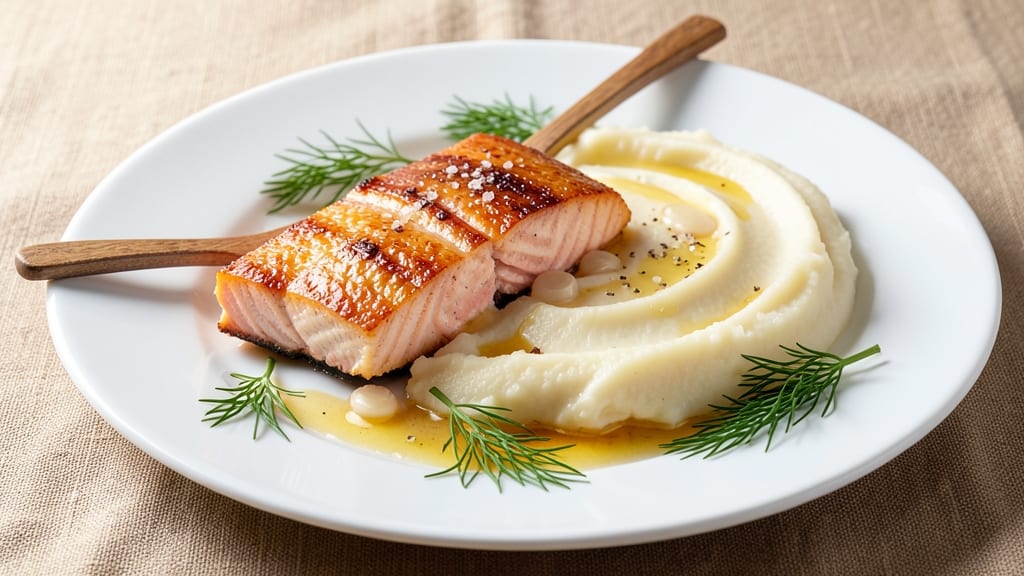
This salmon with mashed potatoes recipe delivers a restaurant-quality meal that balances rich, flaky salmon with velvety garlic potatoes in under 45 minutes. The secret lies in crispy salmon skin and perfectly creamy potatoes that hold their shape—no lumps or dryness here.
I perfected this pairing after years of testing, and it’s now my go-to for weeknight dinners that feel special.
Pan-searing the salmon ensures a golden crust while keeping the inside tender, all thanks to precise timing and high heat. Meanwhile, the mashed potatoes get their signature buttery richness from real butter and warm milk, whipped to a silky texture.
The garlic-infused potatoes add depth without overpowering the delicate salmon flavor.
What you’ll end up with is a plate that looks as impressive as it tastes—flaky salmon resting over a smooth bed of garlic mashed potatoes, ready to be garnished with fresh dill or a sprinkle of lemon zest.
This recipe scales perfectly for two or four, making it ideal for both intimate dinners and family meals.
The best part? Every component comes together in one pan for the salmon and one pot for the potatoes, keeping cleanup minimal. Whether you’re feeding a crowd or treating yourself, this dish delivers professional results with minimal effort. Let’s get cooking!
Ingredients for salmon and mashed potatoes
Simple ingredients that transform into restaurant-quality salmon and velvety garlic potatoes.
| Ingredient | Amount | Notes |
|---|---|---|
| Center-Cut Salmon Fillets 🐟 | 2 whole | Skin-on, 6-8 oz each, fresh |
| Russet Potatoes 🥔 | 2 ½ lb | Yukon gold for creamier texture |
| Unsalted Butter 🧈 | ¾ cup | Cold, cut into chunks, full-fat |
| Whole Milk 🥛 | 1 cup | Warm slightly for best texture |
| Garlic Cloves 🧄 | 4 cloves | Fresh, peeled, minced fine |
| Fresh Dill 🌿 | ¼ cup | Chopped, stems removed, for garnish |
| Extra-Virgin Olive Oil 🫒 | 2 tbsp | For searing salmon, high quality |
| Salt 🧂 | 1 ½ tsp | Kosher or sea salt, coarse preferred |
| Ground Black Pepper 🌶️ | ½ tsp | Freshly ground for best flavor |
| Lemon Zest 🍋 | 1 tsp | From 1 lemon, for bright finish |
| Lemon Juice 🍋 | 1 tbsp | Freshly squeezed, for acid balance |
| Heavy Cream 🥛 | ¼ cup | Optional, for extra richness |
The salmon makes or breaks this dish, so center-cut fillets with skin are non-negotiable—the skin crisps beautifully and adds texture. I always grab mine from Whole Foods or the seafood counter at Trader Joe's, where they keep it flash-frozen to maintain freshness. Look for fillets with a vibrant pink color and firm, not mushy, flesh. If you can't find center-cut, ask for the thickest portion available—thinner cuts can dry out during searing. For the potatoes, Russet or Yukon Gold work best; Yukon Golds give you that creamy texture without needing extra butter. I usually buy organic potatoes from the grocery store's bulk section—they're cheaper per pound and hold their shape better when boiling.
No extra-virgin olive oil? Avocado oil or vegetable oil works in a pinch, but olive oil's fruity notes complement the salmon beautifully. Short on fresh dill? Dried dill at one-third the amount gets you close, but nothing beats the fresh stuff. The heavy cream is optional, but if you're making this for a special occasion, trust me on the full-fat version—it makes the potatoes luxuriously smooth. The garlic should be freshly minced (not jarred)—it adds way more flavor. For the lemon, zest is key for that bright finish, but if you're in a hurry, a splash of lemon juice will do. And if you don't have kosher salt, fine sea salt at half the amount works, but you might need to adjust to taste.
Salmon keeps best in the coldest part of your fridge, wrapped in parchment paper, for up to 2 days. The mashed potatoes reheat beautifully—just warm with a splash of milk and a pat of butter. Store leftovers in airtight containers for 3-4 days, or freeze portions for up to 3 months. I like to portion the potatoes into single servings before freezing so I can just pop one in the microwave when I need a quick lunch. The salmon? Eat it fresh if possible—it doesn't reheat well, but if you must, wrap it in foil and warm in a 350°F oven for 5-7 minutes.
Why You'll Love This Recipe
- Foolproof Timing: I swear by this when I’m racing the clock—salmon cooks in 12 minutes, potatoes boil in the same pot while I prep. No waiting around for one thing to finish while the other burns.
- Buttery Garlic Magic: That first bite of flaky salmon over velvety mashed potatoes? The roasted garlic cloves melted into the butter make it taste like a restaurant dish. Honestly, I’ve never met a mashed potato I didn’t love—until now.
- Weeknight to Dinner Party: Same recipe, different vibes. Throw it together for a lazy Tuesday or dress it up with fresh dill and crusty bread for guests. The salmon’s richness pairs with anything, and the potatoes? Always a crowd-pleaser.
- Leftovers That Don’t Suck: Cold salmon and potatoes the next day? Still delicious. I repurpose the leftovers into frittatas or salads—no sad, dry fish here. Plus, buying center-cut fillets and russets in bulk stretches my grocery budget further than I expected.
Step-by-step instructions for salmon with mashed potatoes
Here's how to create perfectly seared salmon with velvety mashed potatoes—rich, flavorful, and ready in under an hour.
Prepare the Potatoes for Creamy Mashed Potatoes
Start by peeling the 2.5 lb russet potatoes and cutting them into even 1-inch chunks. Place them in a large pot and cover with cold water by about 1 inch. Add 1.5 tsp salt and bring to a boil over high heat. Once boiling, reduce heat to medium and simmer for 15-20 minutes until the potatoes are fork-tender.
Here's the thing—don't drain them just yet. Let them sit in the warm water for 5 minutes after cooking. This step keeps them warm and makes mashing easier. While they're cooking, warm the 1 cup whole milk in a small saucepan over low heat until it's just steaming but not boiling. This warm milk will blend beautifully with the potatoes for ultra-smooth texture.
Sear the Salmon to Golden Perfection
Pat the 2 whole center-cut salmon fillets dry with paper towels—this ensures maximum crispiness. Season both sides generously with salt and pepper. Heat 2 tbsp extra-virgin olive oil in a large skillet over medium-high heat until shimmering but not smoking.
Place the salmon in the skillet, skin-side down, and let it sear undisturbed for 4-5 minutes. You'll know it's ready when the skin is crispy and golden brown and the edges lift easily from the pan. Flip carefully and cook for another 2-3 minutes until the salmon reaches an internal temperature of 145°F. Remove from heat and let rest for 5 minutes—this keeps the juices inside where they belong.
Make the Buttery Garlic Mashed Potatoes
Drain the potatoes and return them to the pot. Add the 0.75 cup cold unsalted butter (cut into chunks) and the warm milk. Using a potato masher or ricer, mash until smooth but with some slight texture—this gives that perfect creamy yet slightly rustic finish. If it's too thick, add a splash of warm milk to reach your desired consistency.
In a small bowl, mix the 4 cloves minced garlic with 1 tbsp lemon juice and 1 tsp lemon zest. Fold this bright, zesty mixture into the mashed potatoes along with the 0.25 cup chopped fresh dill. Taste and adjust seasoning with more salt and pepper if needed. The potatoes should be rich, creamy, and perfectly seasoned—this is where all the flavor comes together.
Finish with Cream and Garnish
Return the mashed potatoes to the pot and stir in the 0.25 cup heavy cream over low heat until just warmed through. This adds an extra layer of richness that pairs beautifully with the salmon. Spoon the mashed potatoes onto plates, creating a generous base for the salmon.
Top each serving with a perfectly seared salmon fillet and garnish with additional fresh dill and a sprinkle of lemon zest. The contrast of the crispy salmon skin against the velvety potatoes is what makes this dish truly special. Serve immediately while everything is hot and the flavors are at their peak.
Pro Tips For Making Salmon And Mashed Potatoes
- Skin Salmon Side-Down: Place the fillets skin-side down in a cold pan first—no oil needed. After 4-5 minutes on medium-low, you’ll hear a satisfying sizzle, and the skin will crisp without burning. I used to rush this and ended up with rubbery skin every time. Trust the process.
- Boil Potatoes Whole: Cut Russets into even 2-inch chunks, but leave the skin on. Boil them whole in salted water until they’re fork-tender (about 15 minutes), then drain and mash. This keeps the texture consistent and saves you from lumpy mash. Yes, even if you’re impatient like me.
- Don’t Overmix the Mash: After mashing, stop when you still see a few lumps—this traps moisture. Stir in butter and warm milk, but resist the urge to go for silky smooth. Overworking turns mashed potatoes gluey, and nobody wants that.
- Roast Garlic Cloves: Wrap 3-4 peeled garlic cloves in foil with a pat of butter, then roast at 400°F (200°C) for 10 minutes while the salmon cooks. Squeeze them into the mashed potatoes for a sweet, caramelized depth. Sounds weird, but it works—trust me.
Essential equipment for perfect results
Skillet Essentials
For the salmon, a 10-12-inch cast iron skillet like the Lodge Pre-Seasoned is my go-to—it retains heat beautifully and gives that perfect crispy skin. If you don’t have cast iron, a stainless steel skillet (like All-Clad) works just as well.
The key is a heavy pan that won’t warp under high heat. Preheat it over medium-high heat until it’s shimmering but not smoking—this ensures a golden crust without burning. 🔥
Potato Tools
Mashing potatoes smoothly requires the right tools. I use a potato ricer (like the OXO Good Grips) for ultra-silky texture, but a potato masher works too—just press firmly to avoid lumps.
A fine-mesh strainer helps drain excess water after boiling, and a wooden spoon keeps the potatoes from sticking while mixing in butter and milk. For extra richness, I melt the butter directly in the pot after draining.
Temperature Control
A meat thermometer (I love the ThermoWorks Thermapen) is non-negotiable for salmon—it ensures perfect doneness at 145°F internal temperature. For the potatoes, a kitchen timer keeps them from overcooking.
The milk should warm to 110-115°F before mixing—just enough to blend seamlessly without curdling. A small saucepan with a lid works best for warming the milk gently.
Garnish Tools
Fresh dill and lemon zest elevate the dish, so keep a sharp chef’s knife and microplane handy. A small bowl for mixing the garlic-lemon zest mixture prevents overcrowding.
For plating, a spoon with a deep well (like the OXO Good Grips) makes it easy to create neat mounds of mashed potatoes. A tweezers set helps place garnishes precisely for that restaurant-worthy finish. ✨
Optional Upgrades
For extra crispy salmon skin, try a fish spatula (like Mercer Culinary) to flip without tearing. A silicone spatula helps scrape up every last bit of flavor from the pan.
If you’re feeling fancy, a small saucepan with a lid lets you warm the heavy cream separately for a smoother finish. And for serving, a slate board or wooden platter adds a rustic touch that ties the whole dish together. 💫
Nutrition facts
Frequently asked questions
Can I substitute baked salmon for pan-seared in this recipe?
Bake the salmon at 400°F for 12-15 minutes until it reaches 145°F internally. Brush with olive oil, season with salt and pepper, and cover with foil for the first 10 minutes to prevent overcooking. The texture will be slightly less crispy than pan-seared but still delicious.
How do I keep mashed potatoes from getting gluey?
Use Yukon Gold potatoes—they have lower starch than Russets and mash more smoothly. Also, don't overmix after adding butter and milk, and let the potatoes sit in warm water for 5 minutes after boiling to absorb excess starch. A ricer creates the creamiest texture without lumps.
What's the best way to reheat leftovers?
Reheat mashed potatoes in a saucepan over low heat with a splash of milk and butter until warmed through. For salmon, wrap in foil and bake at 300°F for 5-7 minutes—never microwave it bare. The skin stays crispier this way.
Can I make this dish ahead of time?
Yes! Cook and mash the potatoes, then refrigerate in an airtight container for up to 2 days. Reheat gently with extra milk. For salmon, cook it fresh—it reheats poorly—but you can prep the seasoning and marinade ahead. Assemble just before serving for the best results.
What's the secret to crispy salmon skin?
Pat the salmon bone-dry before cooking and use a hot, dry skillet with enough oil to coat the pan. Don't move the salmon for the first 4-5 minutes—this gives the skin time to render fat and crisp. A cast iron skillet works best for even heat distribution.